Mobile World Congress 2024, Barcelona
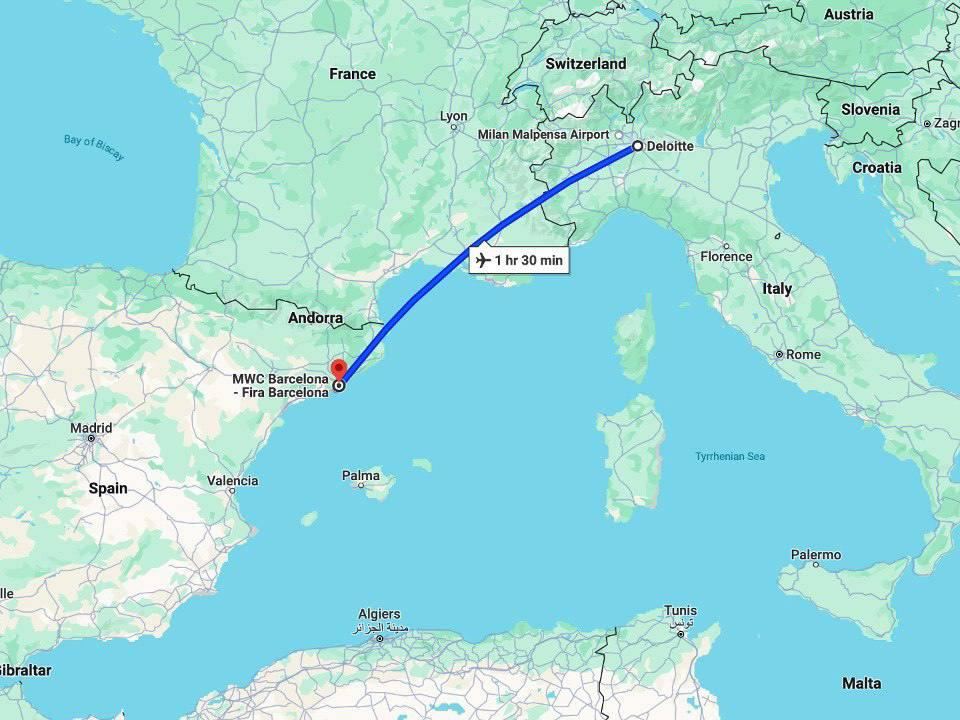
26-29 February 2024, Fira de Barcelona Gran Via. I spent four days at MWC Barcelona, the biggest event in the world for mobile devices and the mobile communications industry, together with two colleagues from the Deloitte Digital mobile team.
Four days walking the halls of the Fira: keynotes and product launches, stands the size of a building, concept devices that will never ship, and a lot of hands-on time with hardware you normally only see in a video. Below is what stayed with me, with the photos and the videos I shot.
101K+attendees
2,700+exhibitors and partners
205countries and territories
725km from the Milano office
- MWC24
- Android
- Gemini
- Foldables
- XR
- Robotics
- EV
- Barcelona
A trade show that moved four times
From a conference room in Brussels to the largest halls in Barcelona, in five moves.
- 1987 Brussels Pan Europe Digital Cellular Radio, the first edition
- 1990 Rome It becomes the GSM World Congress
- 1996 Cannes Ten consecutive years; 3GSM World Congress from 2003
- 2006 Barcelona, Fira Montjuïc The move to Spain
- 2013 Barcelona, Fira Gran Via Still its home today — where MWC24 was held
Getting there
725 km from Via Tortona 25 in Milano to the Fira, and then four days of queues, badges, escalators and 30,000 steps a day.
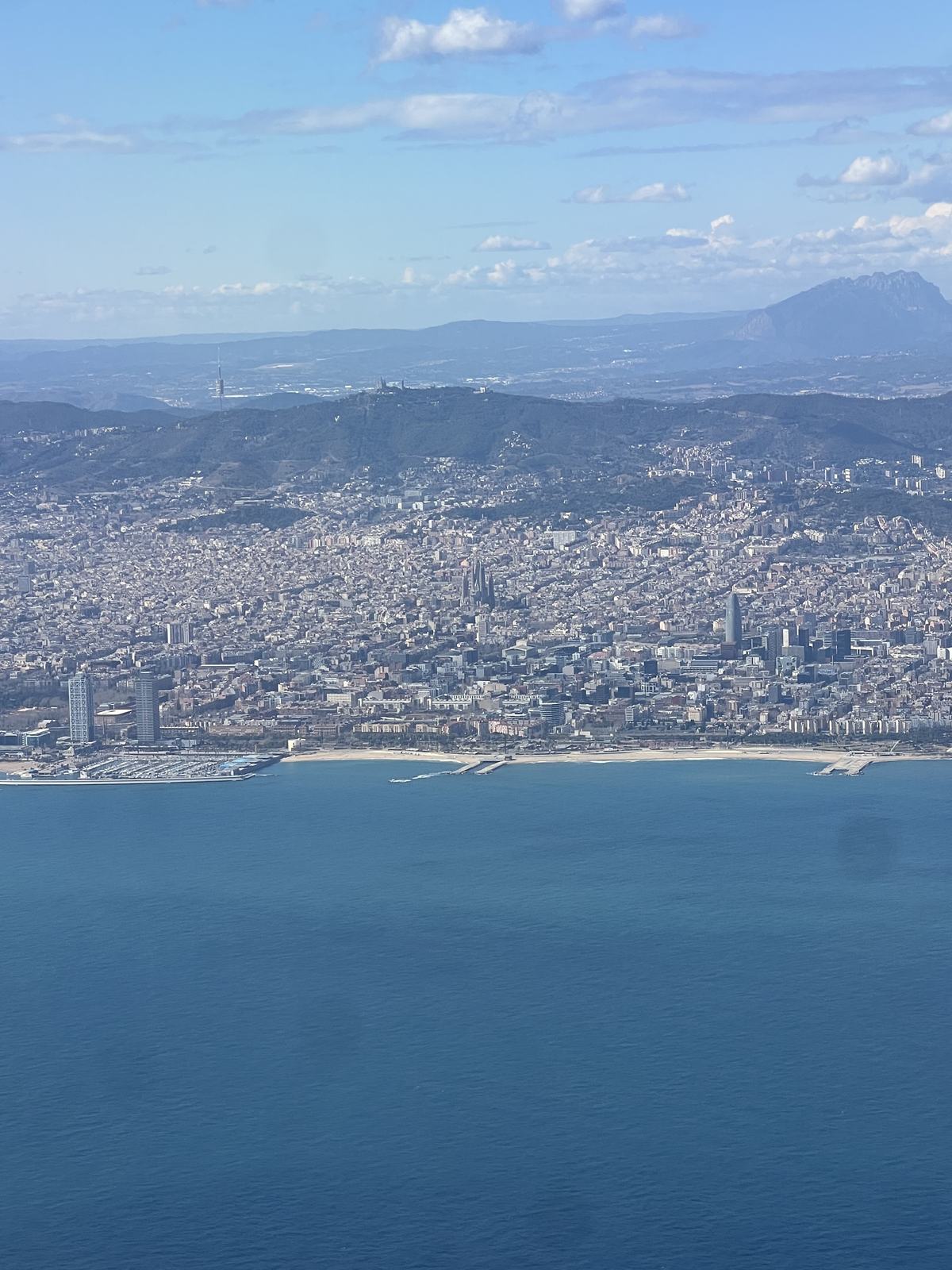
Barcelona from the plane
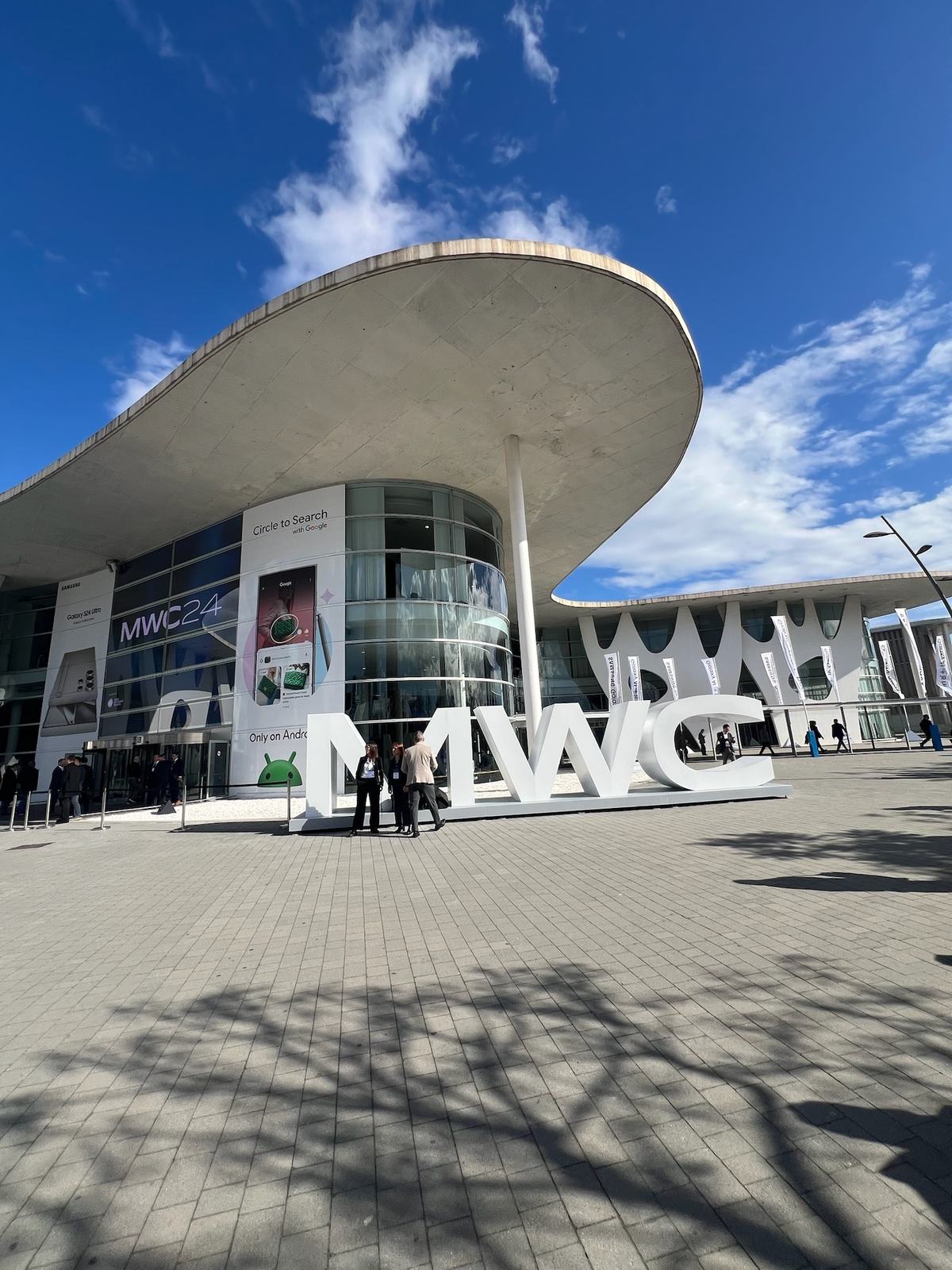
Fira Gran Via, day one
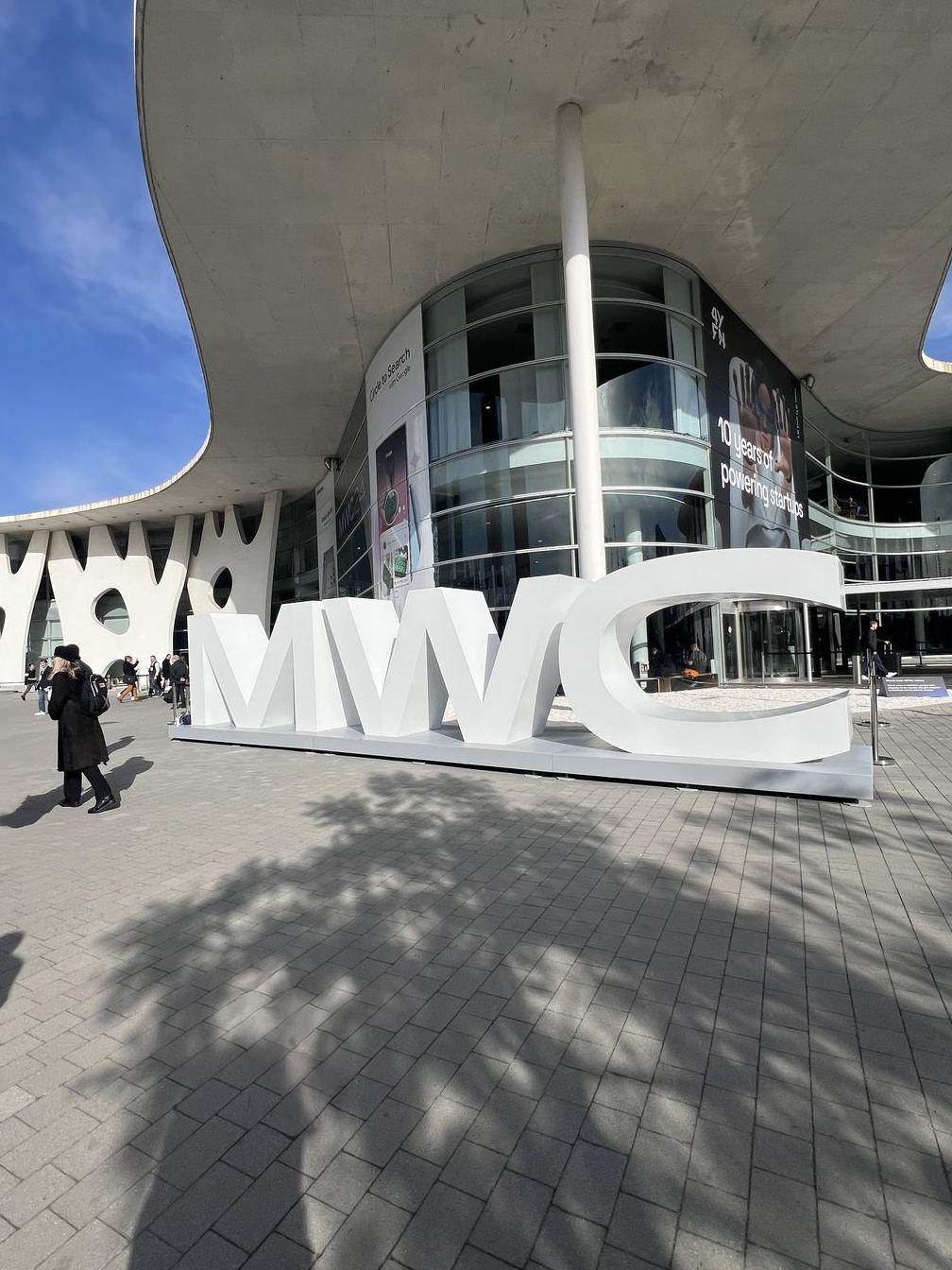
The MWC letters, the compulsory photo
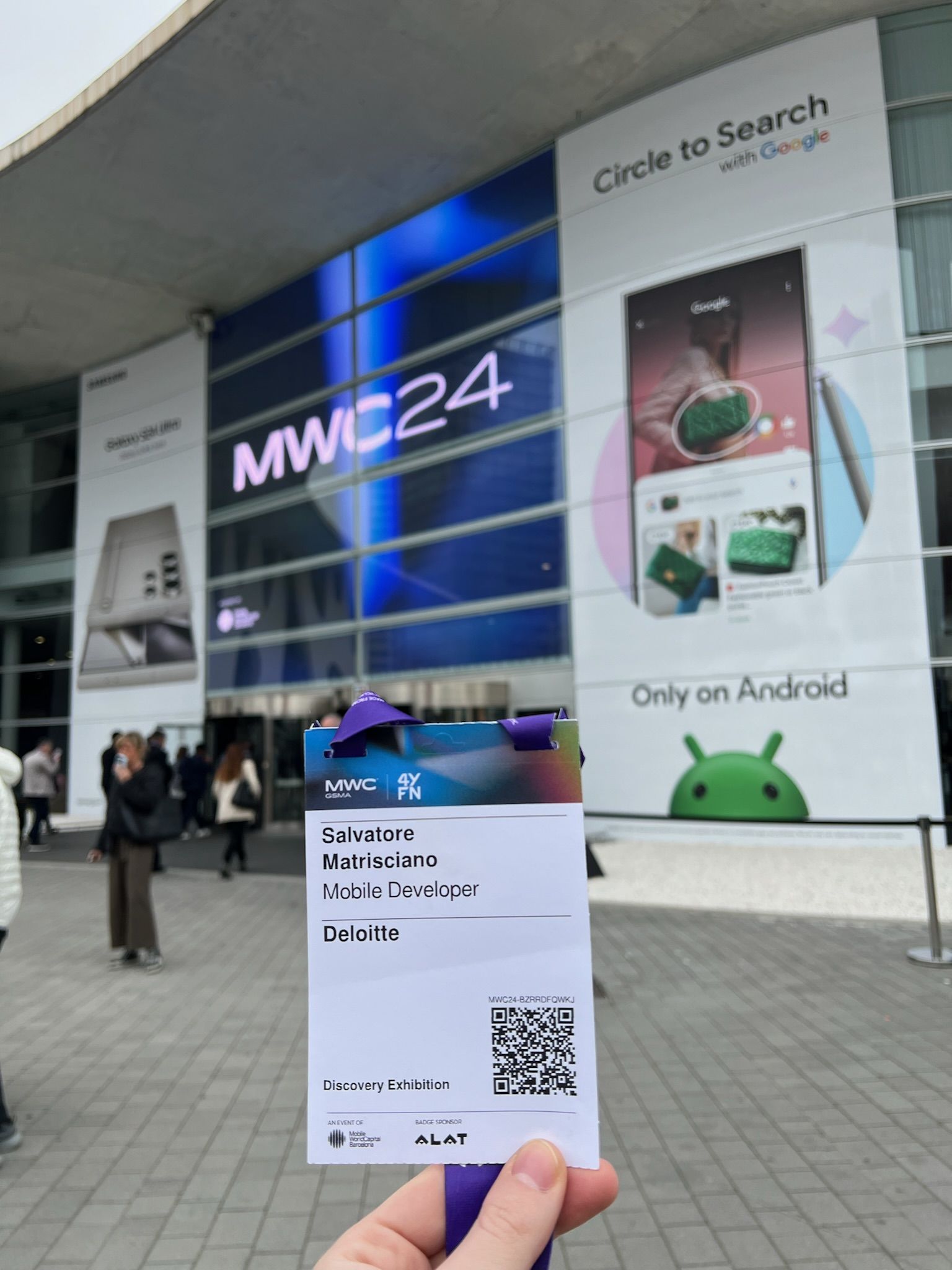
Badge in hand, four days to go
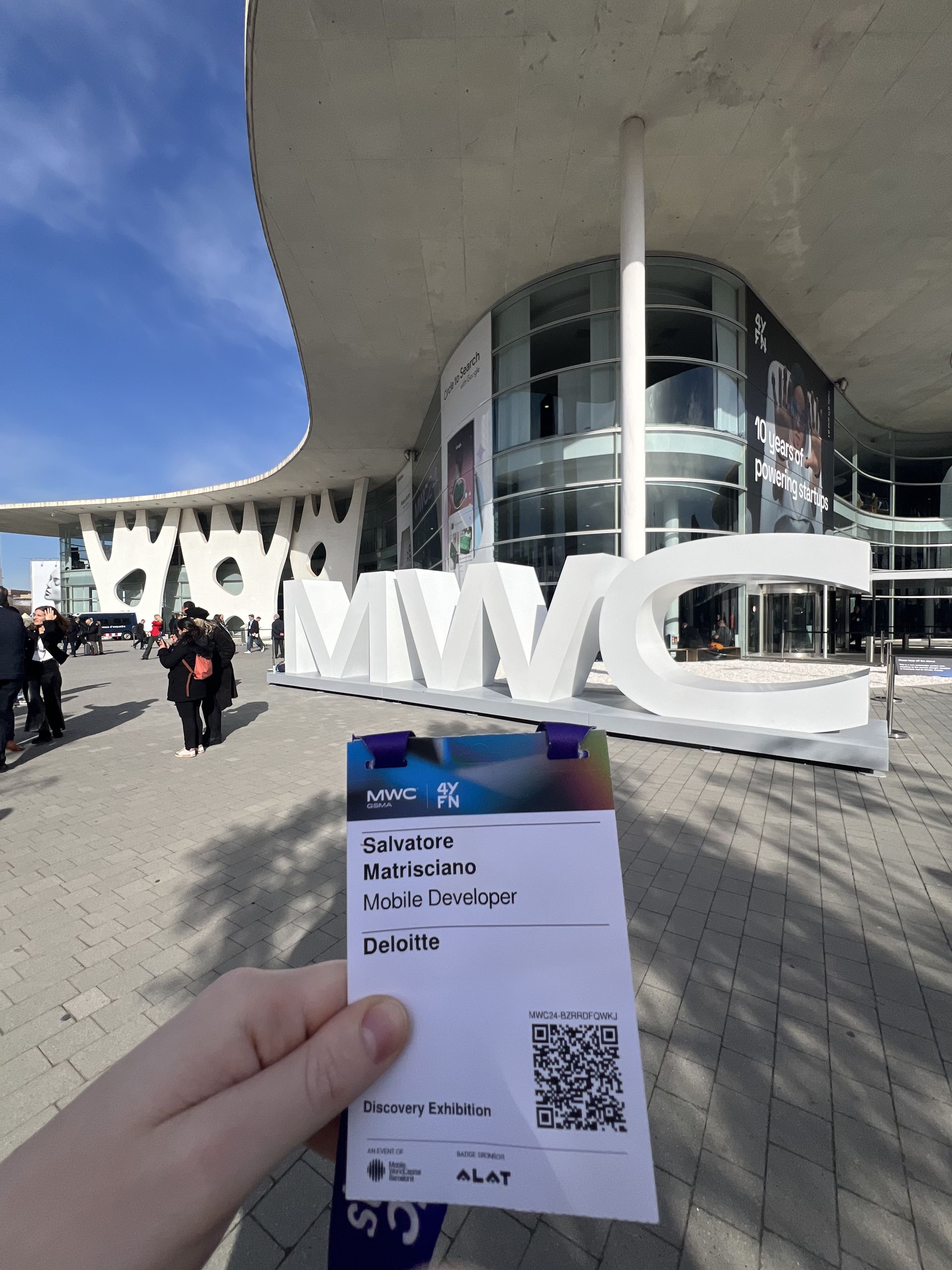
The badge, and the letters behind it
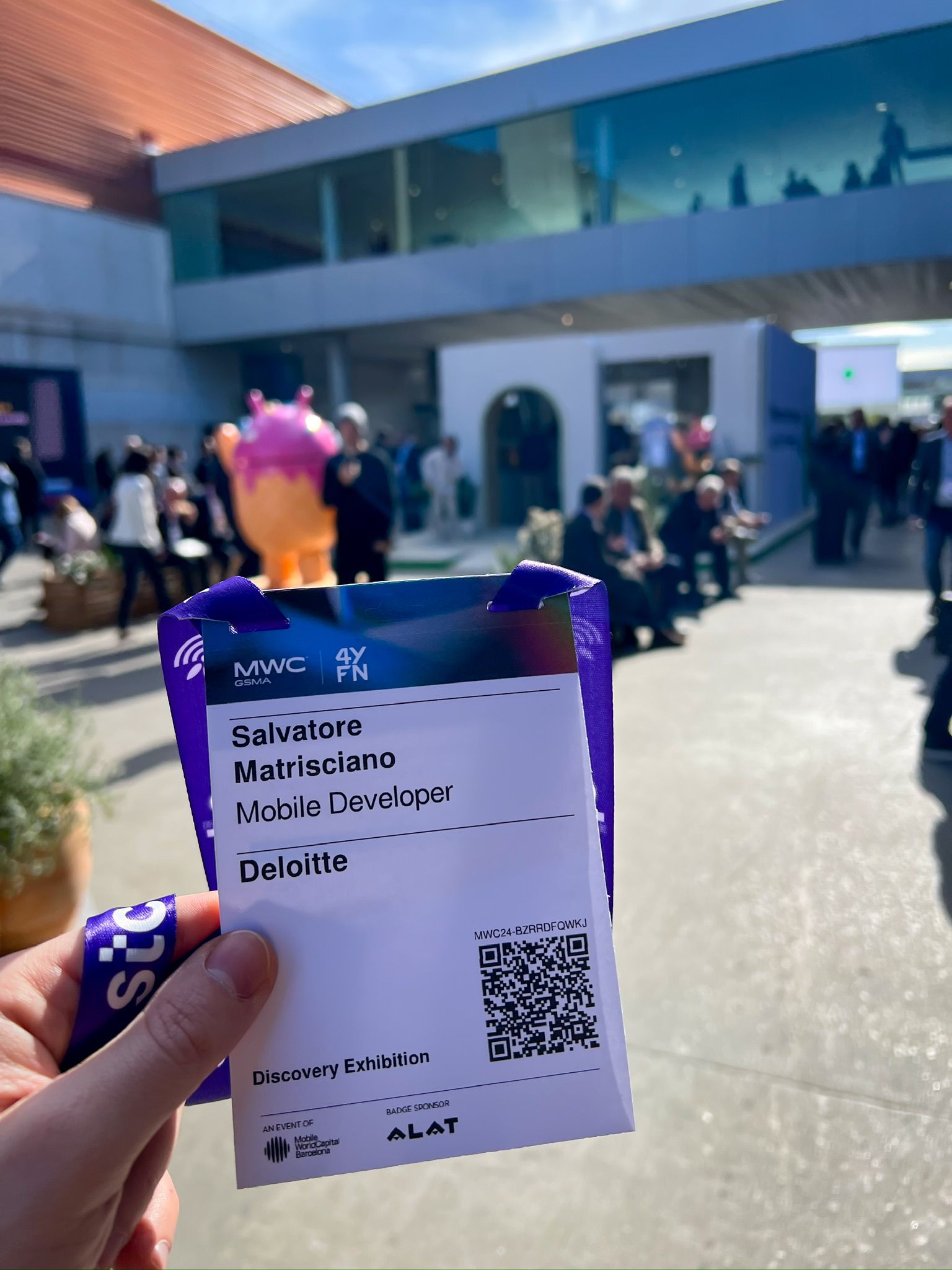
Badge, with an Android in a cone behind
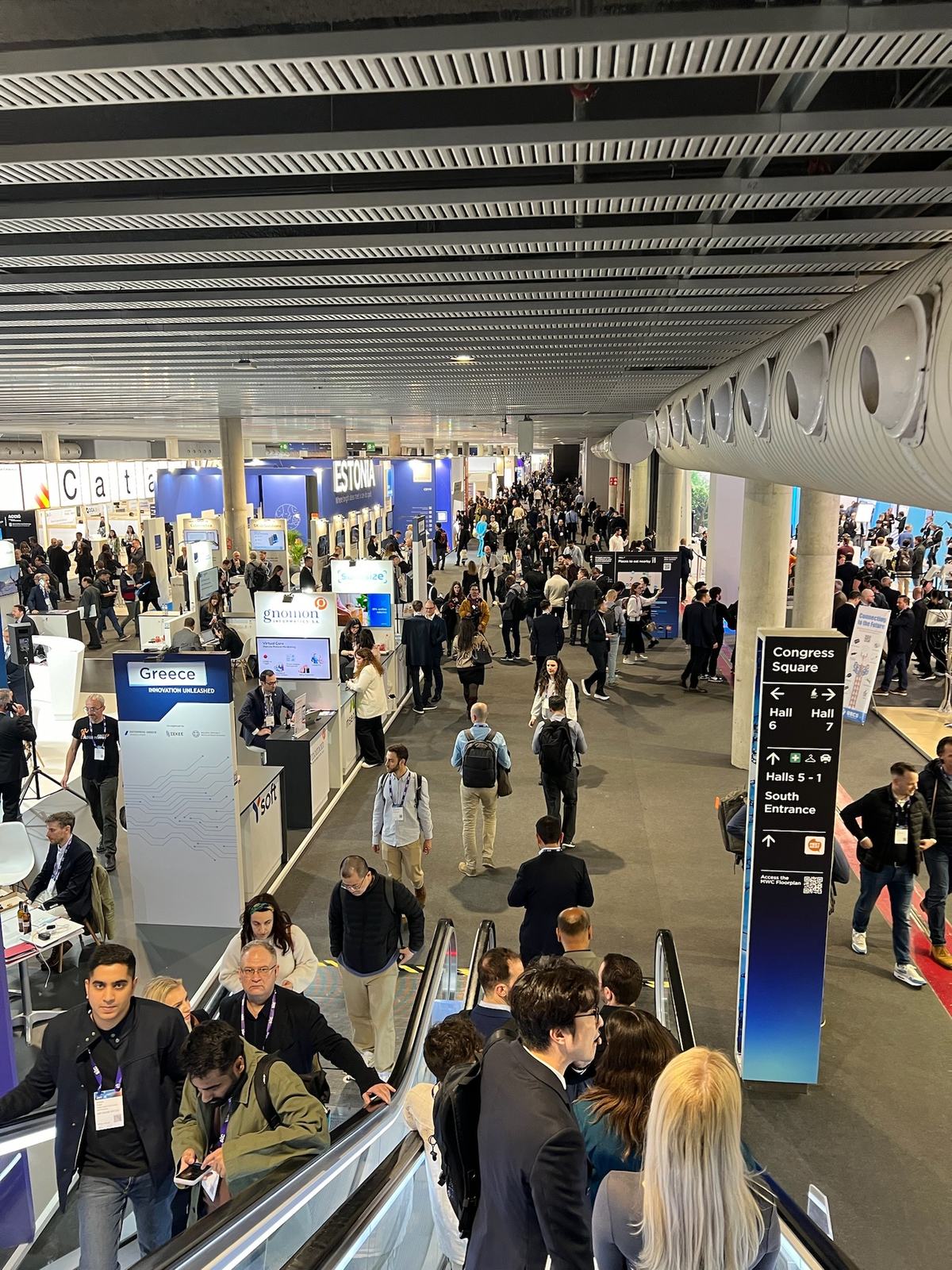
Between the halls, 101,000 people in four days
Android Avenue and the pin hunt
Android did not take a stand: it built an open-air avenue outside the halls, with its own robot statues, a café and a row of demo stations. The two features everyone queued for were Circle to Search — searching straight from whatever is on screen, without leaving the app — and Best Take on the Pixel 8, which picks everyone's best expression out of a burst of group photos. The Pixel Fold ran dual-screen Interpreter mode, showing the live translation on both sides of the phone so a conversation stays natural.
Google also ran a pin hunt across the fair: a map marking the stands of the participating manufacturers, a short demo of the newest hardware at each one, and an Android pin as a reward for every stop. Collect them all and you got a prize at the Android booth at the end of the day. Real-life gamification, and a very effective way to send thousands of people down a pre-determined route through the halls.
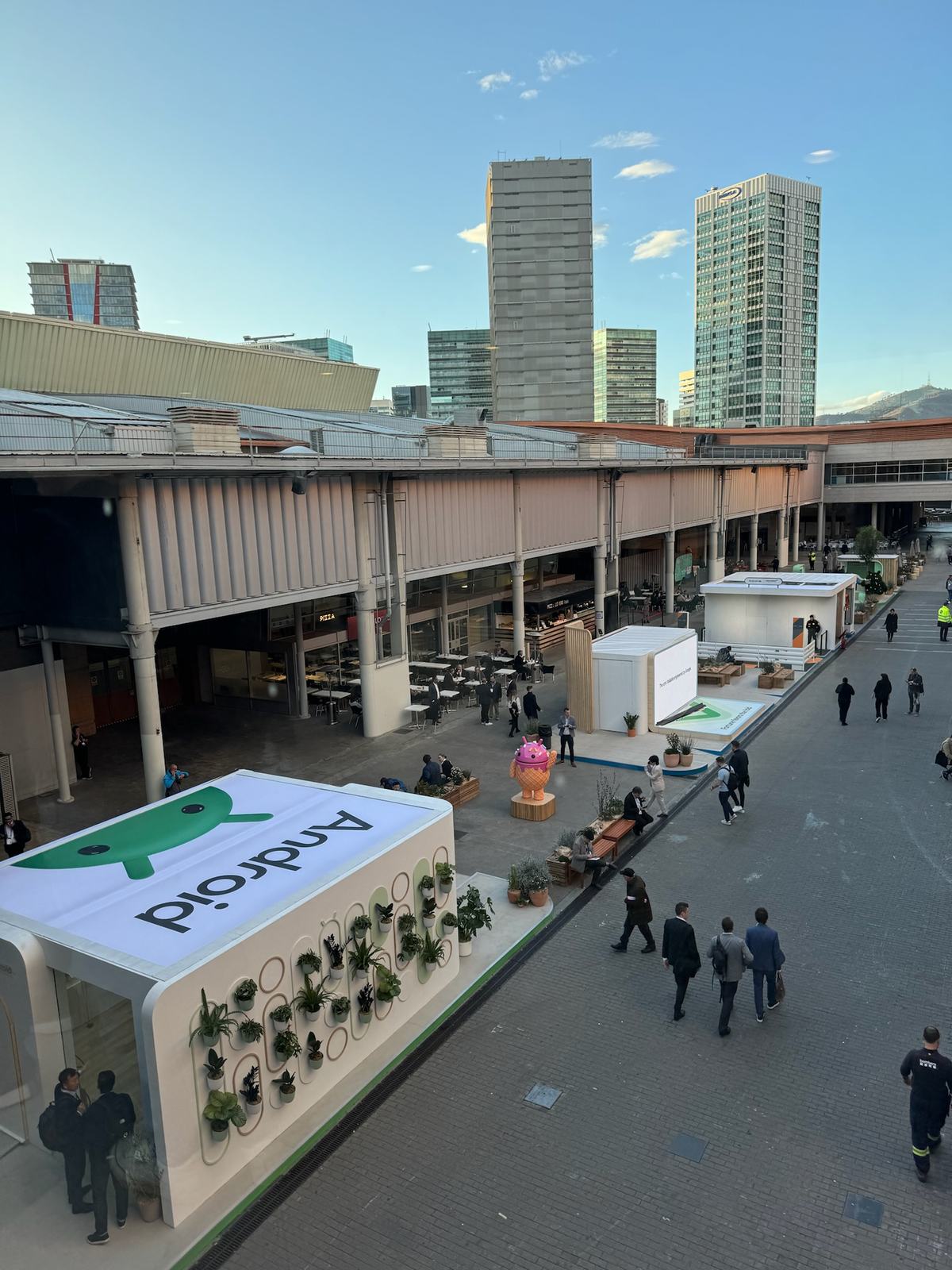
Android Avenue, outdoors between the halls
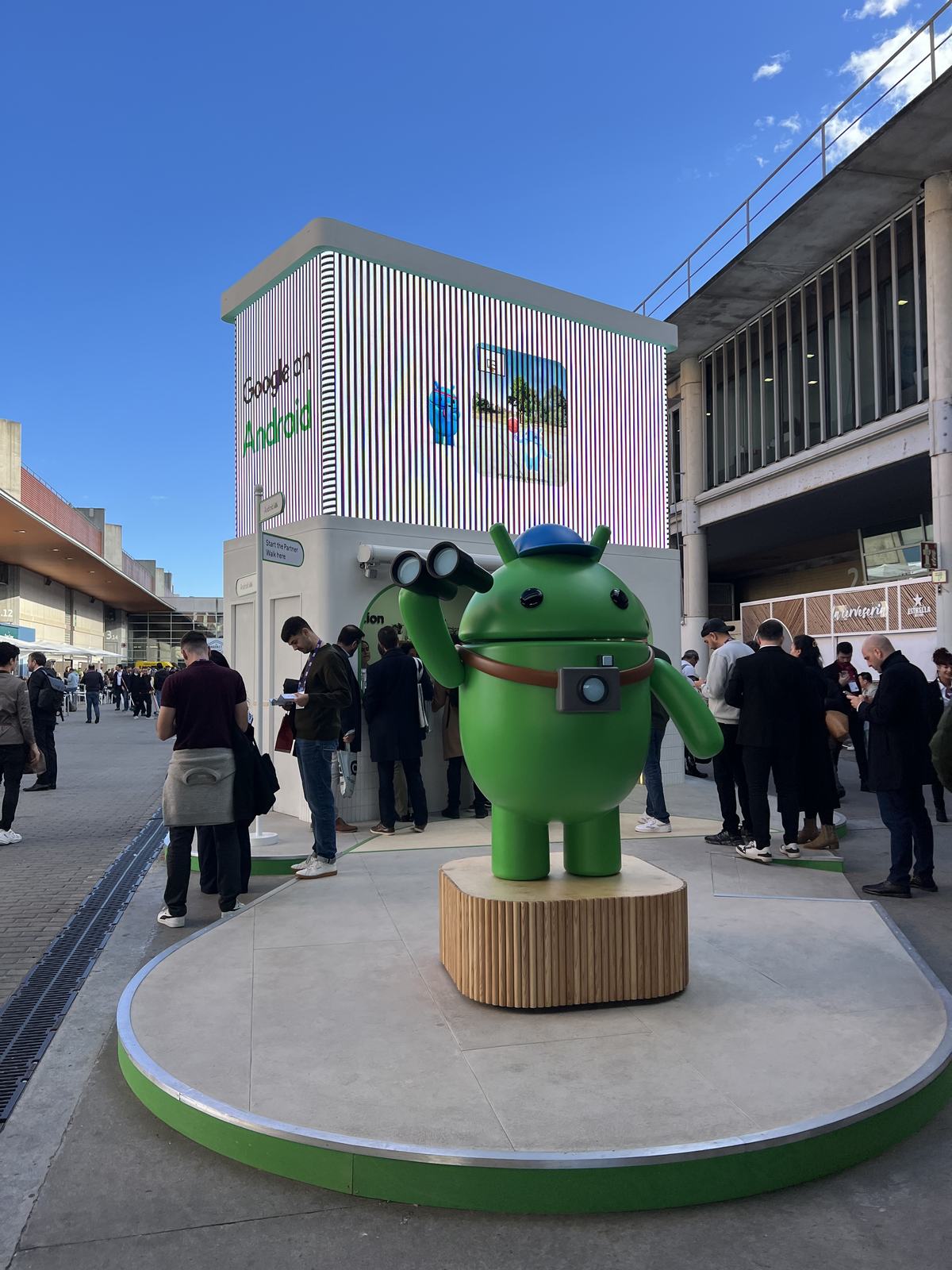
The Android robot at the entrance
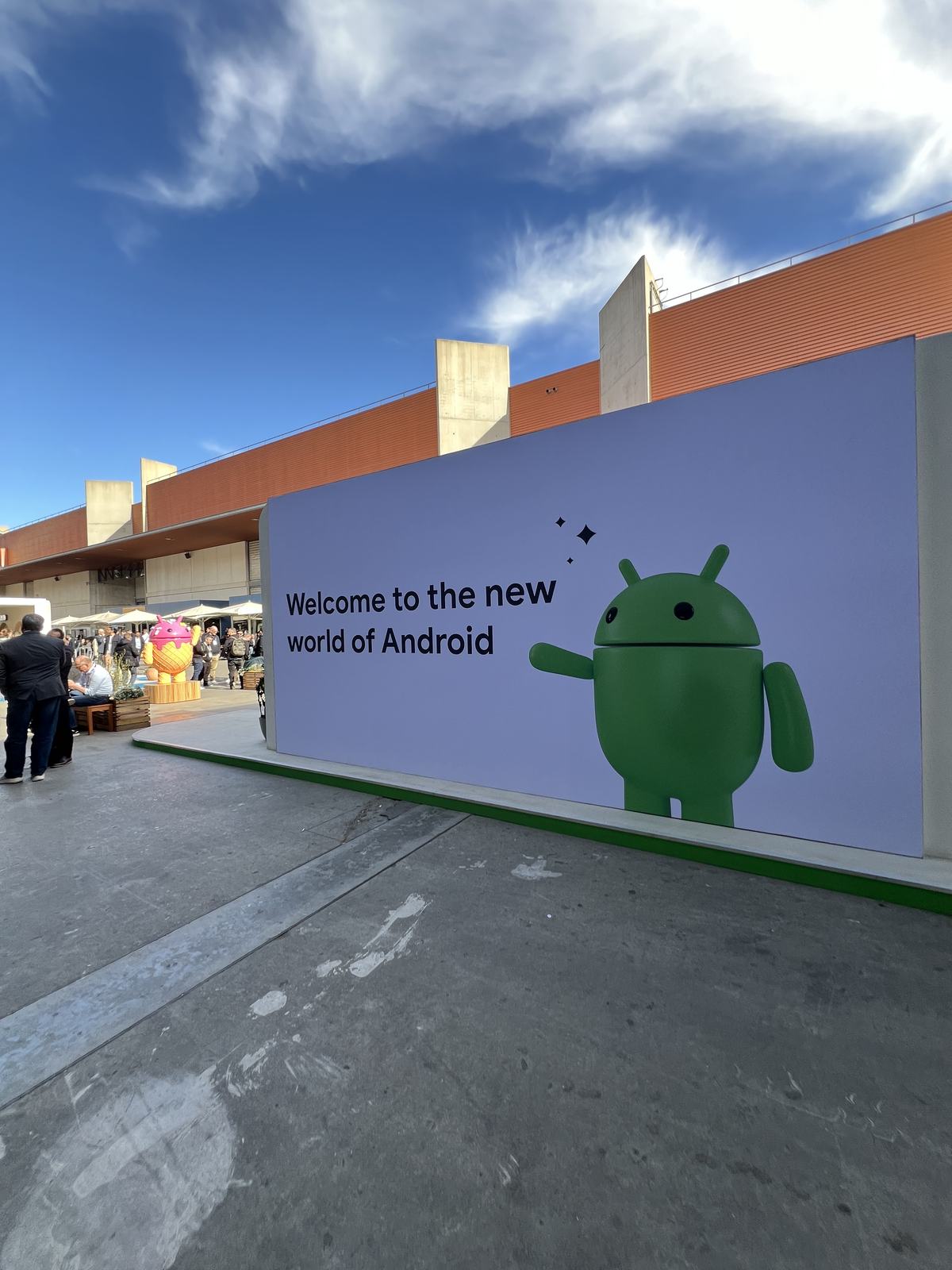
"Welcome to the new world of Android"
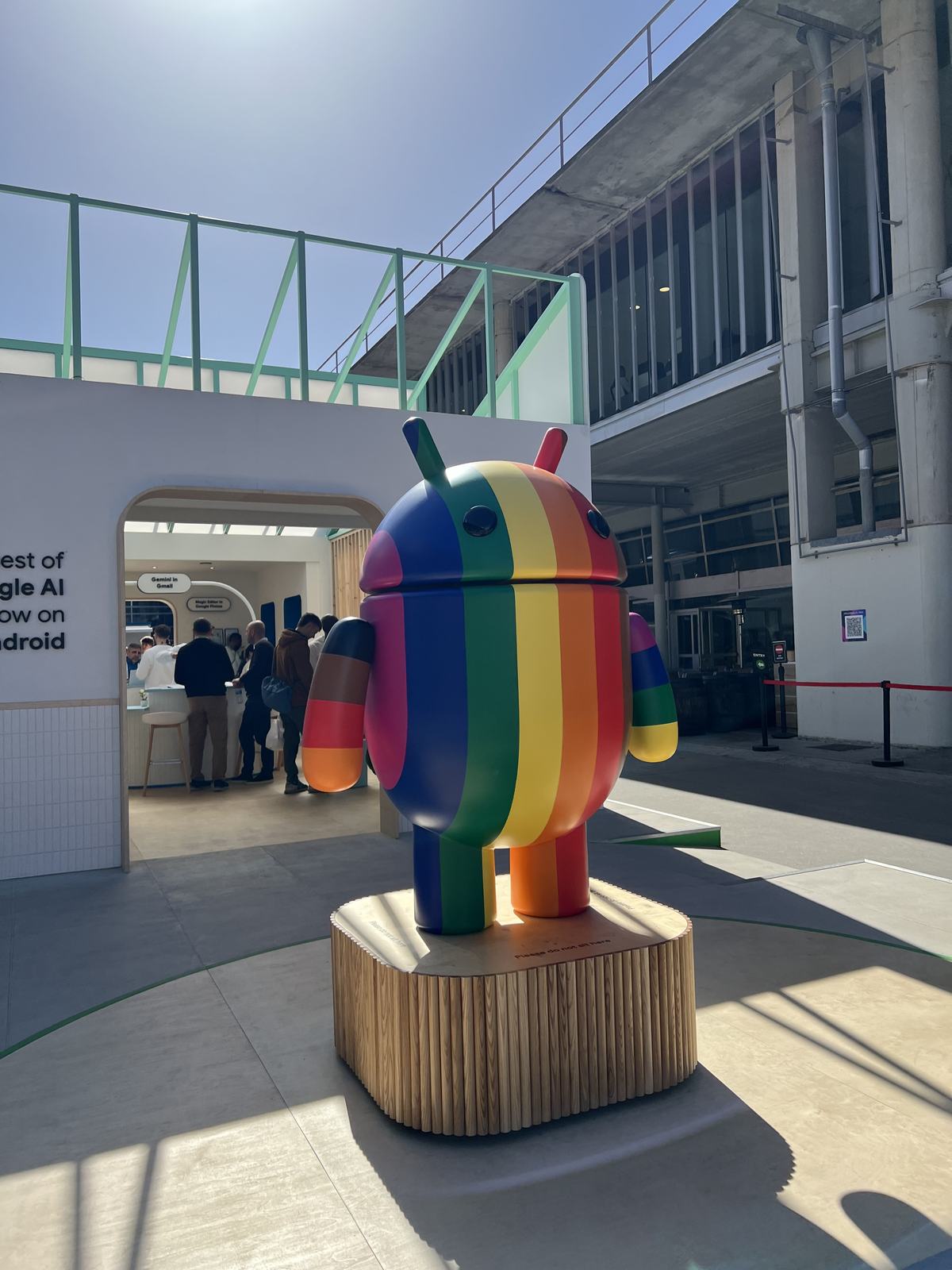
The rainbow Android
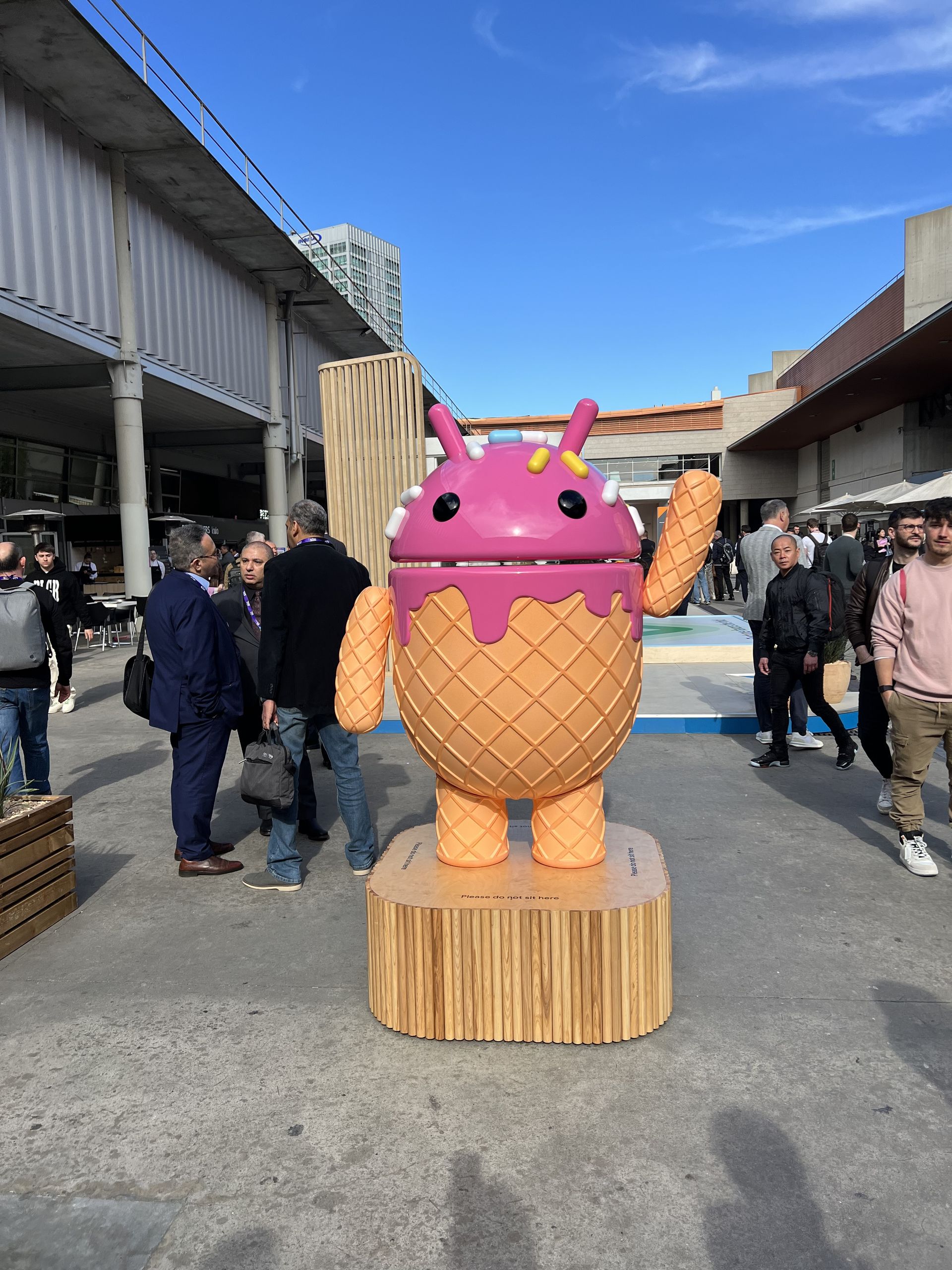
And the one served in a cone
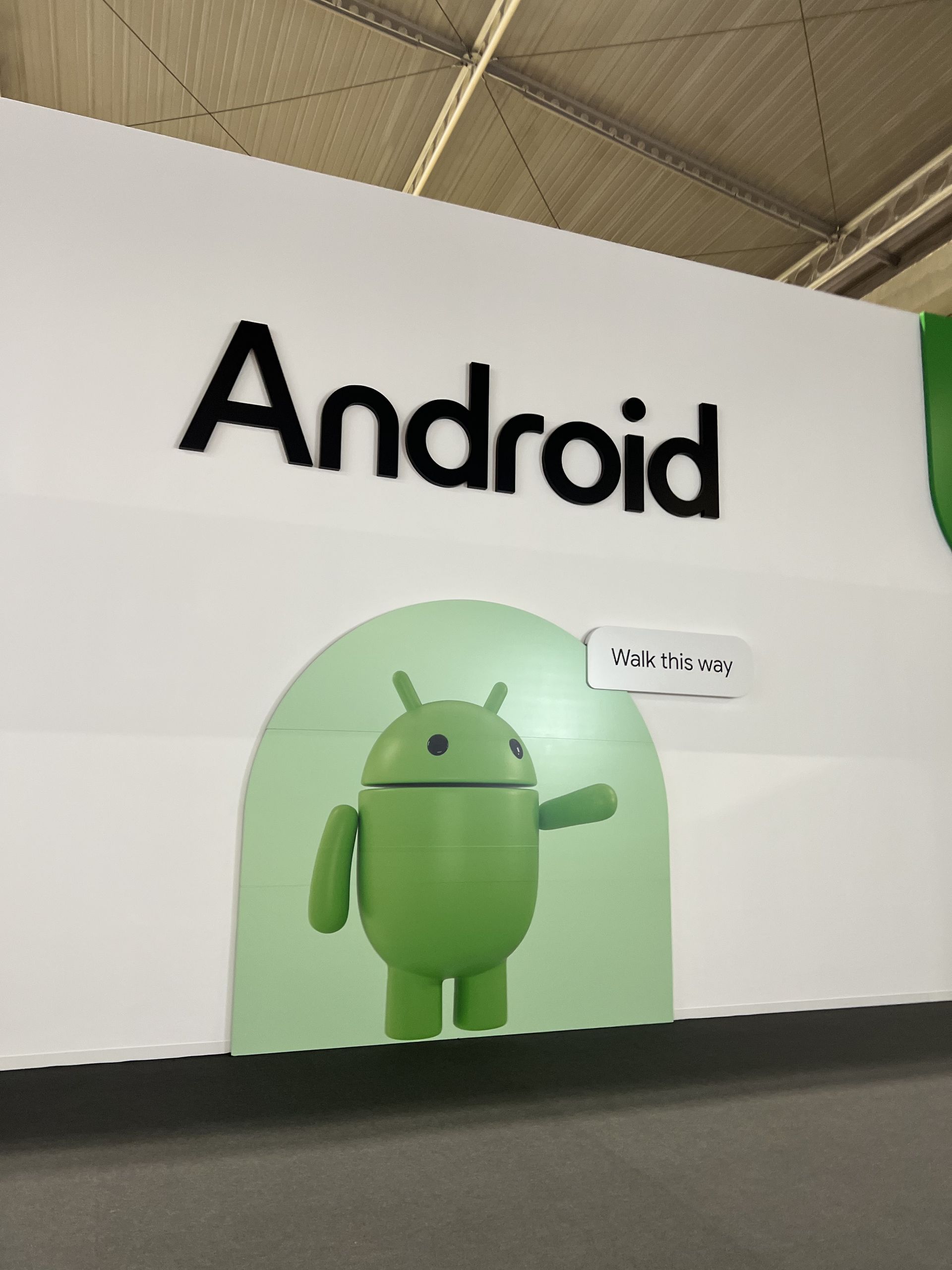
"Walk this way"
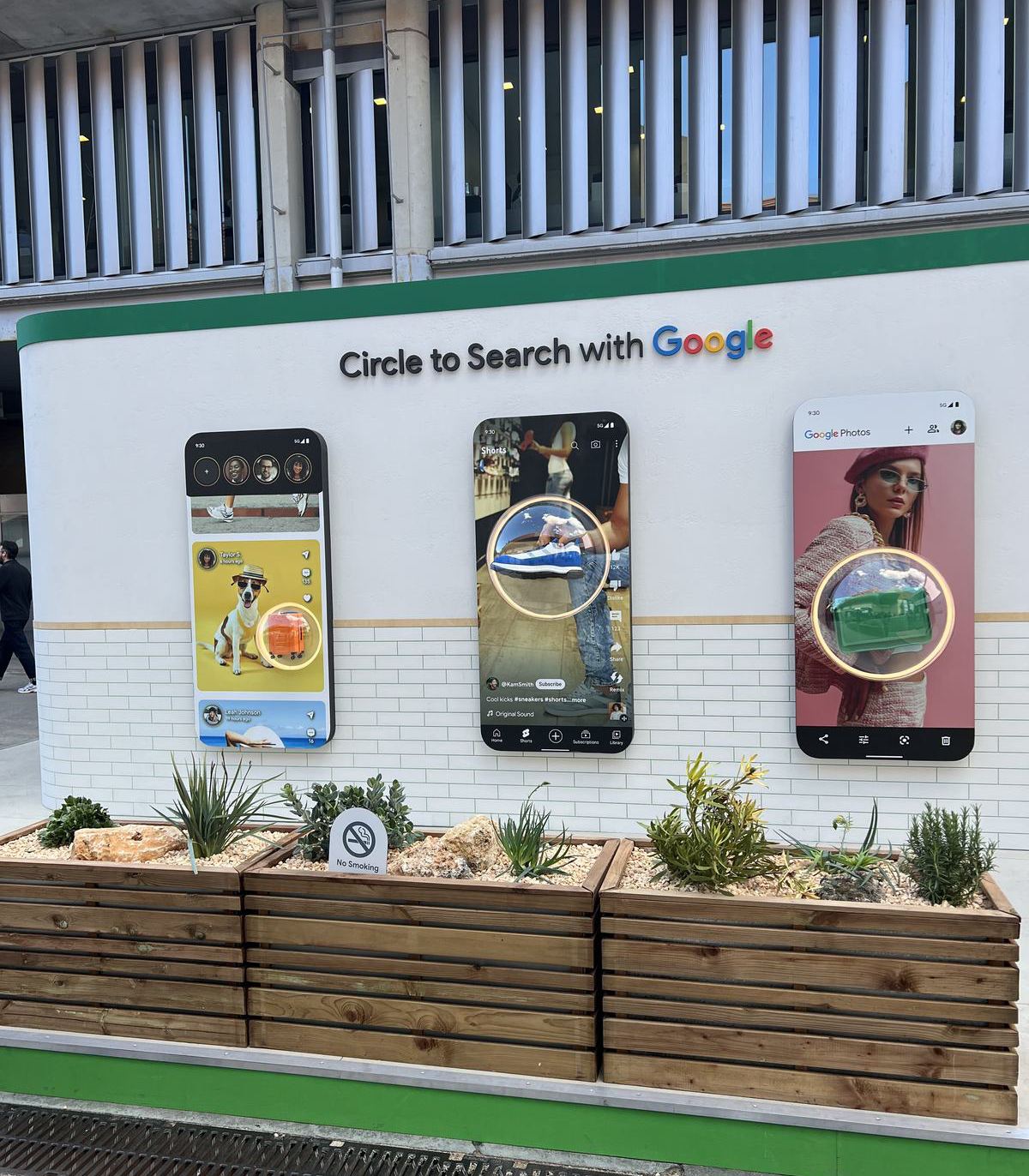
The Circle to Search demo wall
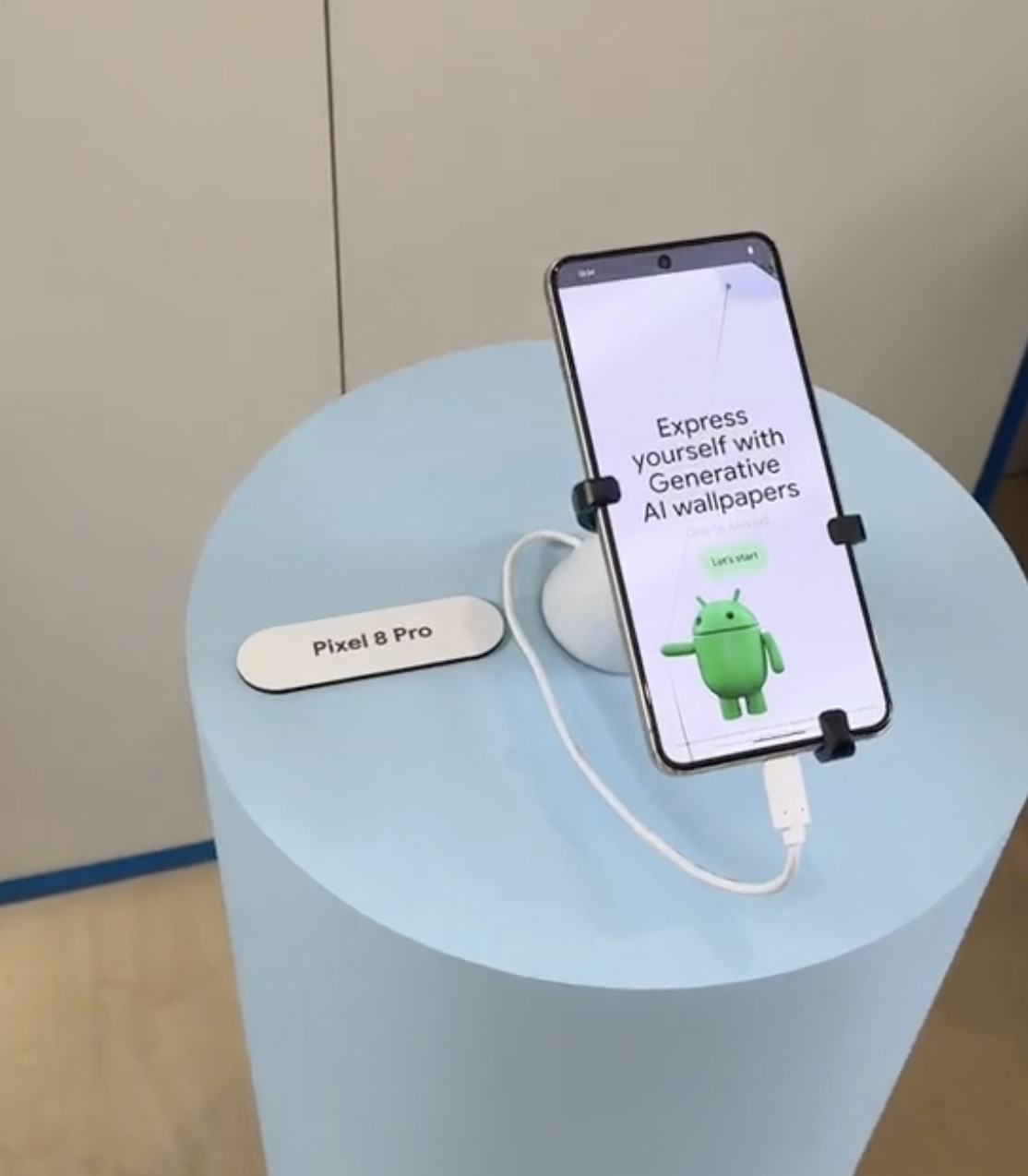
Generative AI wallpapers on a Pixel 8 Pro
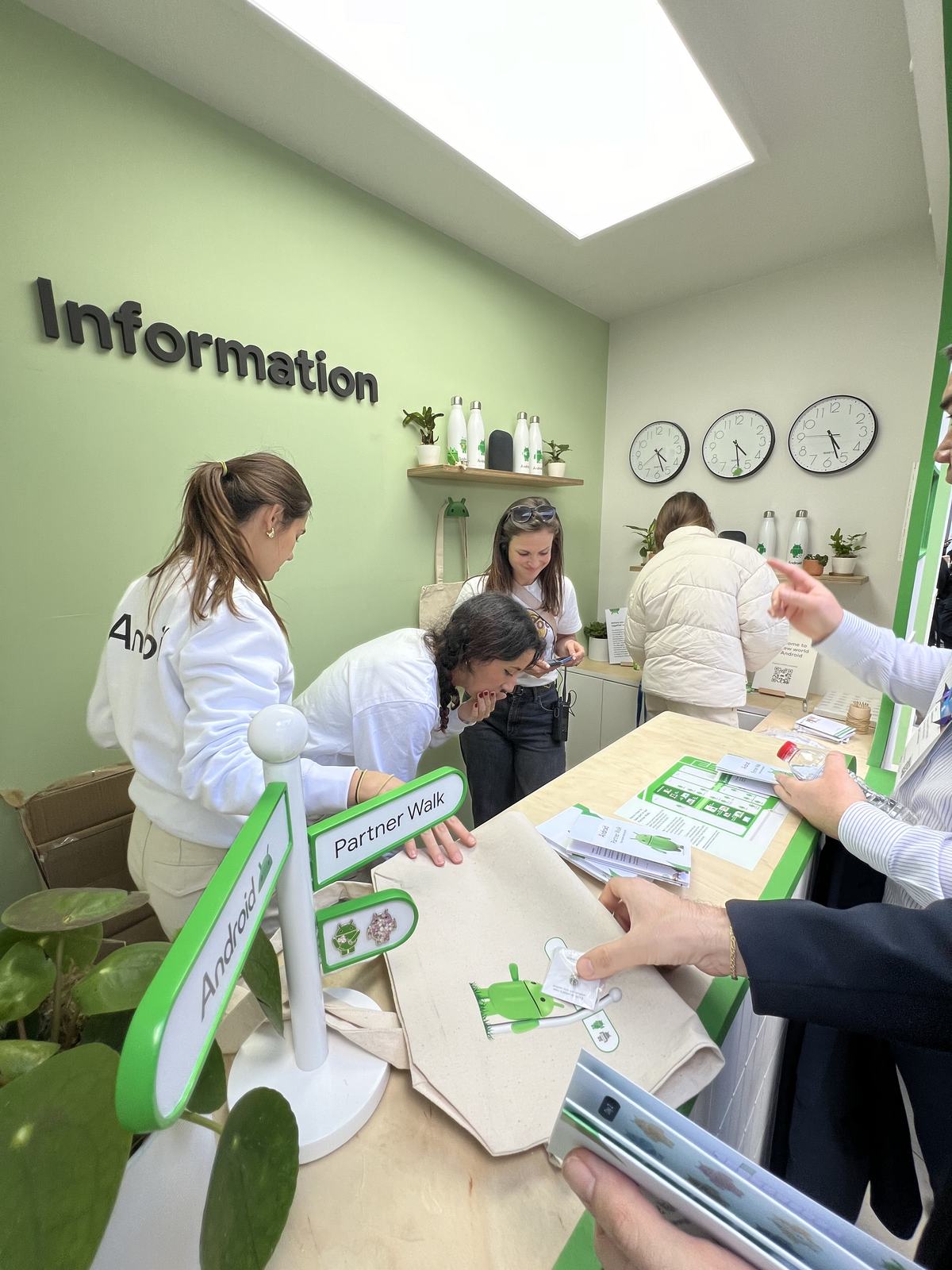
The information desk, where the pin hunt starts
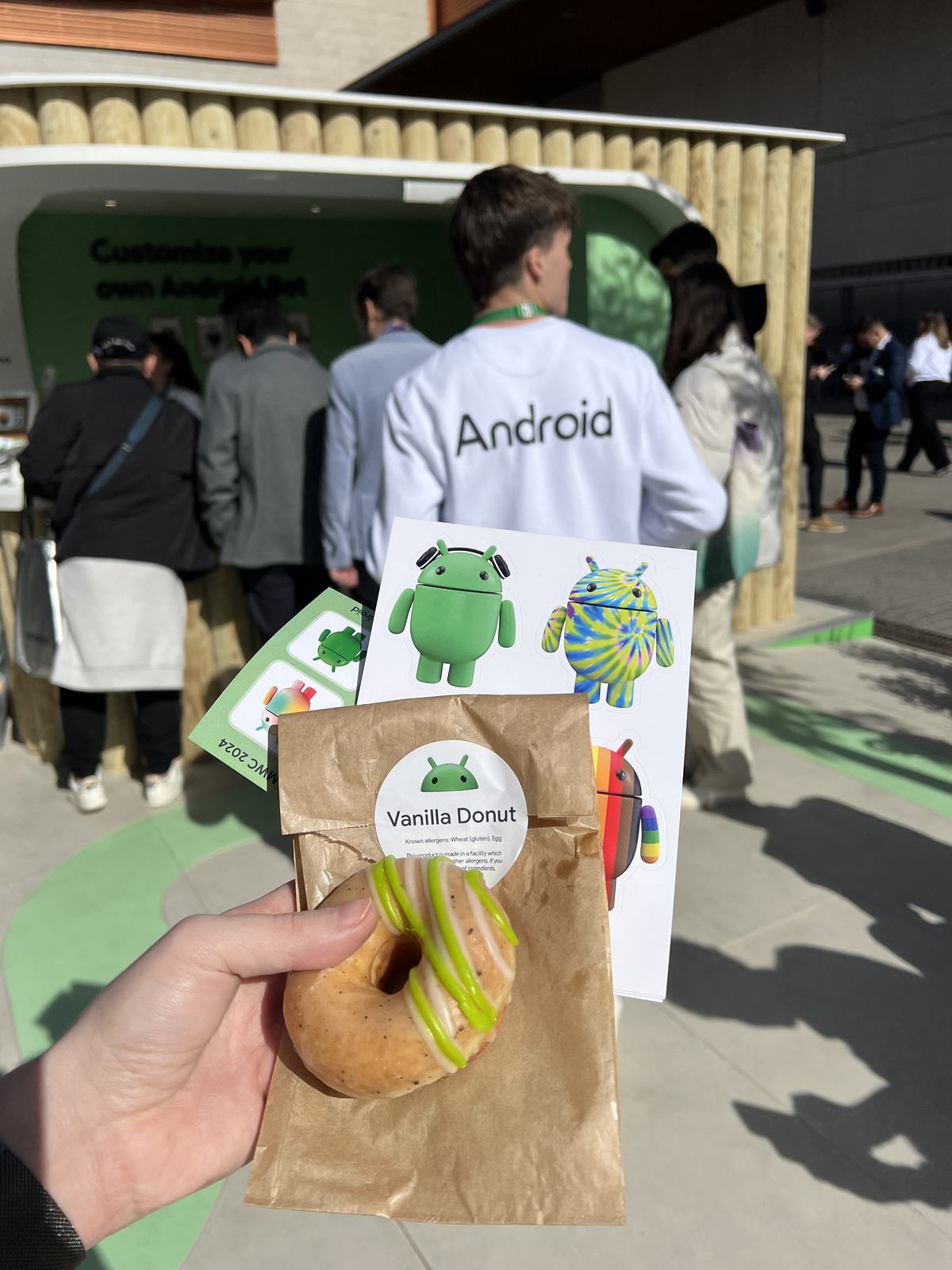
Vanilla donut, Android version numbering rules
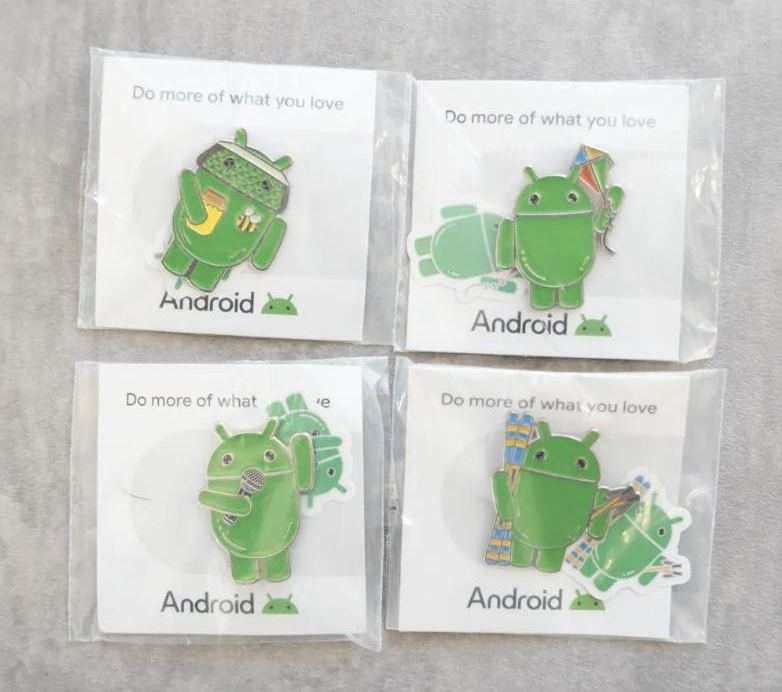
Pins, one stand at a time
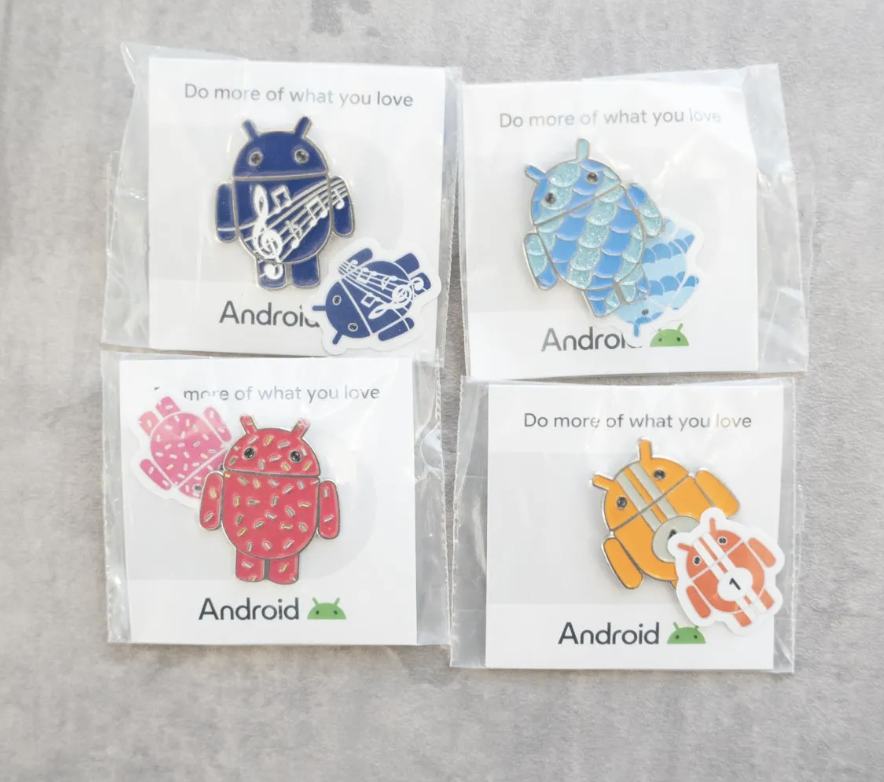
The rest of the collection
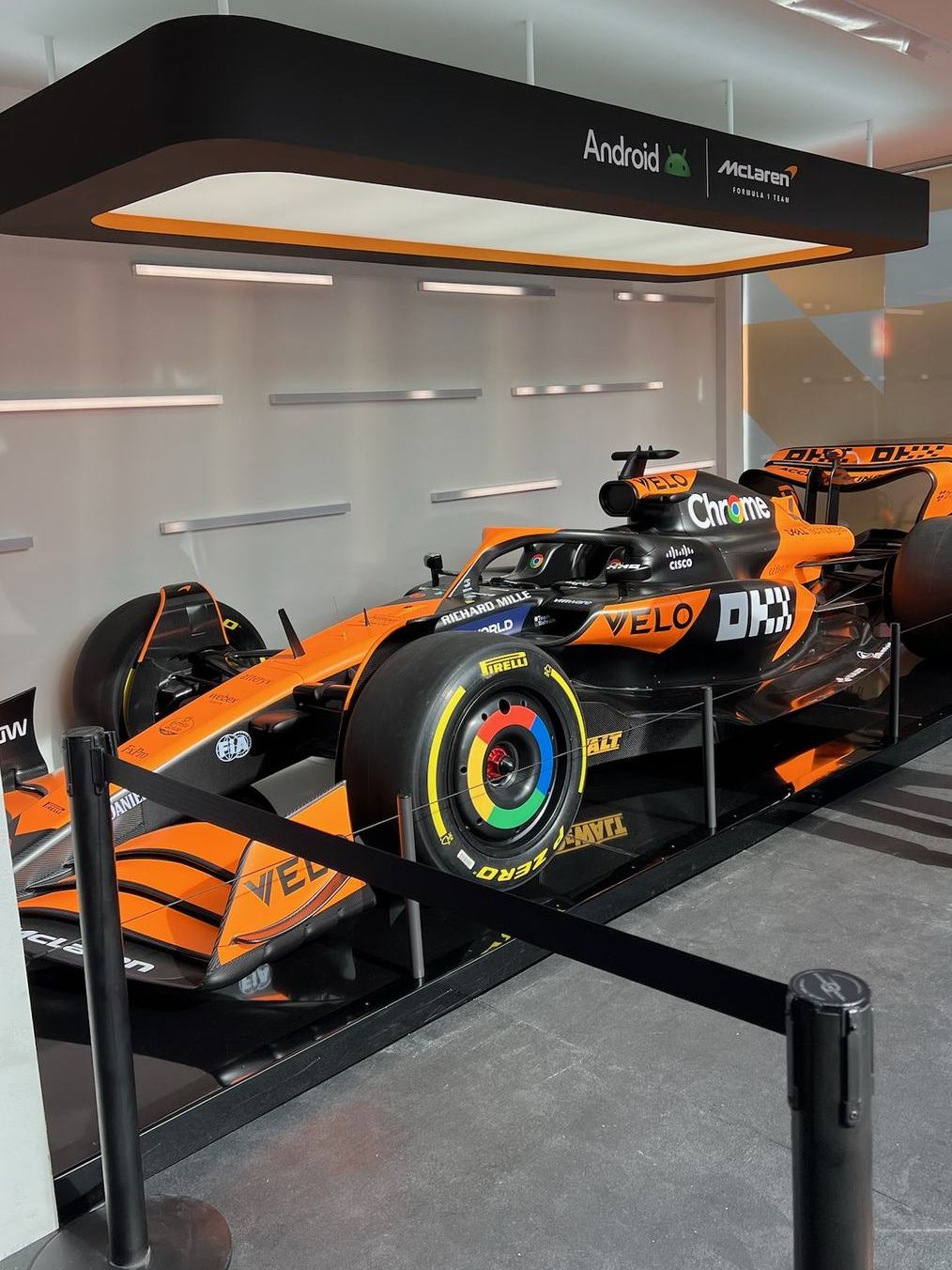
McLaren's F1 car: Galaxy phones, watches and tablets trackside
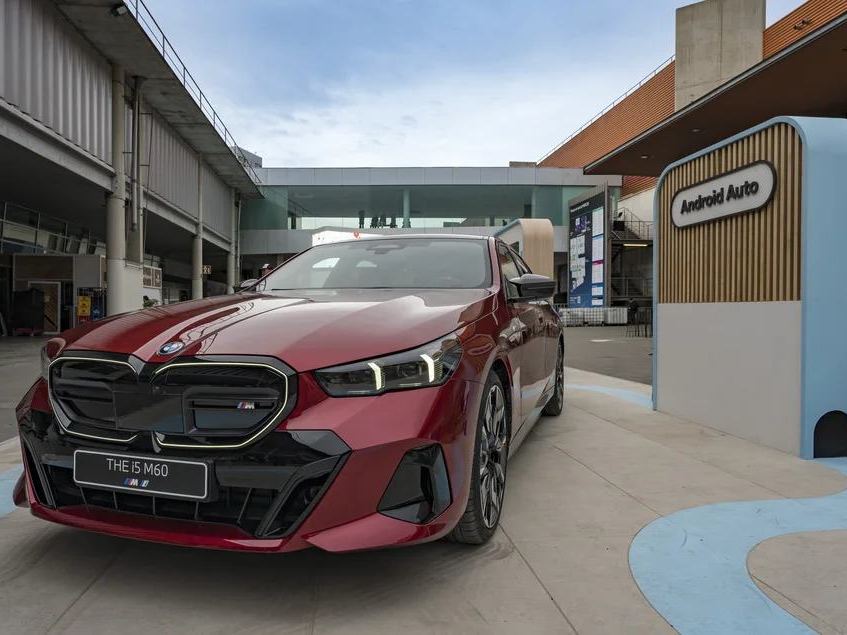
BMW i5 M60: Android Auto with AI message summaries
Gemini, in everything
The other half of Google's message was Gemini, spread across the whole ecosystem rather than announced as a single product: draft-and-plan inside Google Messages, Android Auto summarising incoming messages out loud so drivers keep their eyes on the road, Lookout describing images and text for low-vision users, Google Lens inside Maps, Wallet passes and transit directions on Wear OS. And the model itself in three sizes — Ultra, Pro and Nano, the on-device one — which is the part that ended up mattering most to me later on.
Gemini: Ultra, Pro and Nano
Xiaomi: Human × Car × Home
Xiaomi turned its stand into an ecosystem demo: the global launch of the Xiaomi 14 series, the smart-home wall, and in the middle of it all the SU7, the company's first electric car, with HyperOS as the layer meant to hold phone, car, tablet, watch and vacuum cleaner together. A phone maker showing a sedan on a turntable was, in one image, the whole point of MWC 2024.
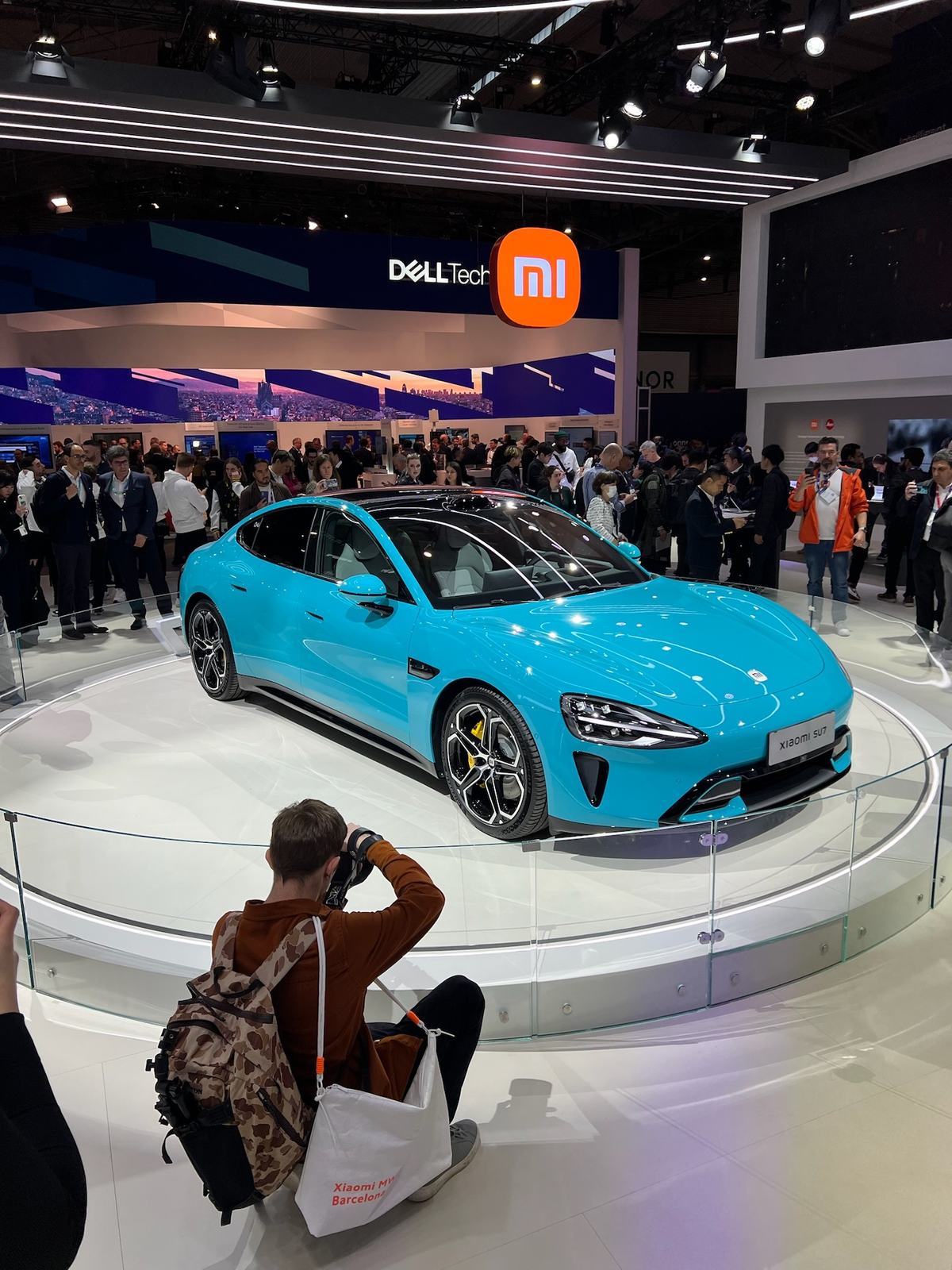
The Xiaomi SU7, Xiaomi's first EV
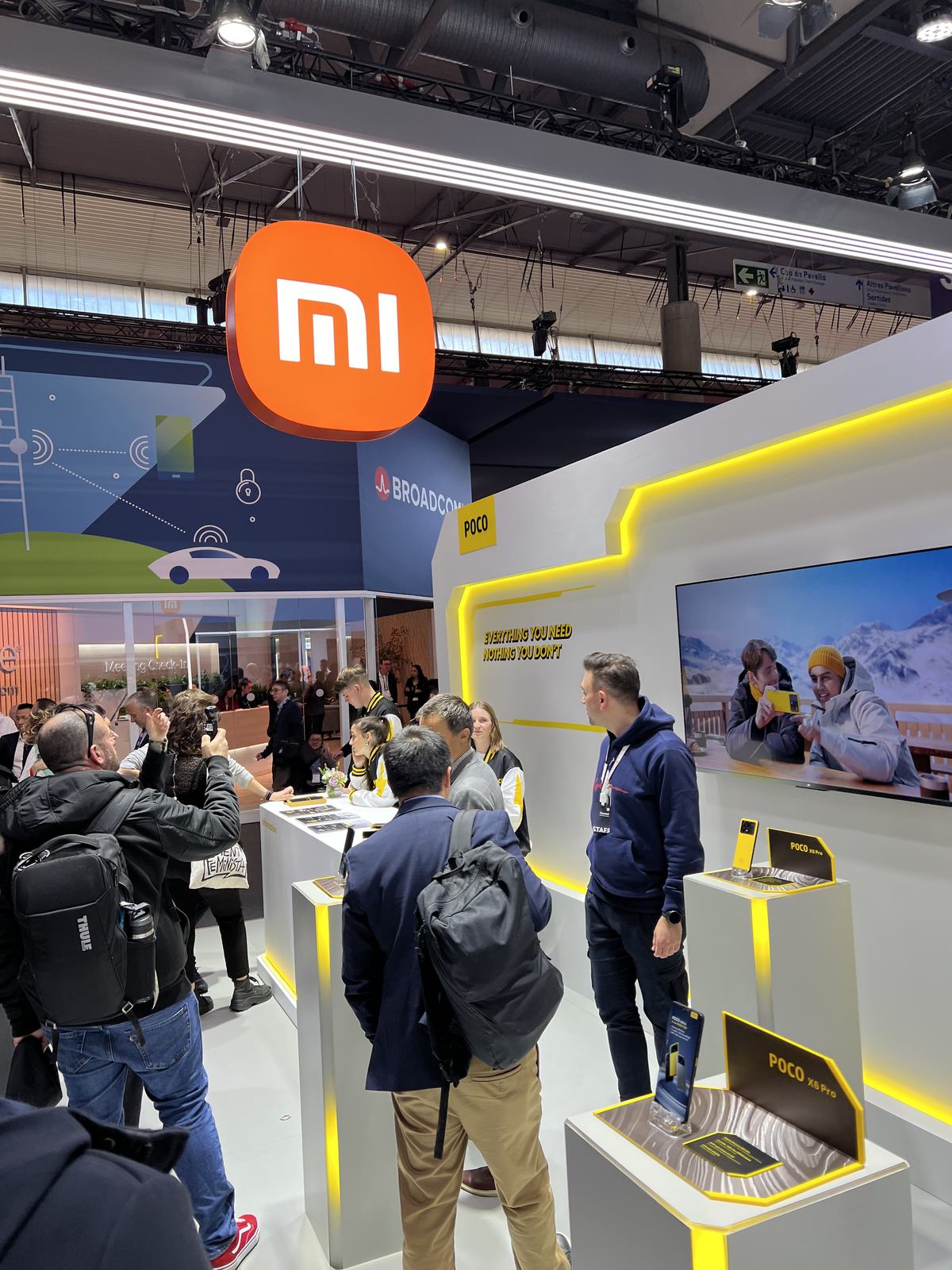
The Xiaomi stand
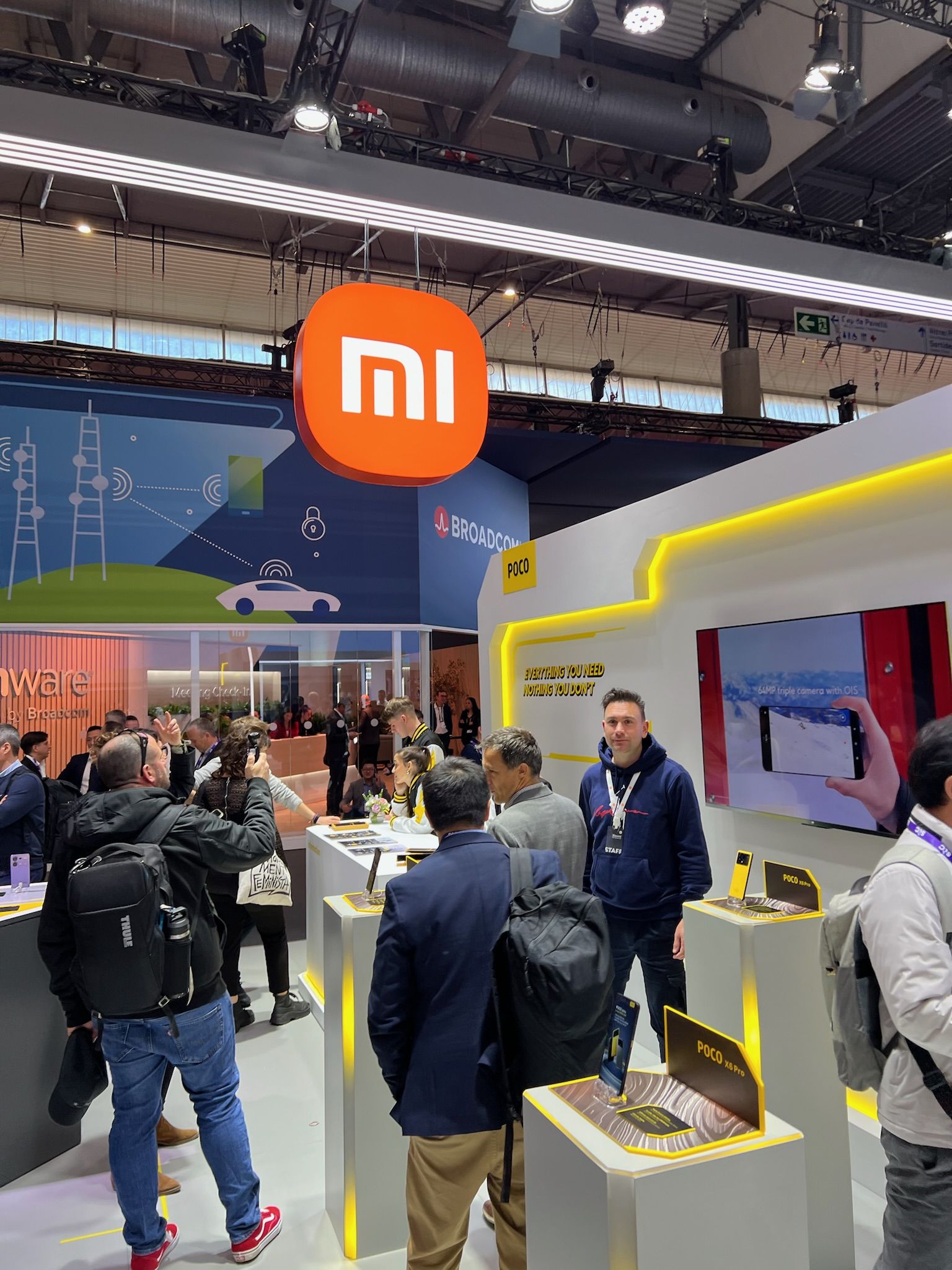
Under the logo, the POCO corner
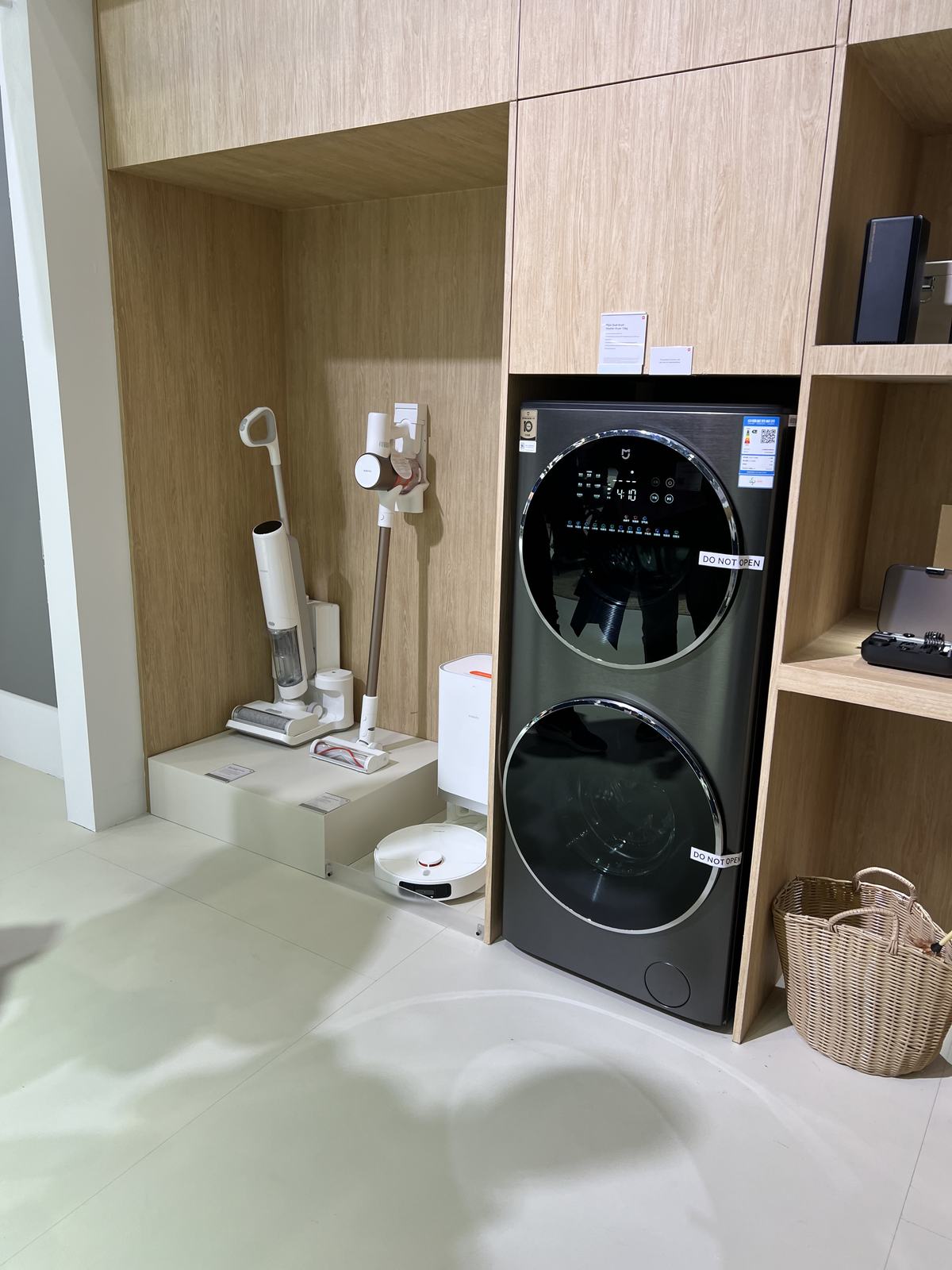
"Home": appliances on HyperOS
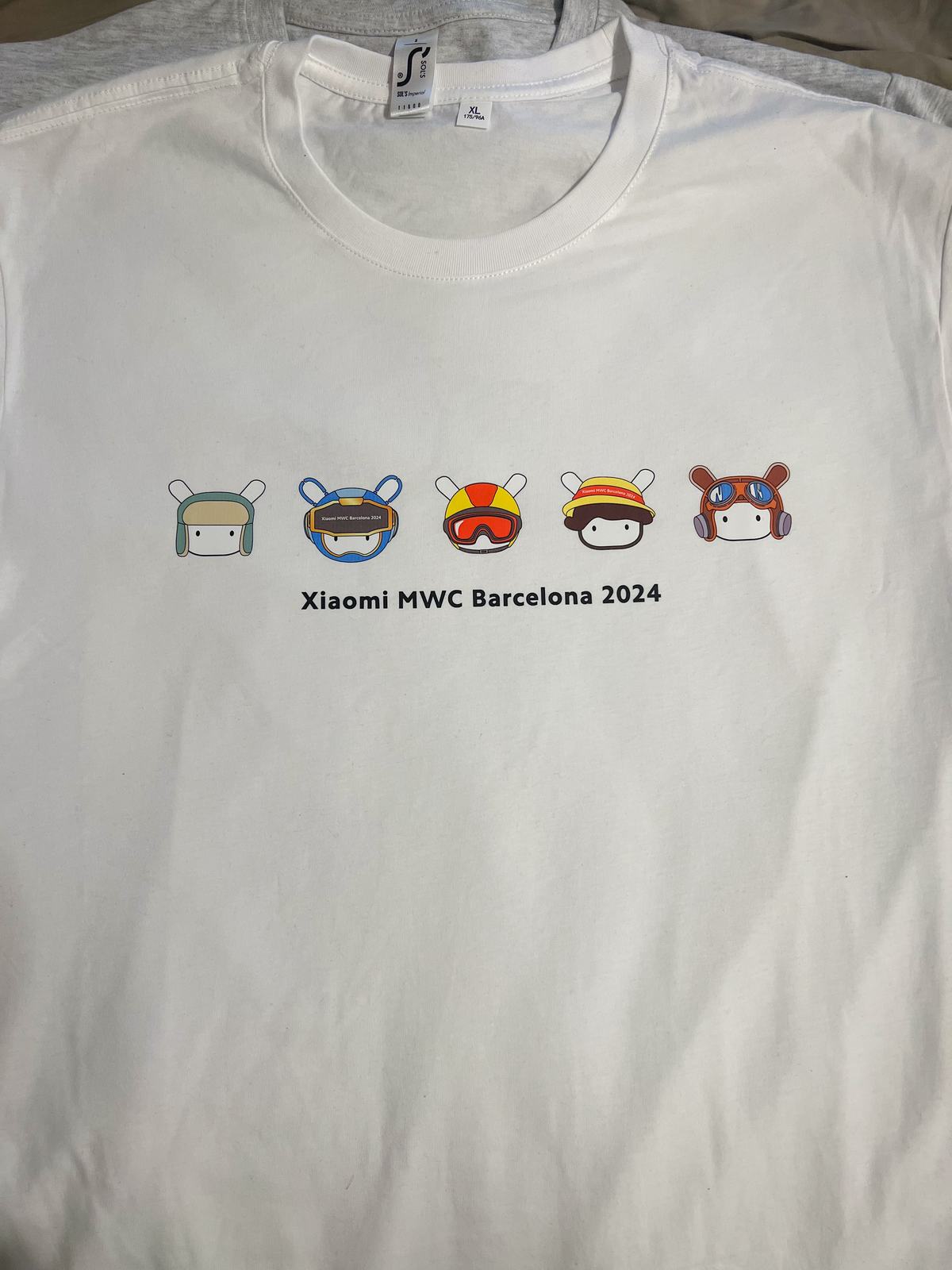
The stand's t-shirt
Bendable, rollable, transparent
The concept devices were the most fun part of the fair. Motorola showed a bendable phone: a 6.9" pOLED panel on a woven fabric backplate with chains of tiny batteries, which wraps around your wrist and changes its interface depending on the shape you bend it into. Lenovo brought Project Crystal, the first laptop with a transparent 17.3" Micro-LED display — up to 55% transparency, meant for overlaying digital content on real objects. Samsung Display filled a room with panels that fold in both directions, wrap around a wrist ("Cling Band"), or roll out from phone size to tablet size. And the Galaxy Ring, still unreleased at the time, sat under glass in three colours and nine sizes.
Motorola's bendable phone, wrapped around a wrist
Lenovo Project Crystal, the transparent laptop
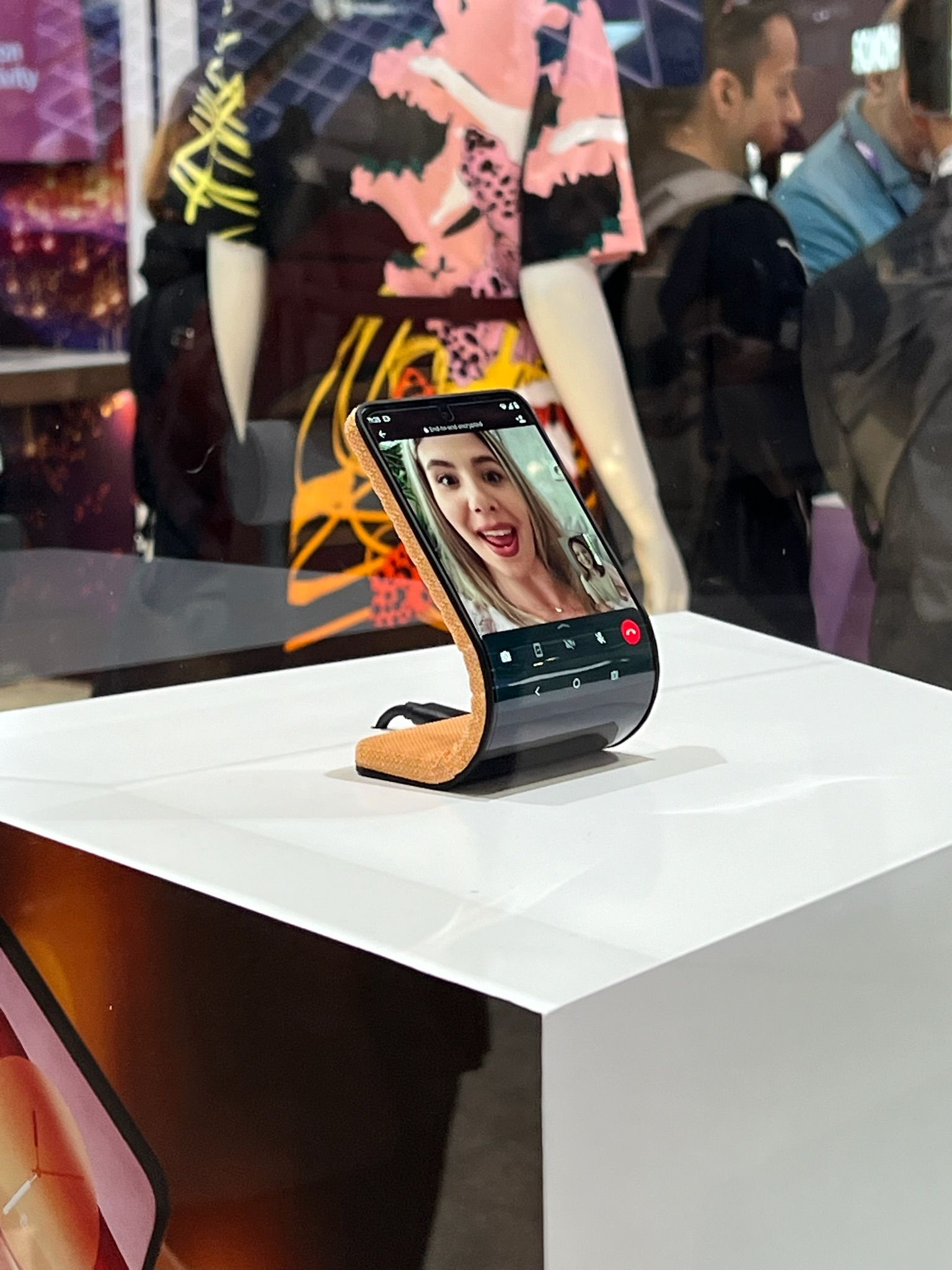
Bent into its own stand, mid video call
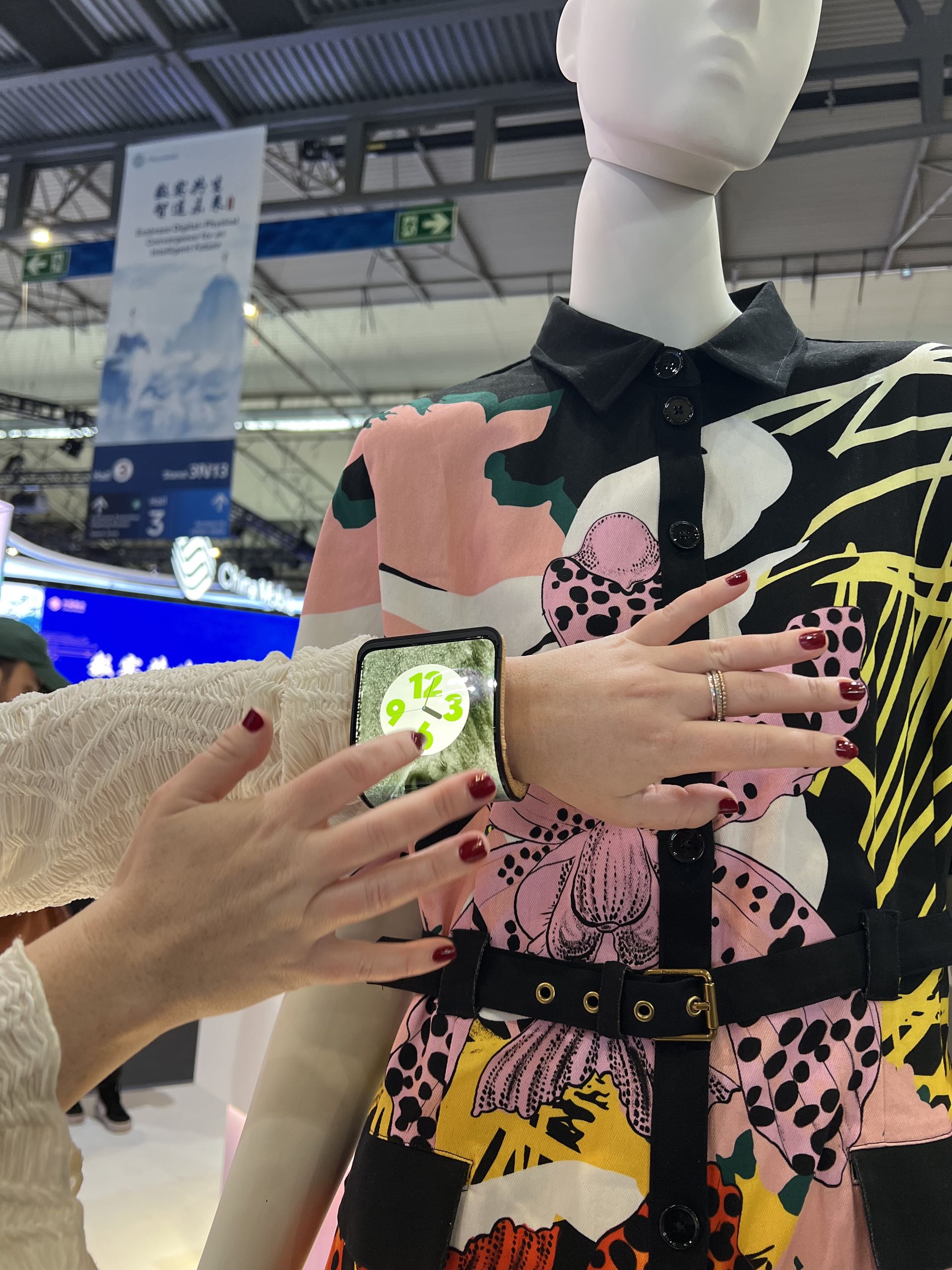
Wrapped around a wrist, it becomes a watch
Rollable Flex: from phone to tablet
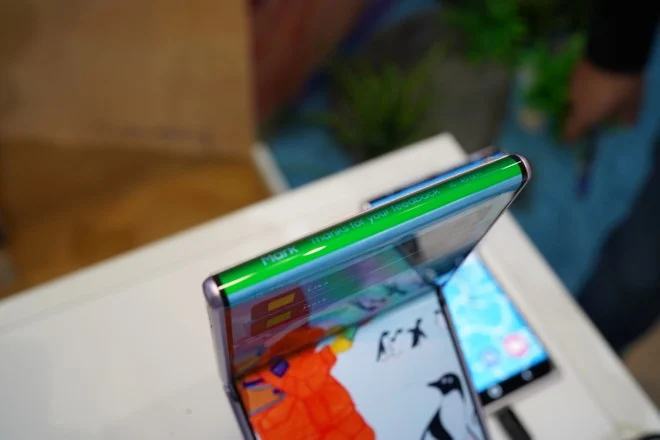
OLED Cling Band, a phone around the wrist
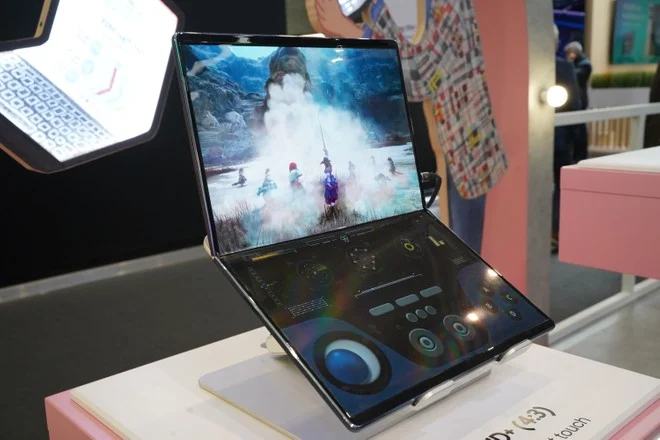
The 17.3" foldable laptop
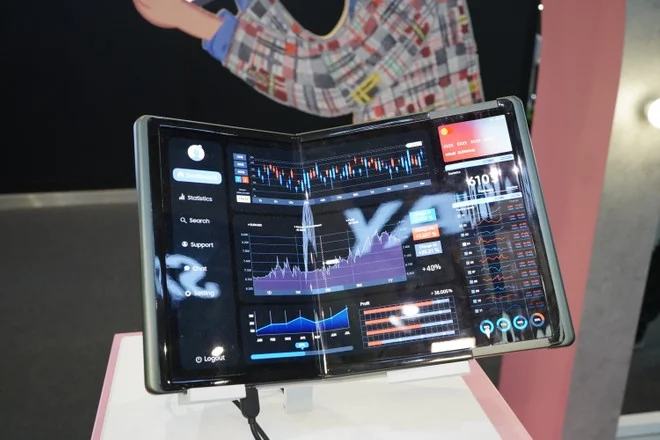
"In & Out": folding in both directions
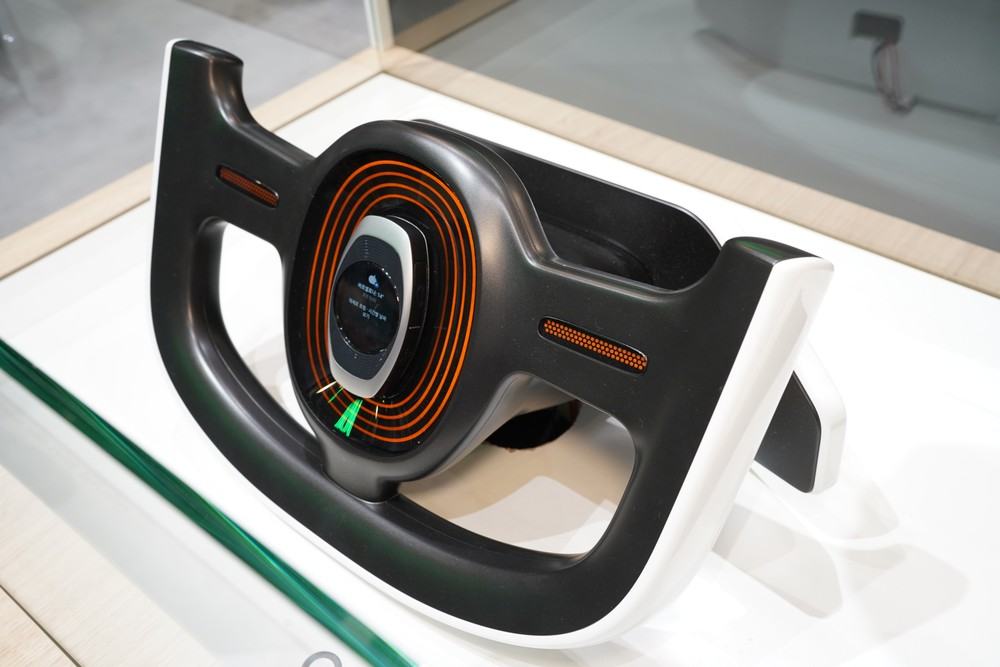
Panels where you would not expect them
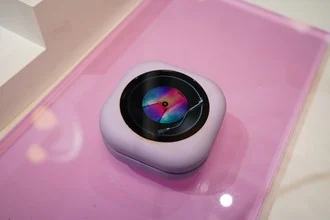
A round one, for good measure
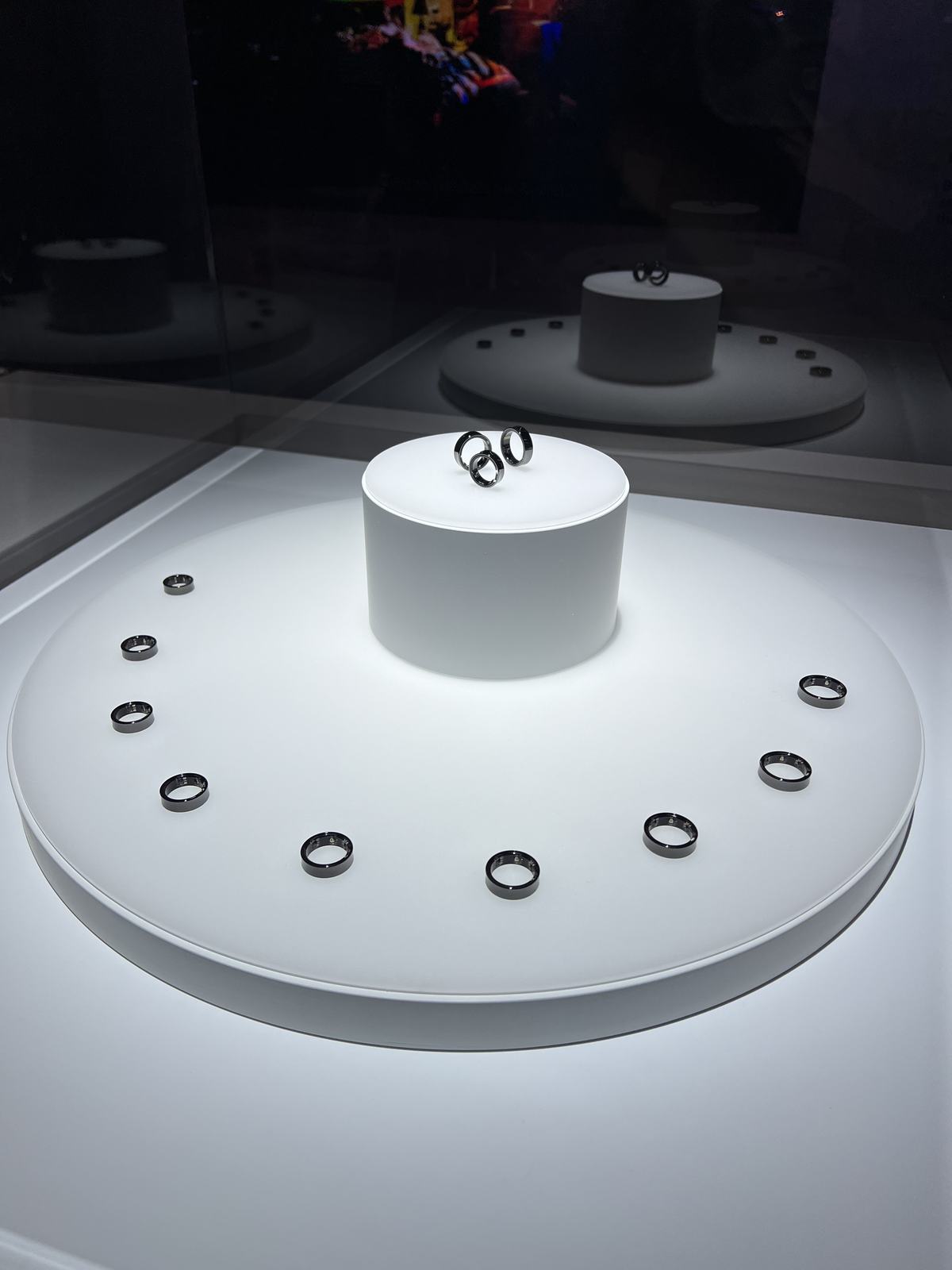
Galaxy Ring: three colours, nine sizes, not yet on sale
Huawei and Honor
Huawei had the largest stand of the fair — a tunnel of LED panels leading into a domed arena — and used it for its 5.5G story: the first 5.5G intelligent core network, an award for its green antenna series, the Mate 60 and P60 flagships, and AI-based solutions for service providers. HONOR launched the Magic 6 series and the Magic V2 RSR Porsche Design foldable, with a robotic arm demoing the phone behind glass.
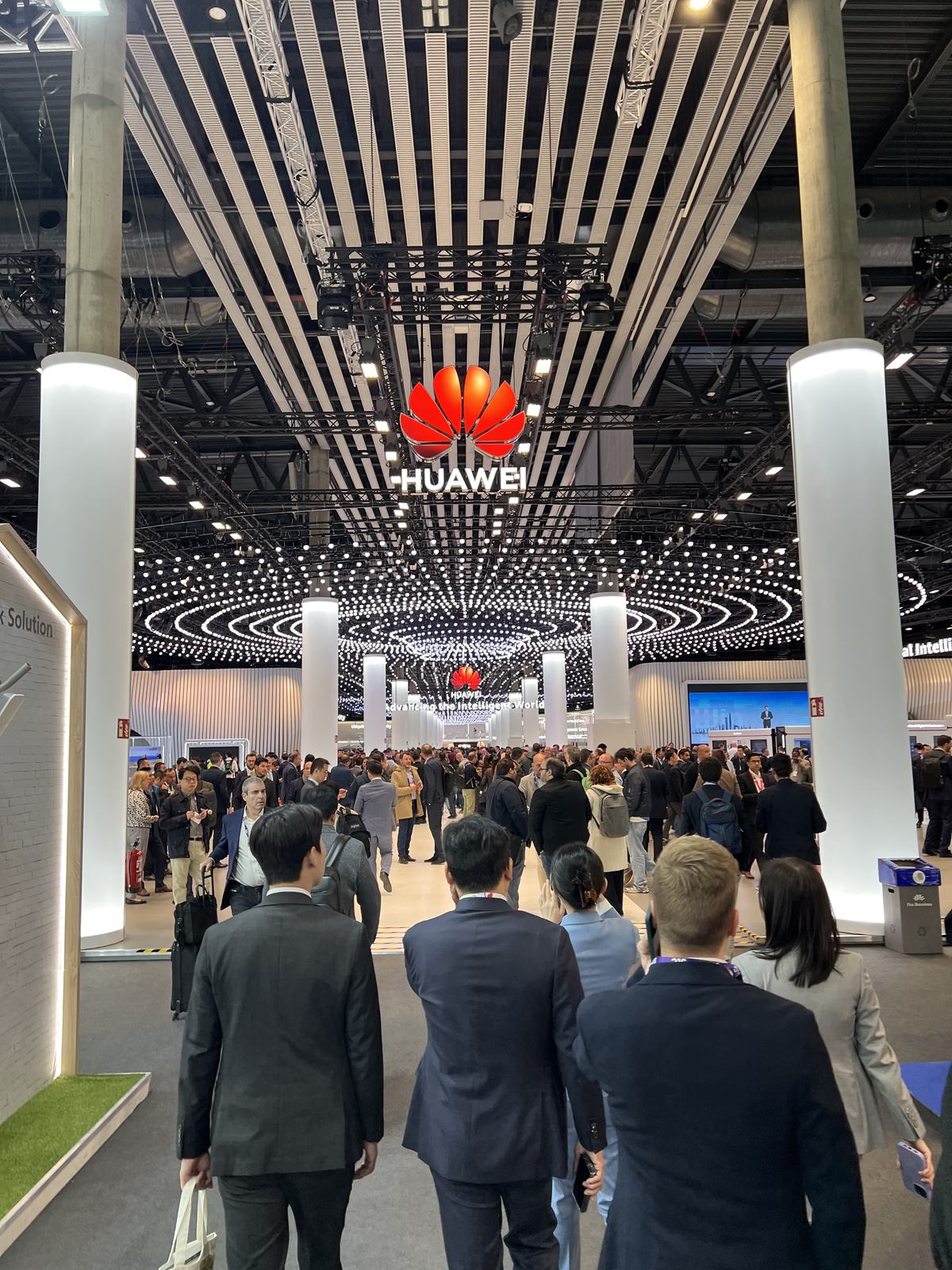
The entrance tunnel of the Huawei stand
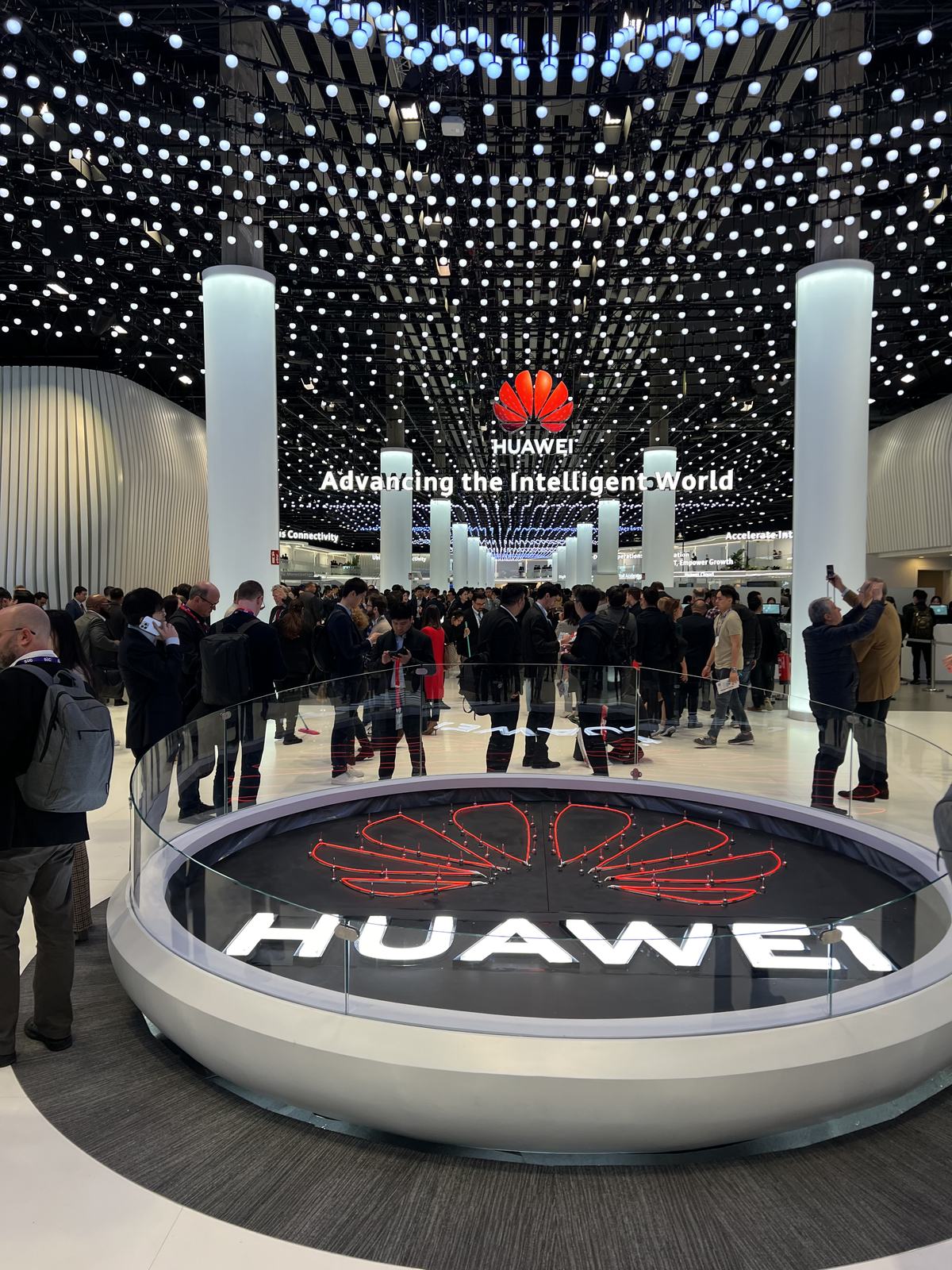
"Advancing the Intelligent World"
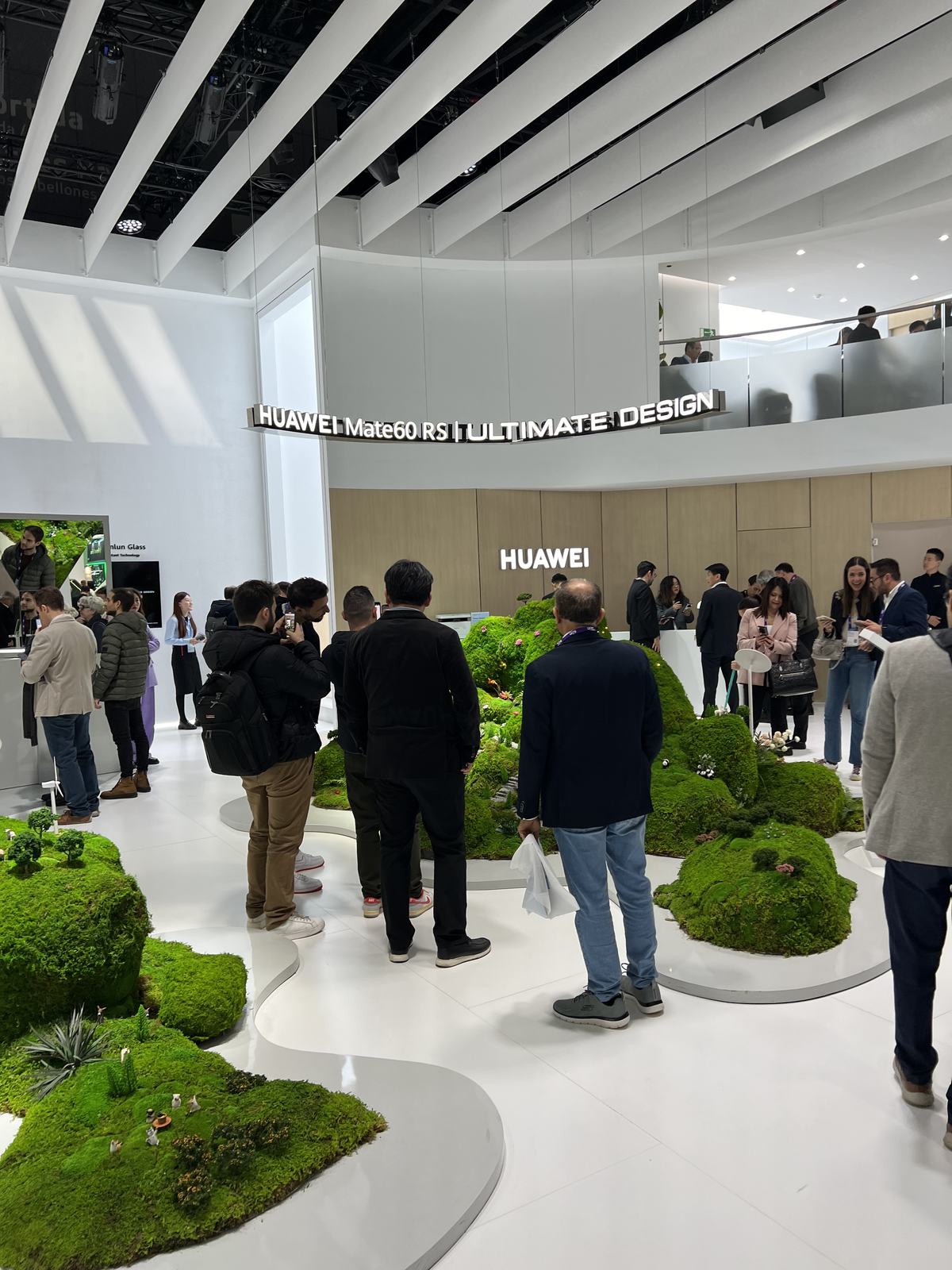
Huawei Ultimate Design
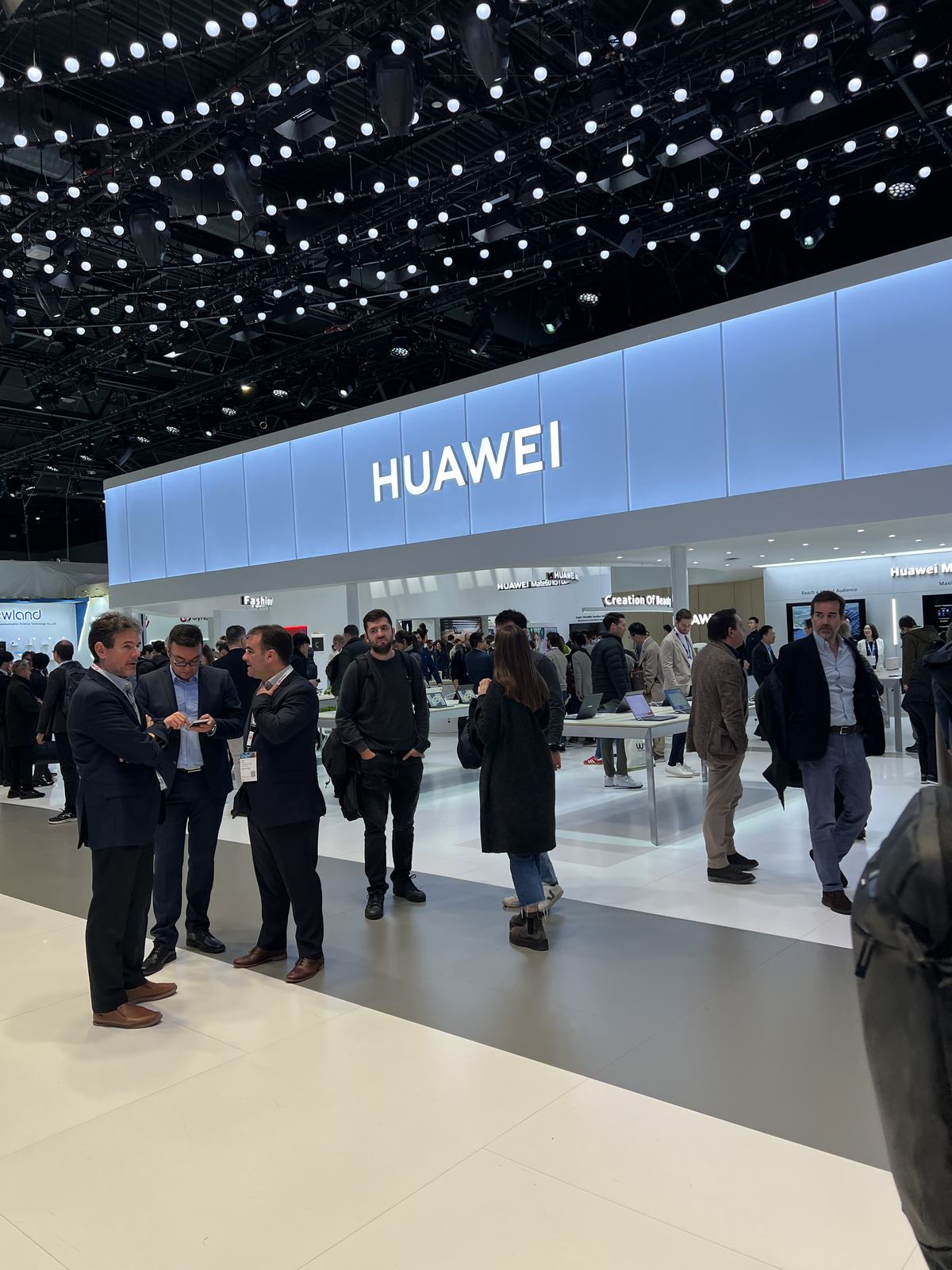
Queues, all day, every day
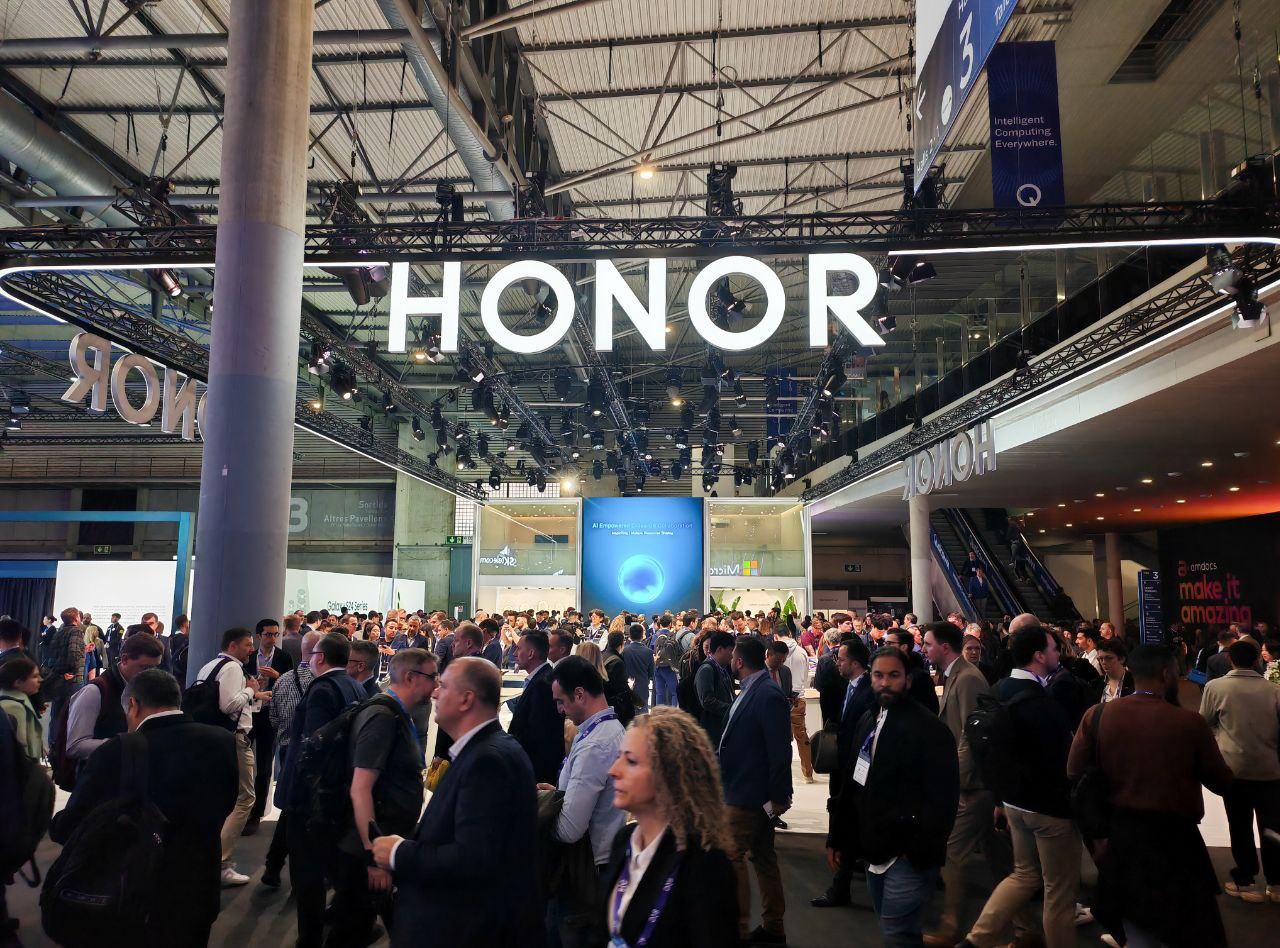
The HONOR stand
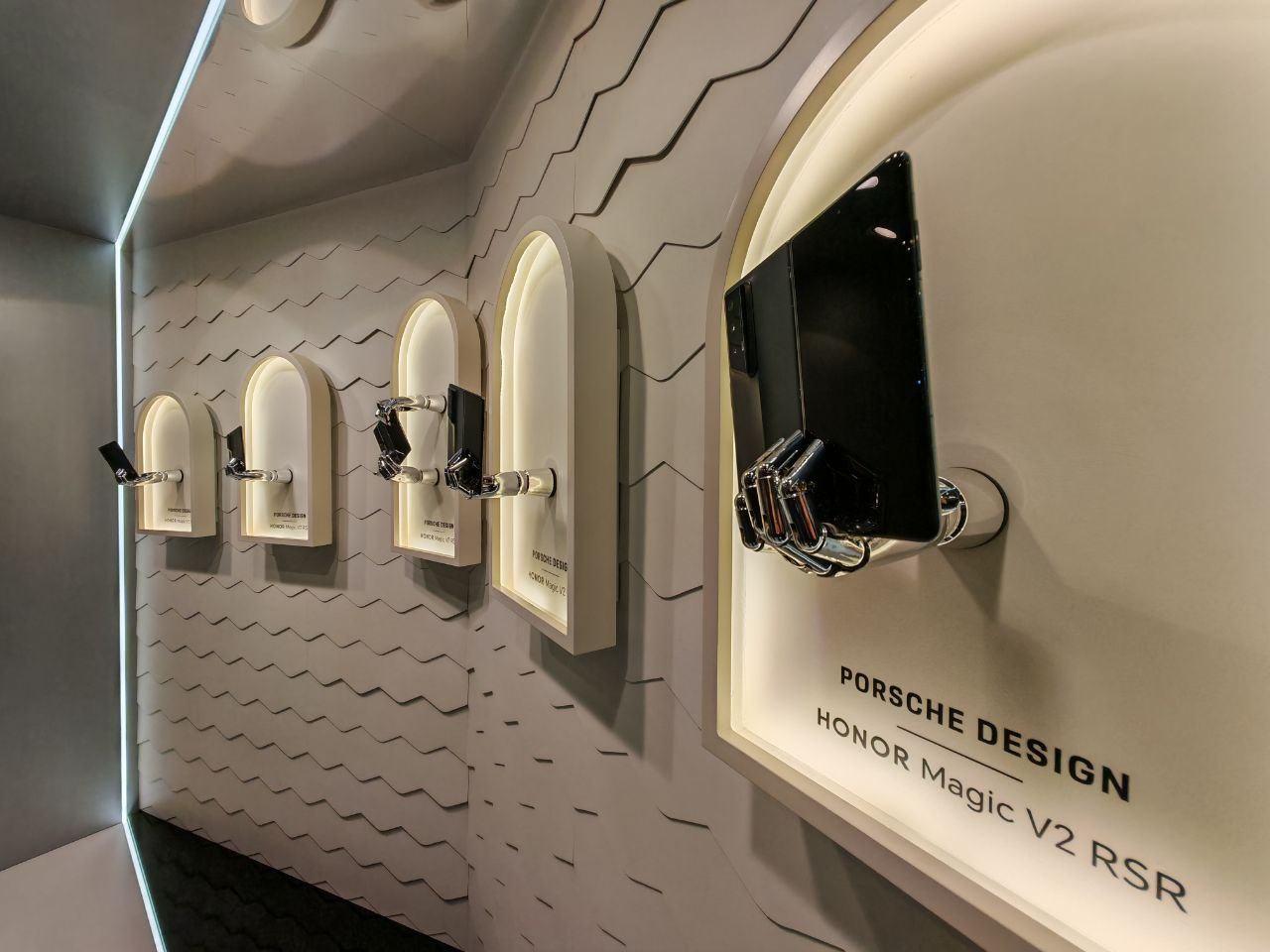
Magic V2 RSR, Porsche Design
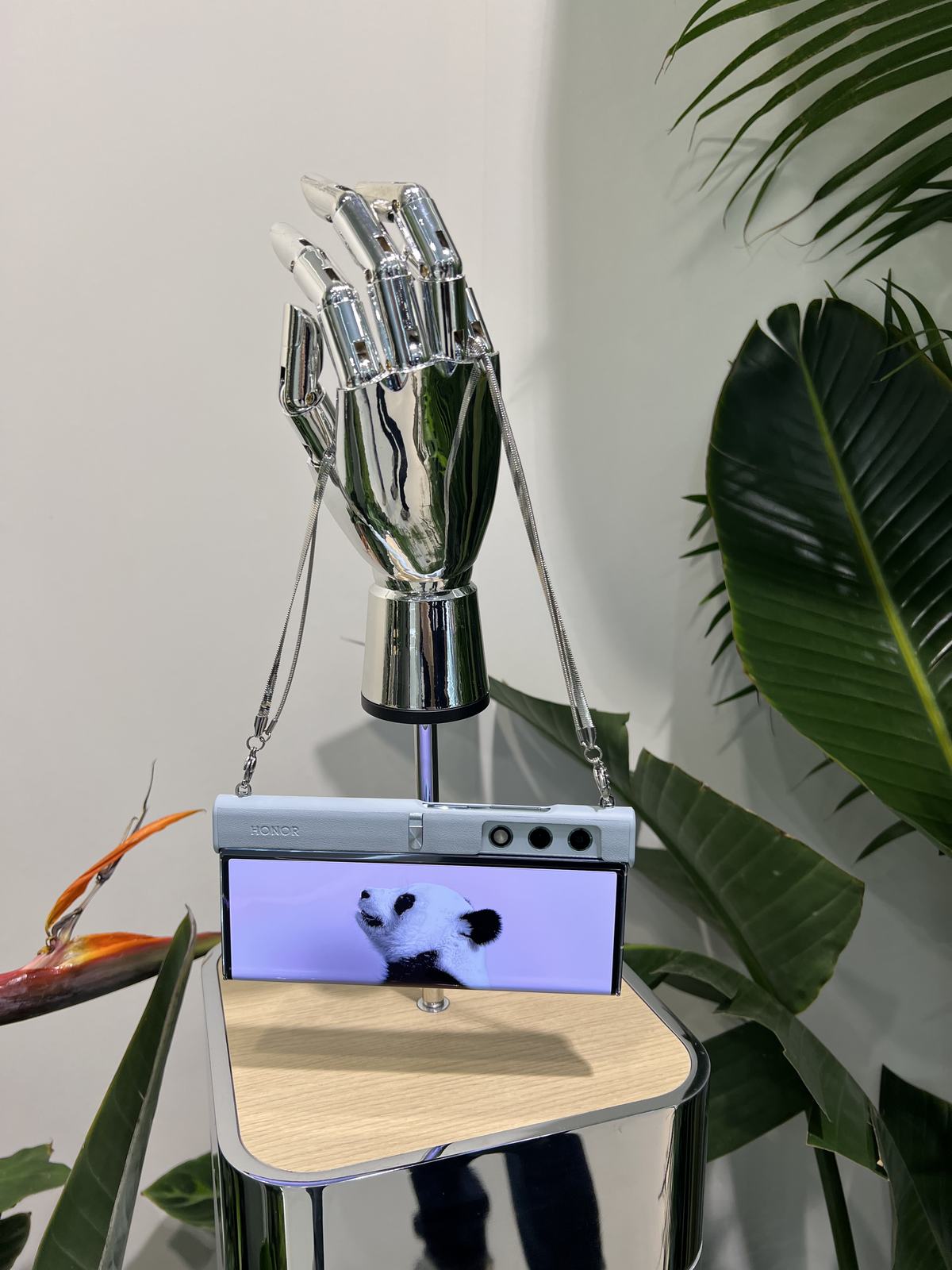
A robotic hand doing the demo
The other stands the size of a building
The rest of the halls were a row of stands built like small districts, each with its own lighting rig. Samsung hung Galaxy over a whole section of Hall 3, Microsoft put its entire stand behind one sentence — "telco transformation in the era of AI" — and Nokia built a green and blue LED box with a drone hovering above the crowd. Four days is not enough to walk all of it properly.
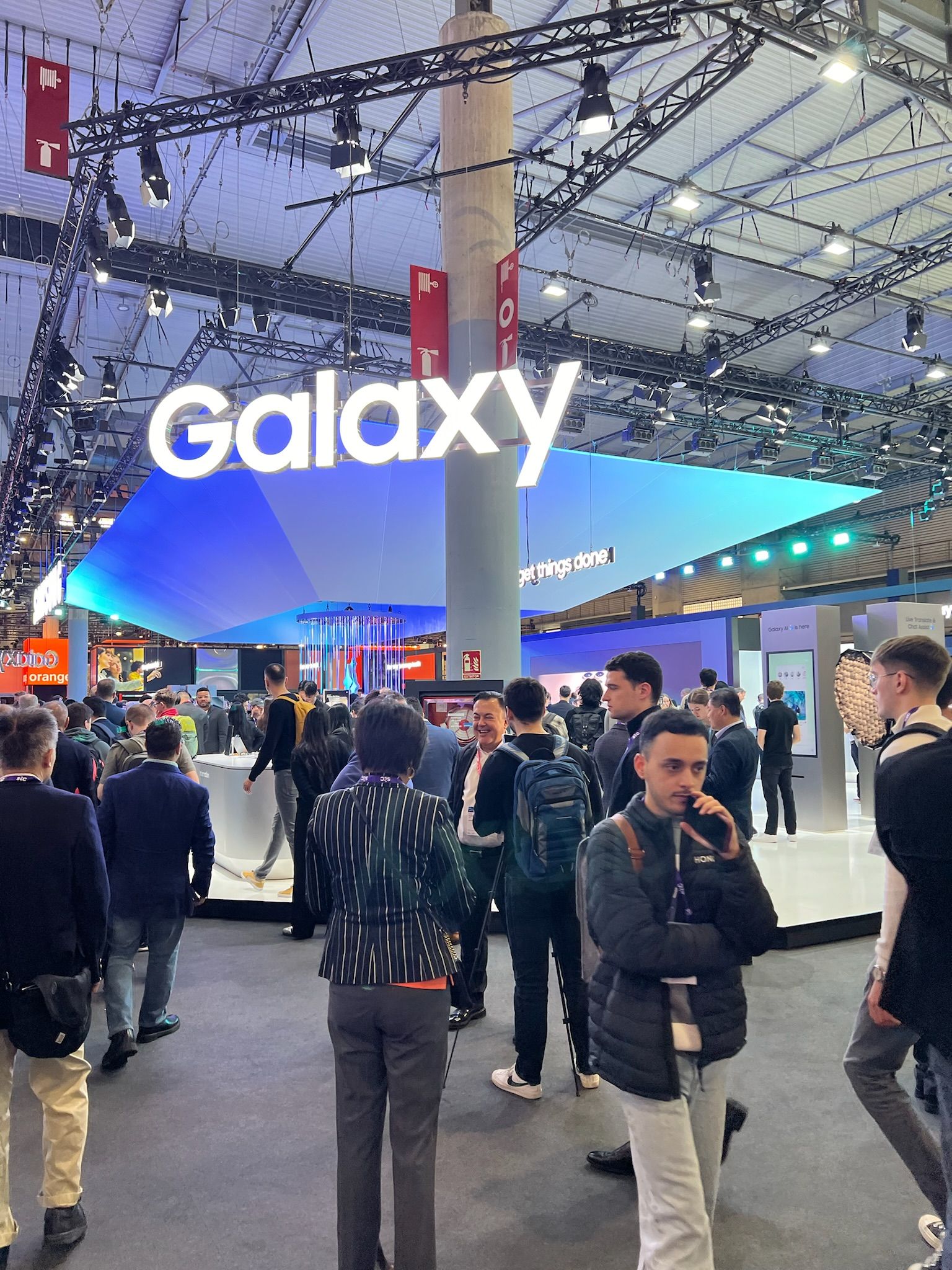
Galaxy, over a whole section of Hall 3
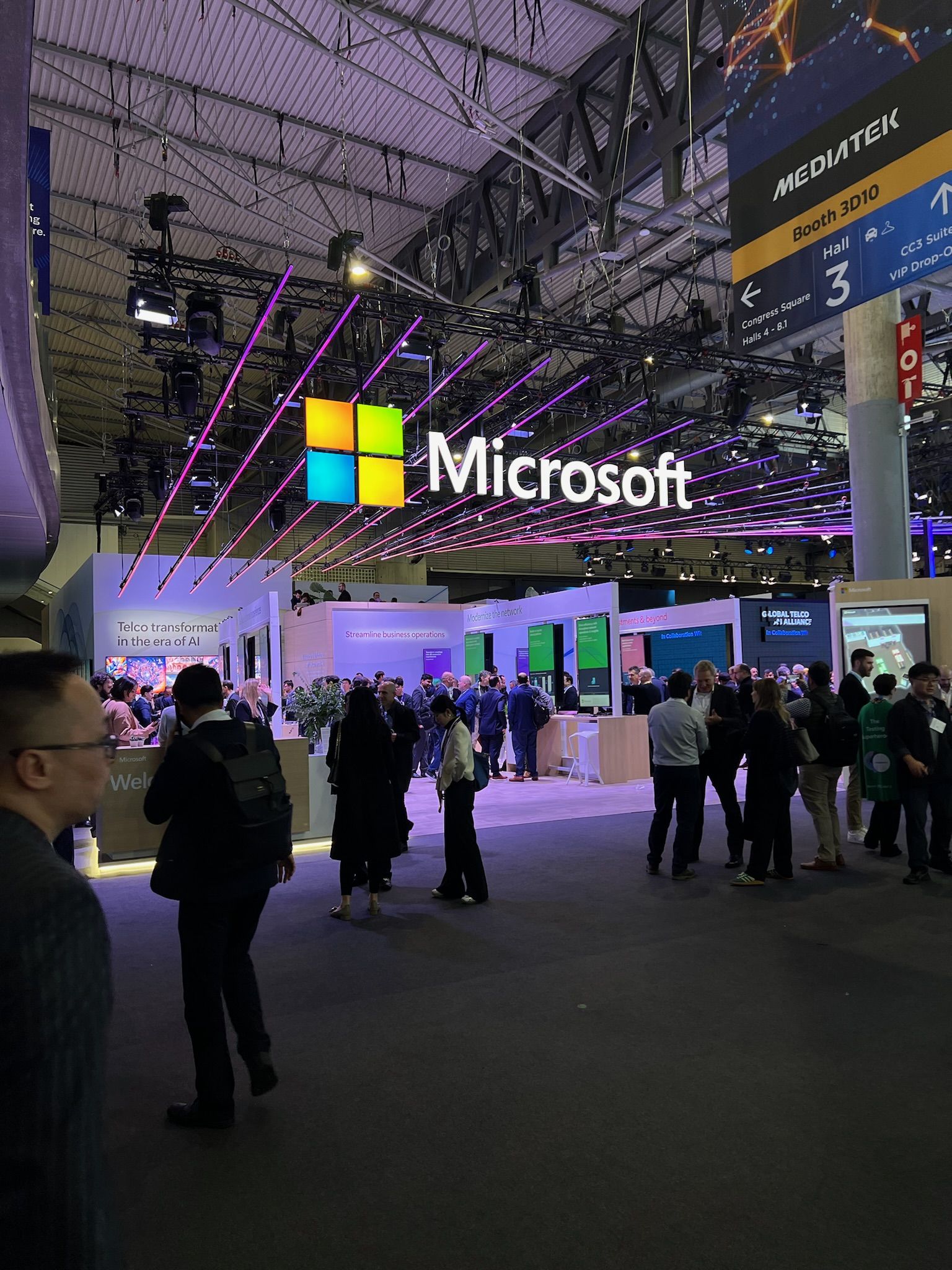
Microsoft: "telco transformation in the era of AI"
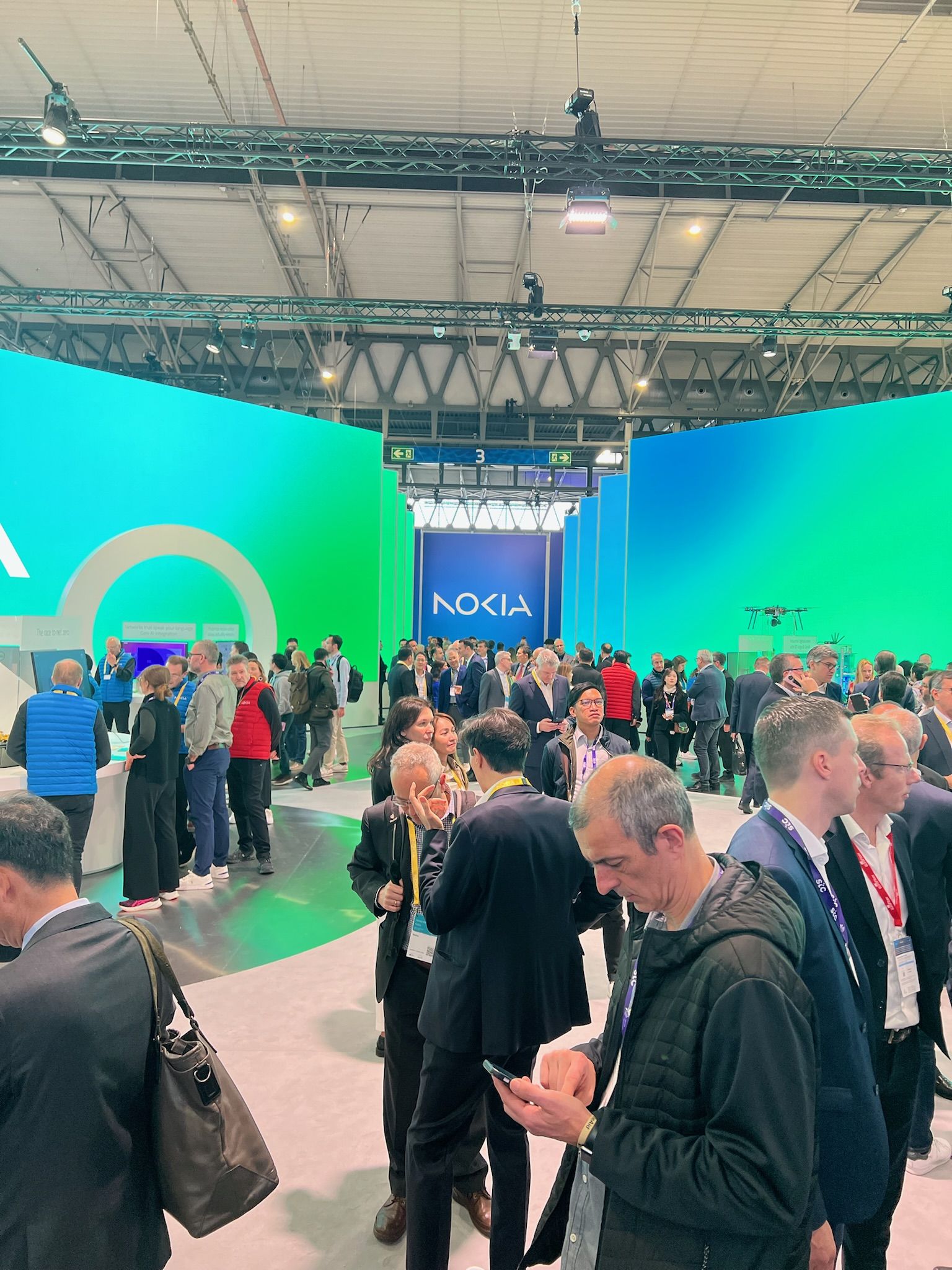
Nokia, with a drone flying over the queue
Robot dogs
Two of them, on opposite sides of the fair. Tecno unveiled Dynamic 1, an AI-powered robotic dog modelled on a German Shepherd — 8-core ARM CPU, a pack of sensors, stairs, and voice commands. Xiaomi brought the second generation of CyberDog. A small crowd stood around both of them all day.
The CyberDog pack in motion
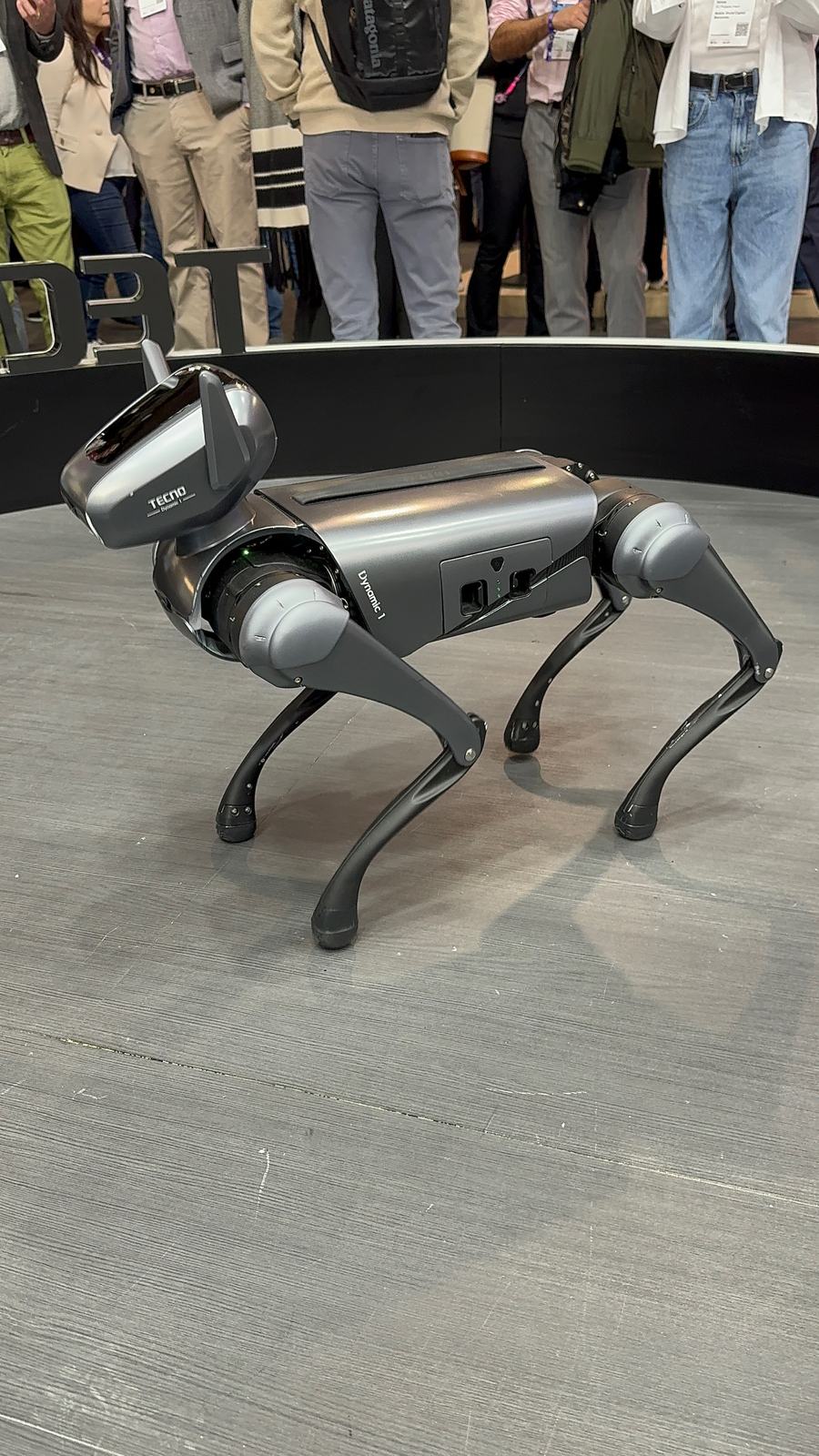
Tecno Dynamic 1
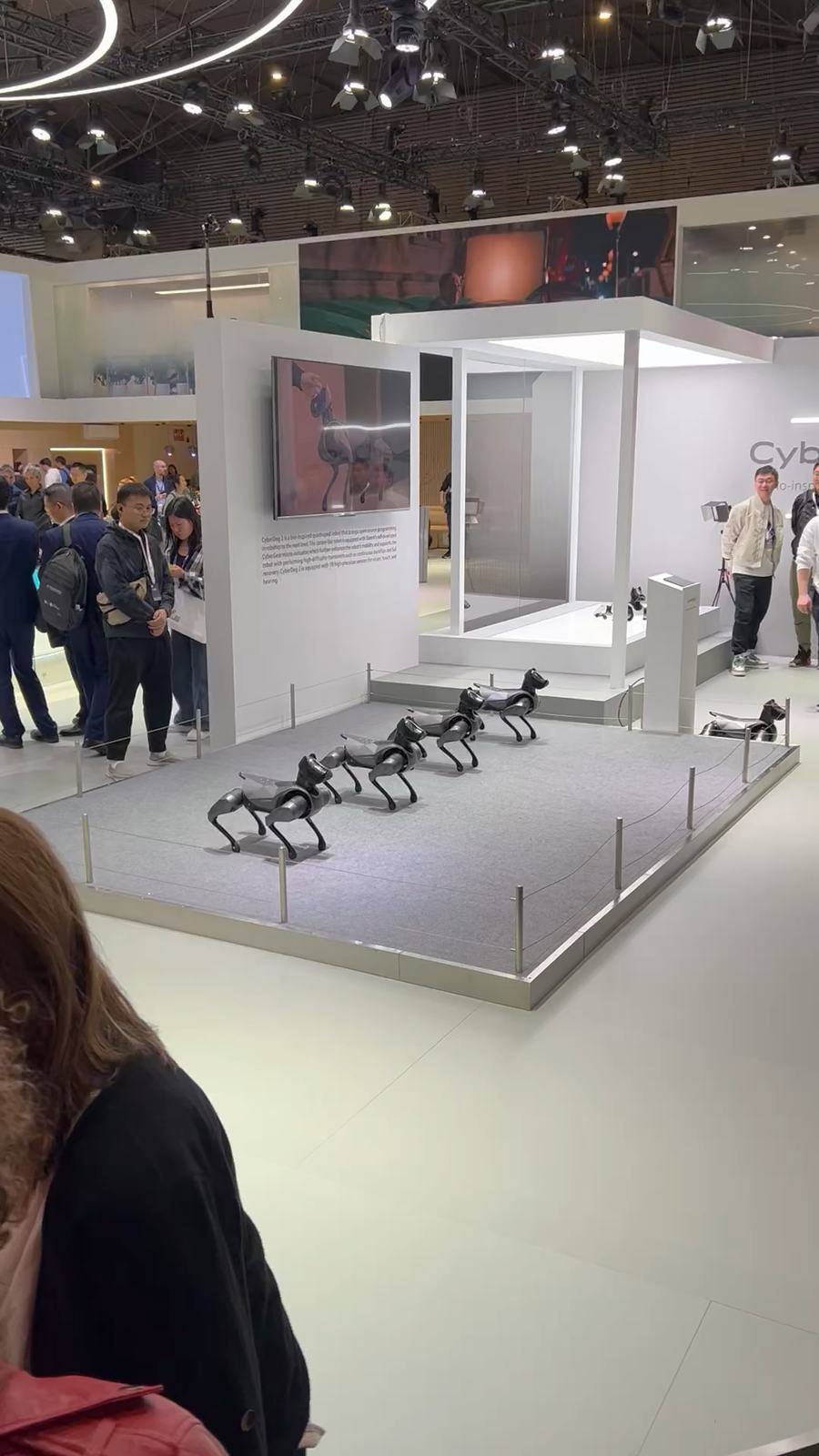
Xiaomi CyberDog 2
XR and the AI Pin
VR, spatial computing and the metaverse were everywhere, but with a more practical tone than the year before: HTC VIVE showed shared VR experiences for teams and AI-driven translation inside virtual worlds, and most of the XR talk was about healthcare, architecture and training rather than social spaces. The device everyone wanted to try was the Humane AI Pin: no screen, voice and gestures only, a laser display projected onto your palm, real-time translation — $699 plus a subscription, and an idea of the post-smartphone interface that was worth queueing for even if you did not believe in it.
The Humane AI Pin demo
Walking the XR hall
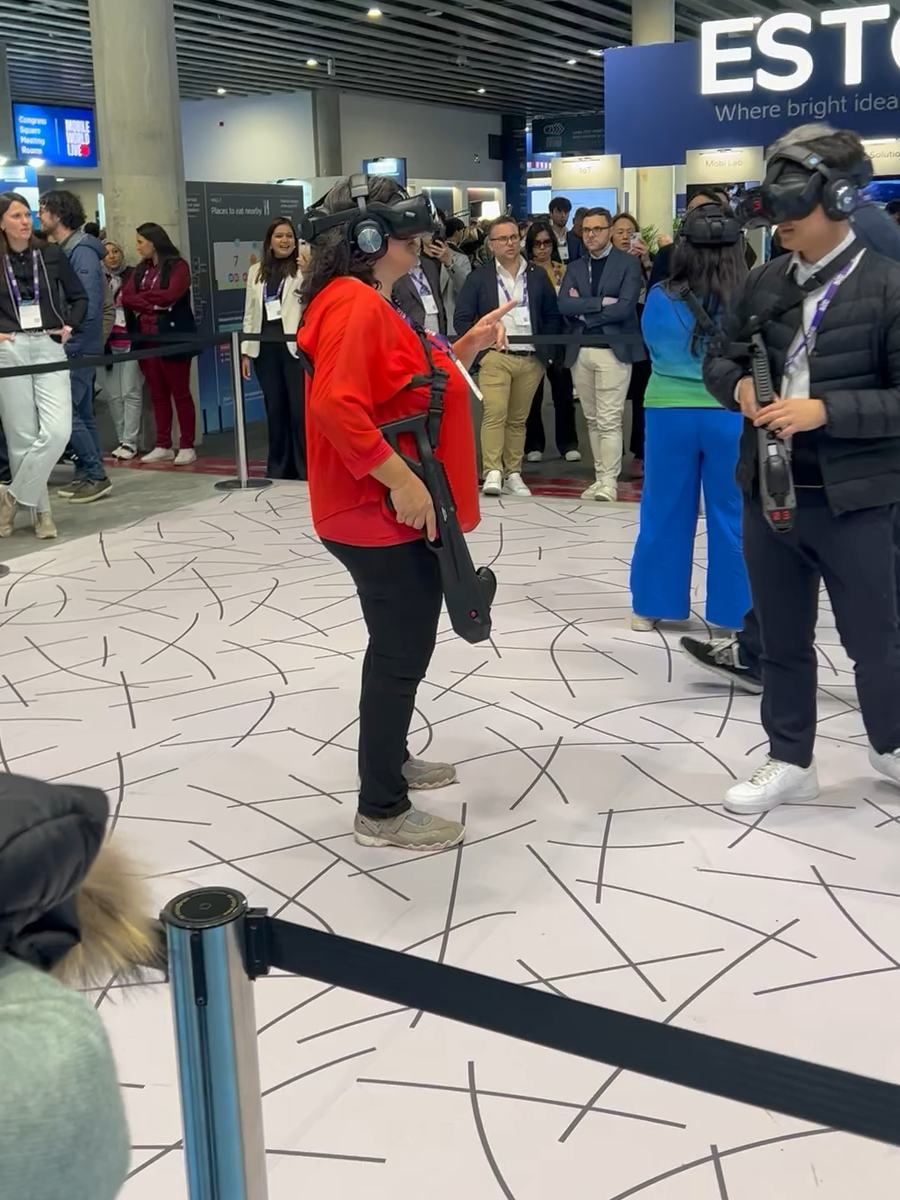
Headsets on, in the middle of the hall
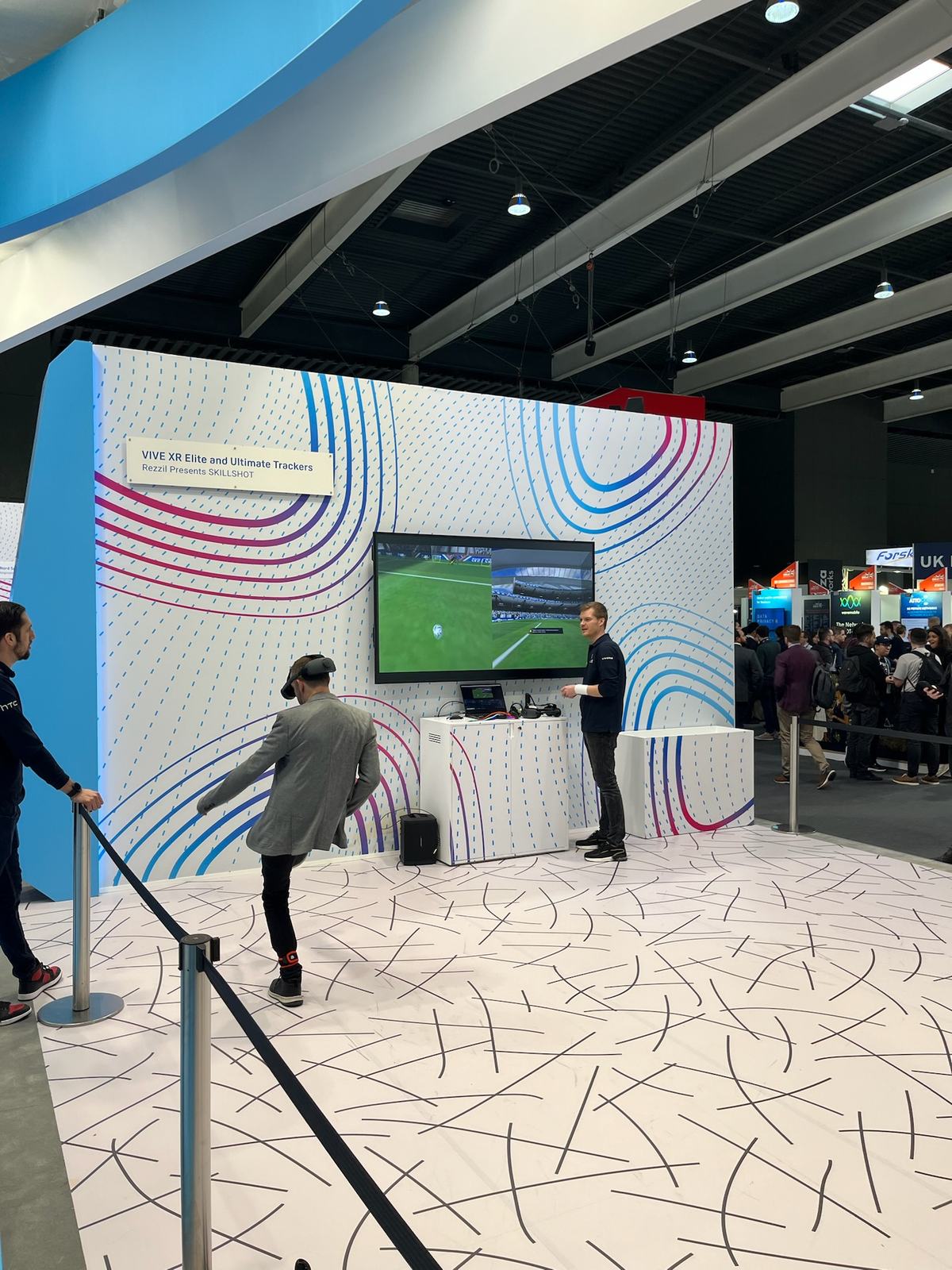
Interactive demos, all day
4YFN, the fair inside the fair
MWC has a second event inside it: 4YFN — Four Years From Now — the startup side of the congress, which in 2024 was celebrating ten years. Its own hall, much smaller stands, earlier products, and a terrace of deck chairs over the Fira where half the conversations of the week actually happened. The one product I kept thinking about afterwards was Clicks: a case that bolts a physical BlackBerry-style keyboard back onto the bottom of a phone.
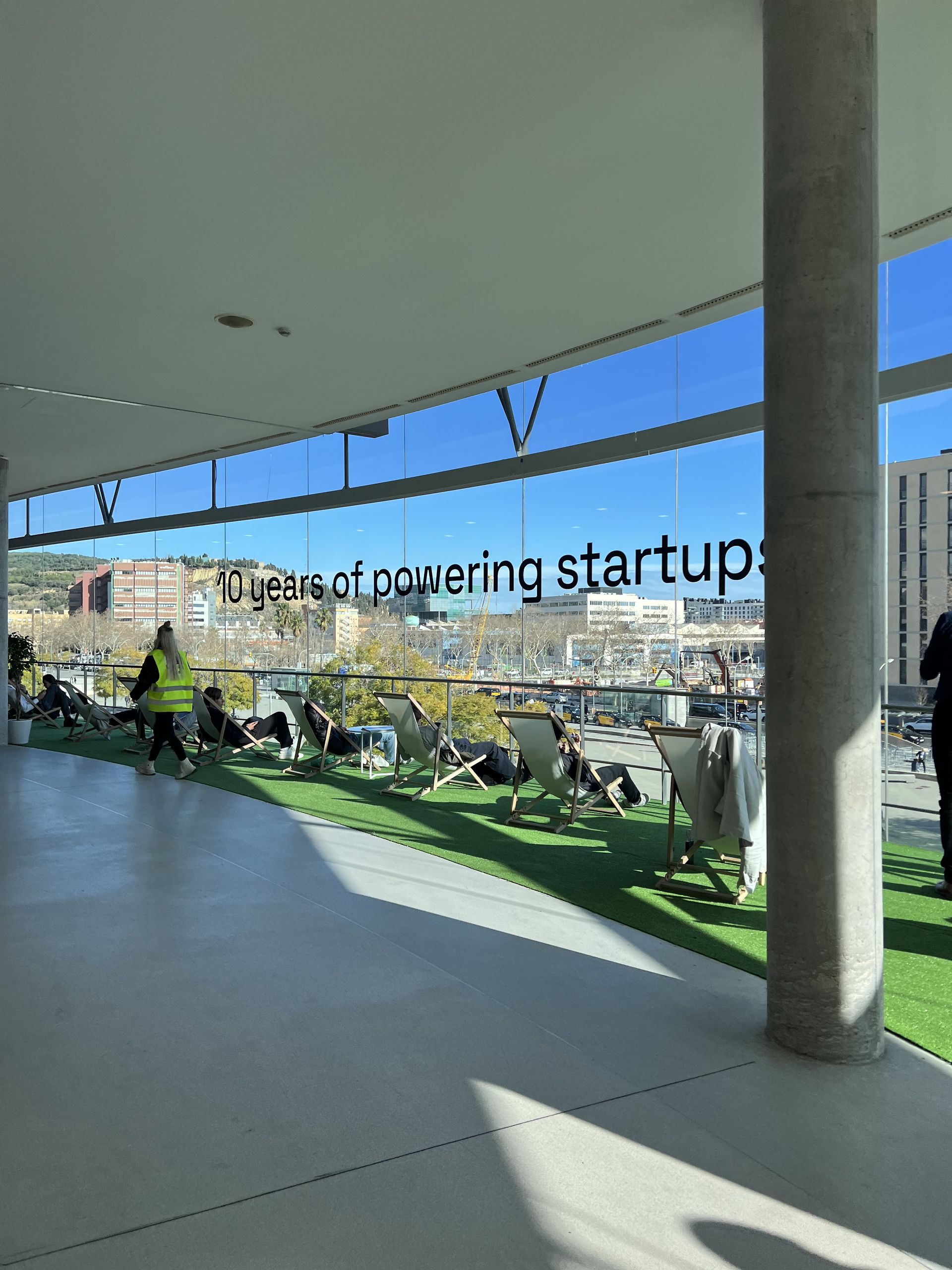
"10 years of powering startups"
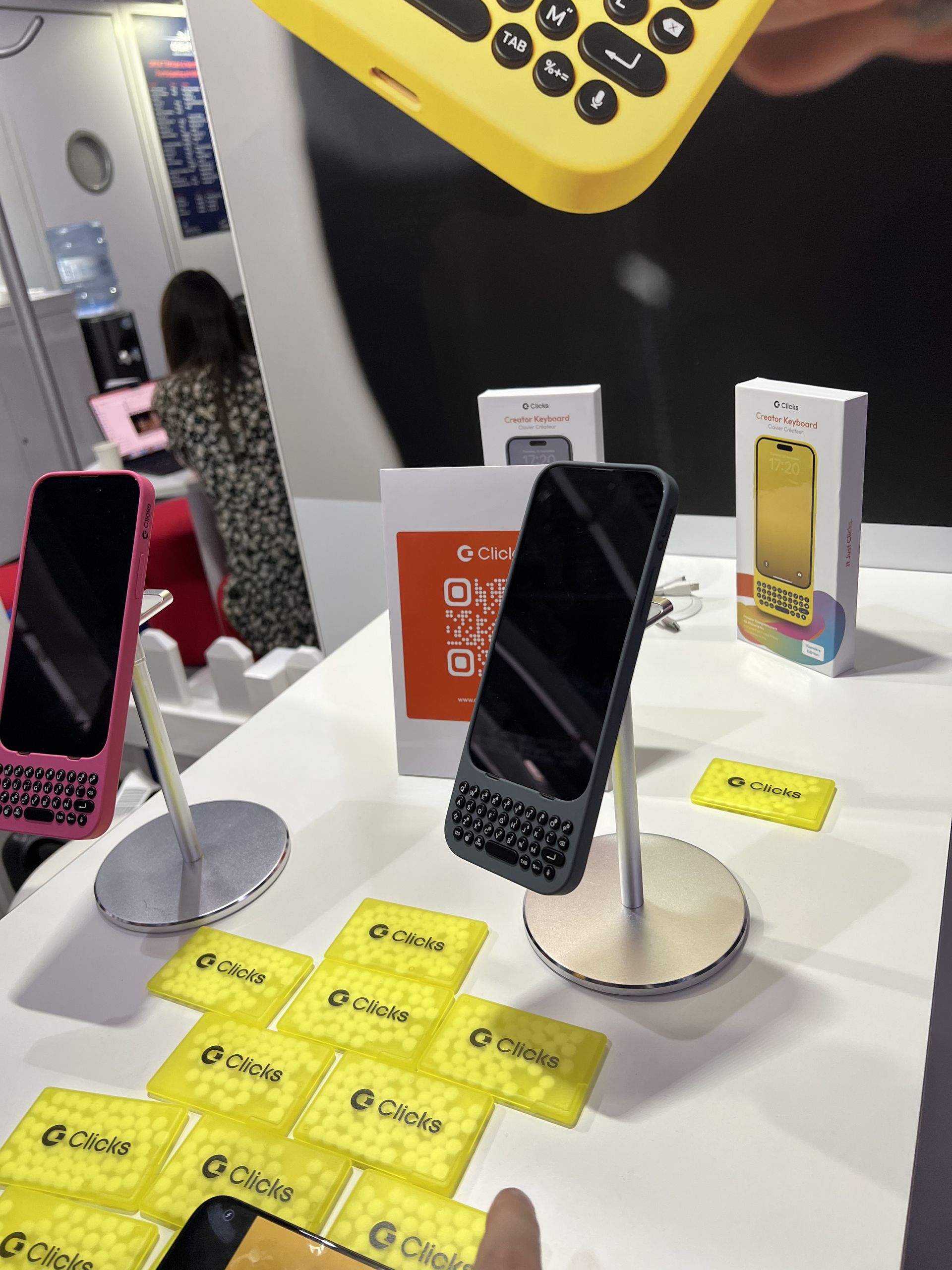
Clicks: a physical keyboard, back on a phone
Deloitte at MWC
Deloitte was at the fair with a stand built around 5G, AI, Cloud, Cybersecurity, Sustainability & Climate and Operate services, with interactive demos rather than slides. The part I enjoyed most was the GenAI Makers Lab, where colleagues built and deployed new features with generative AI live, in front of whoever walked in — plus the panels on connectivity, the future of internet speeds and the scalability of 5G fixed wireless access.
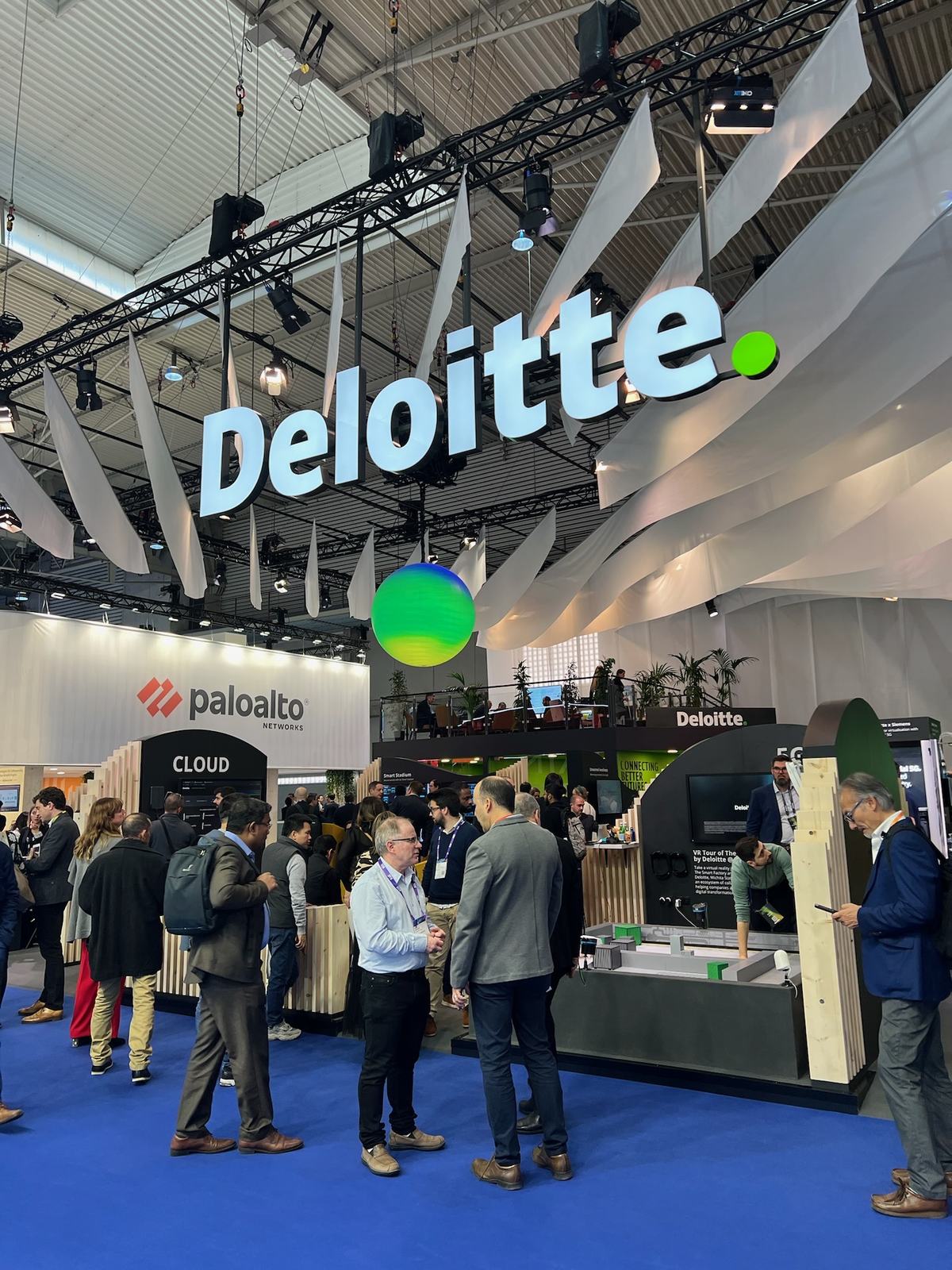
The Deloitte stand
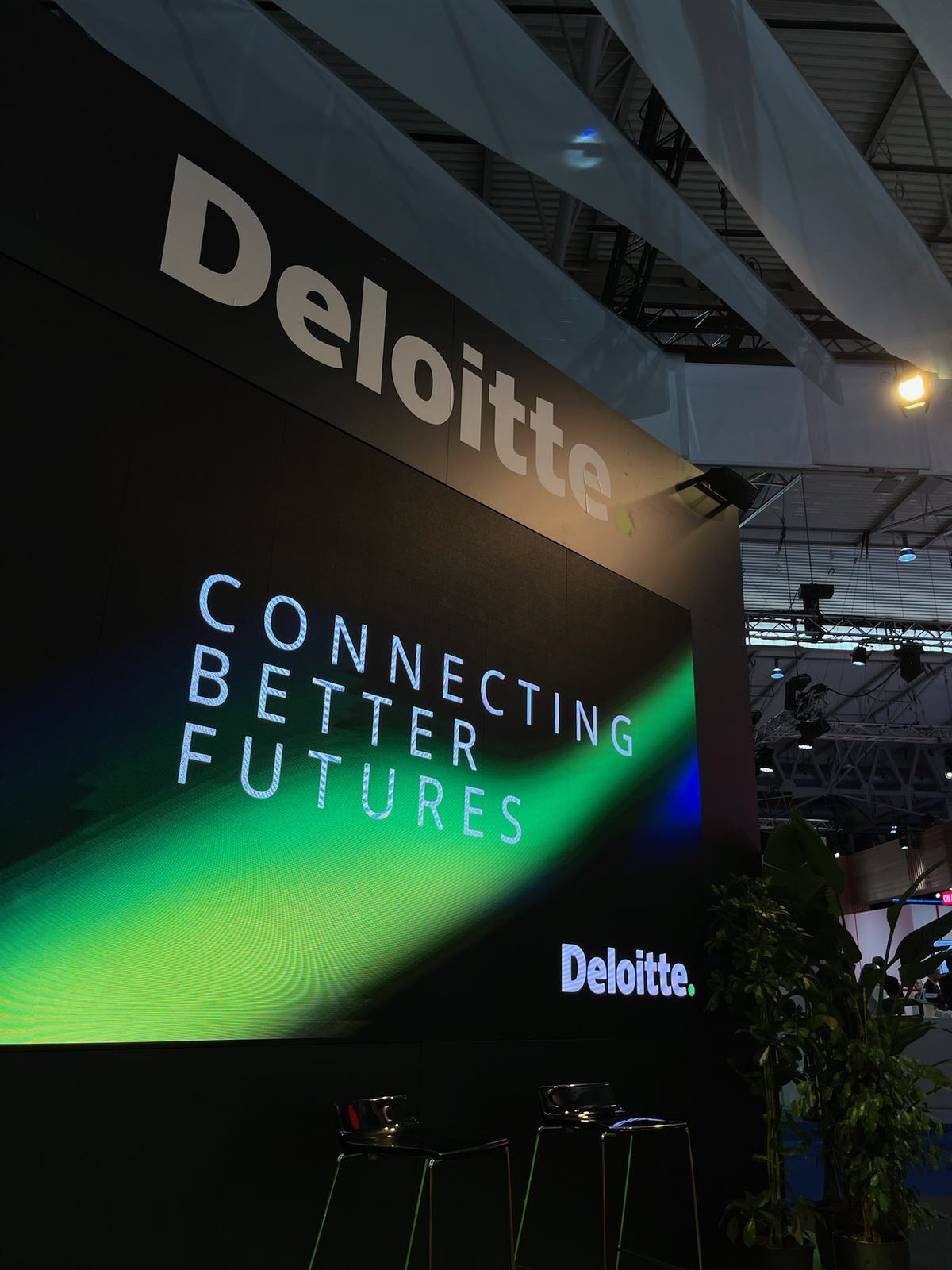
"Connecting Better Futures"
Networking, demos and swag
Between one hall and the next, the actual reason people fly in: demos at other people's stands, conversations that start in a queue, and a fair amount of merchandising carried home on the metro. Salesforce skipped the halls altogether and built a wooden village outdoors, boardwalk included, which by six in the afternoon was the best-lit place at the Fira.
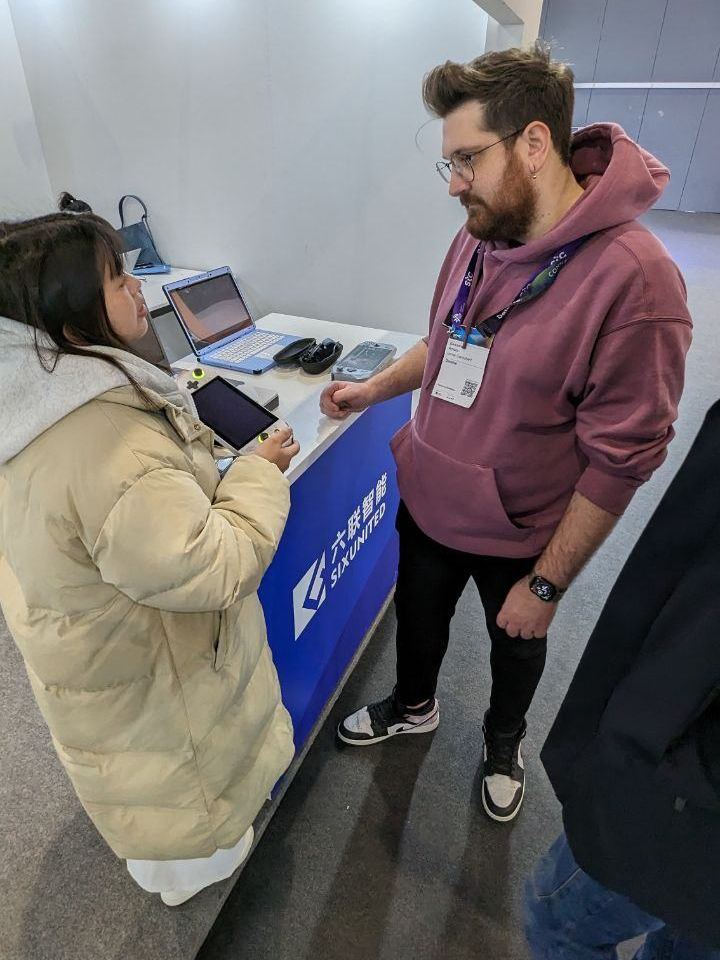
A demo at a partner's stand
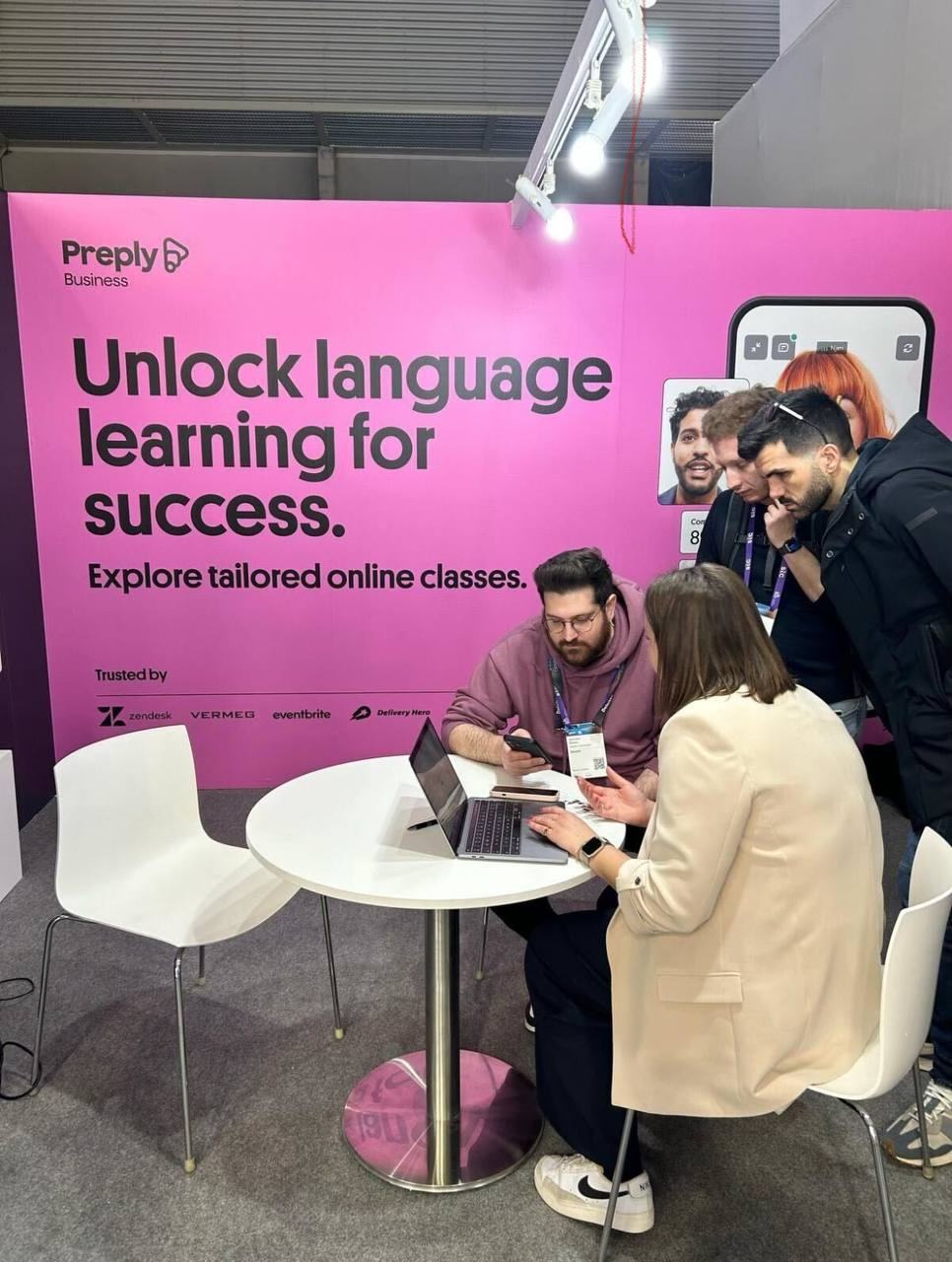
Sitting down for five minutes
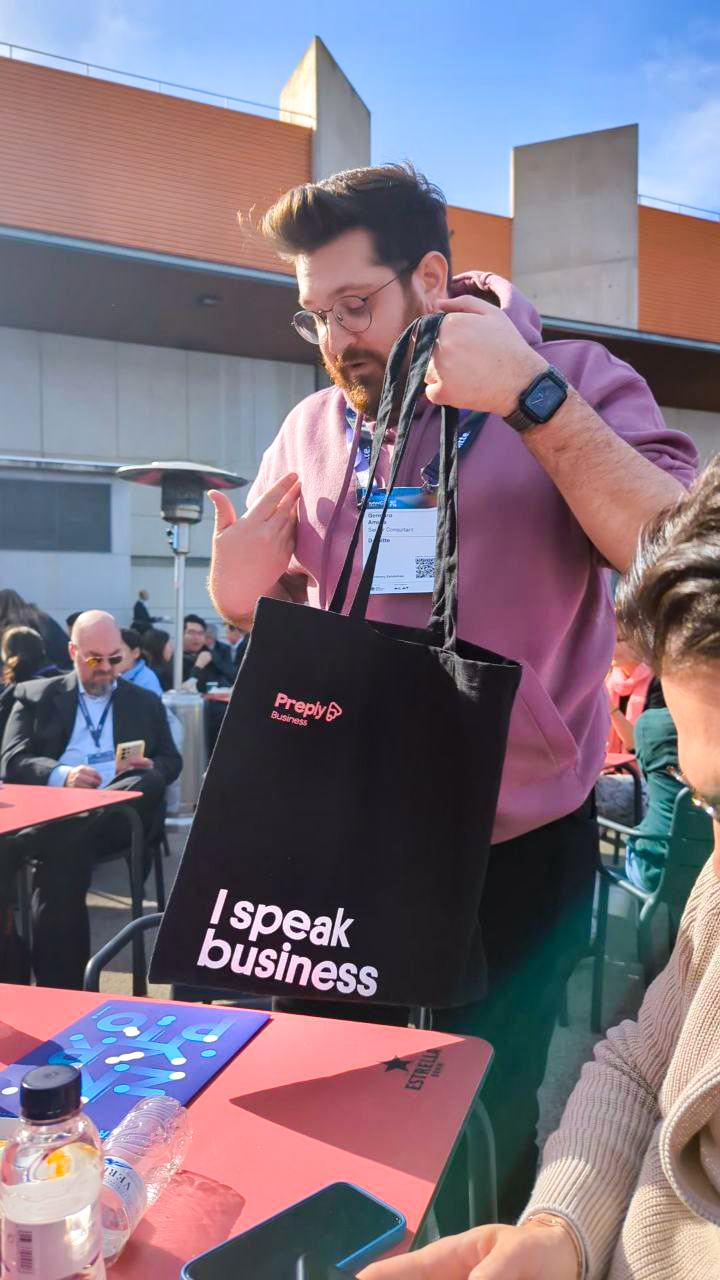
"I speak business"
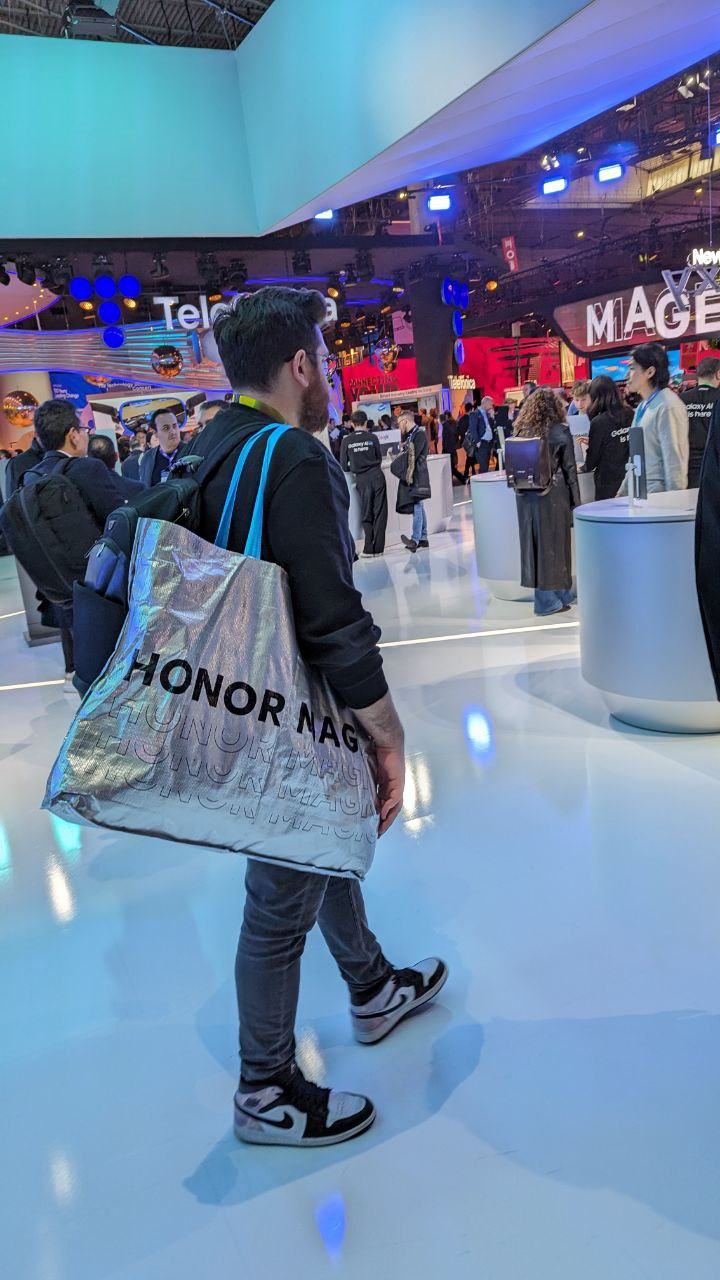
Crossing the hall, again
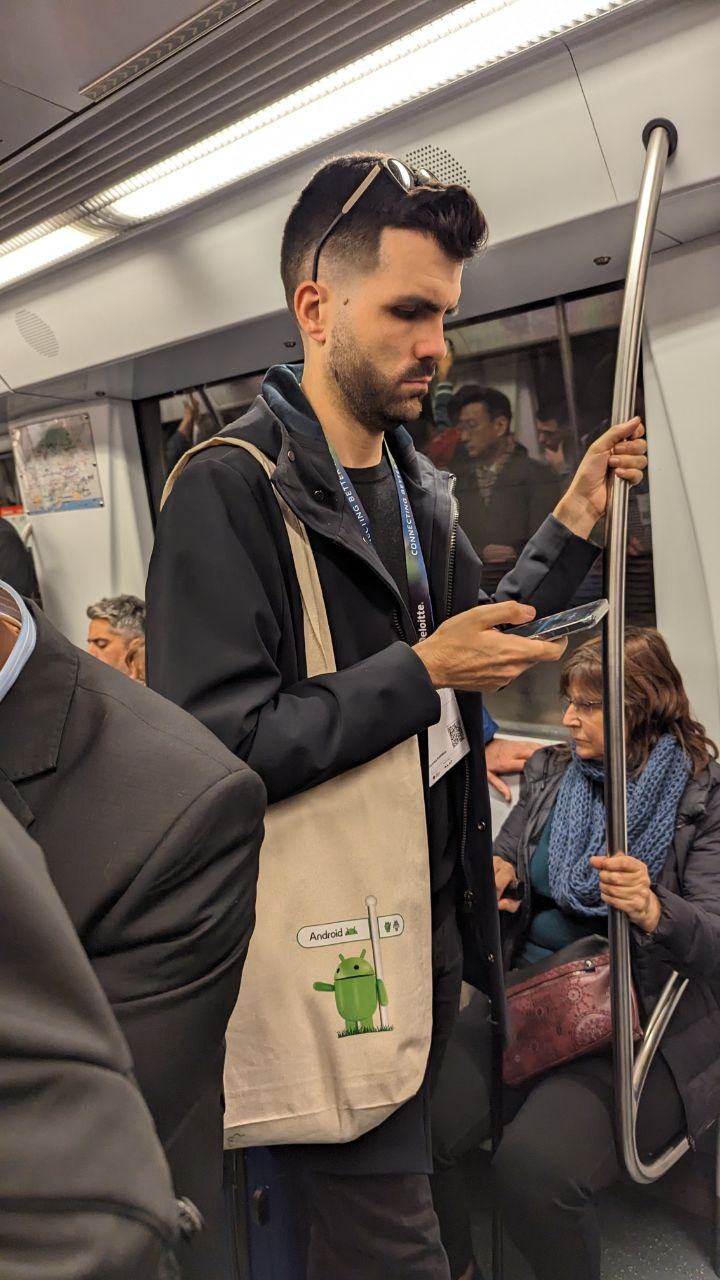
Back to the hotel with the Android tote
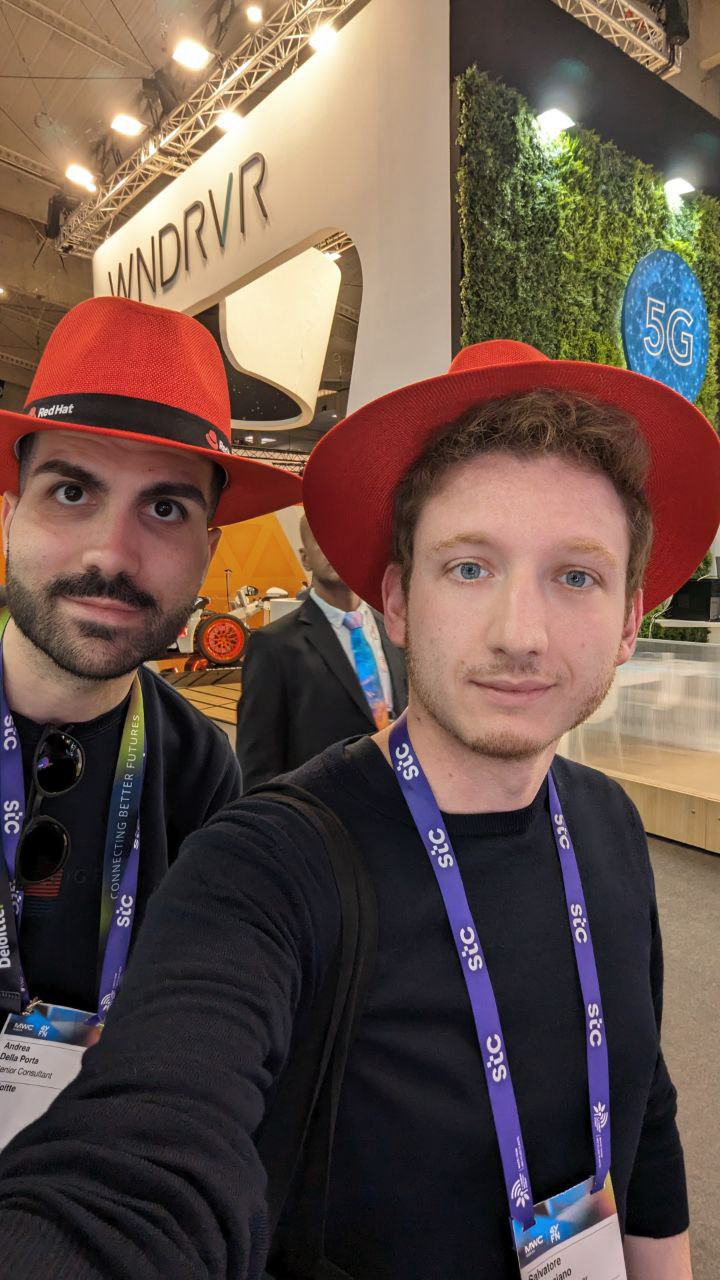
Free hats, obviously worn
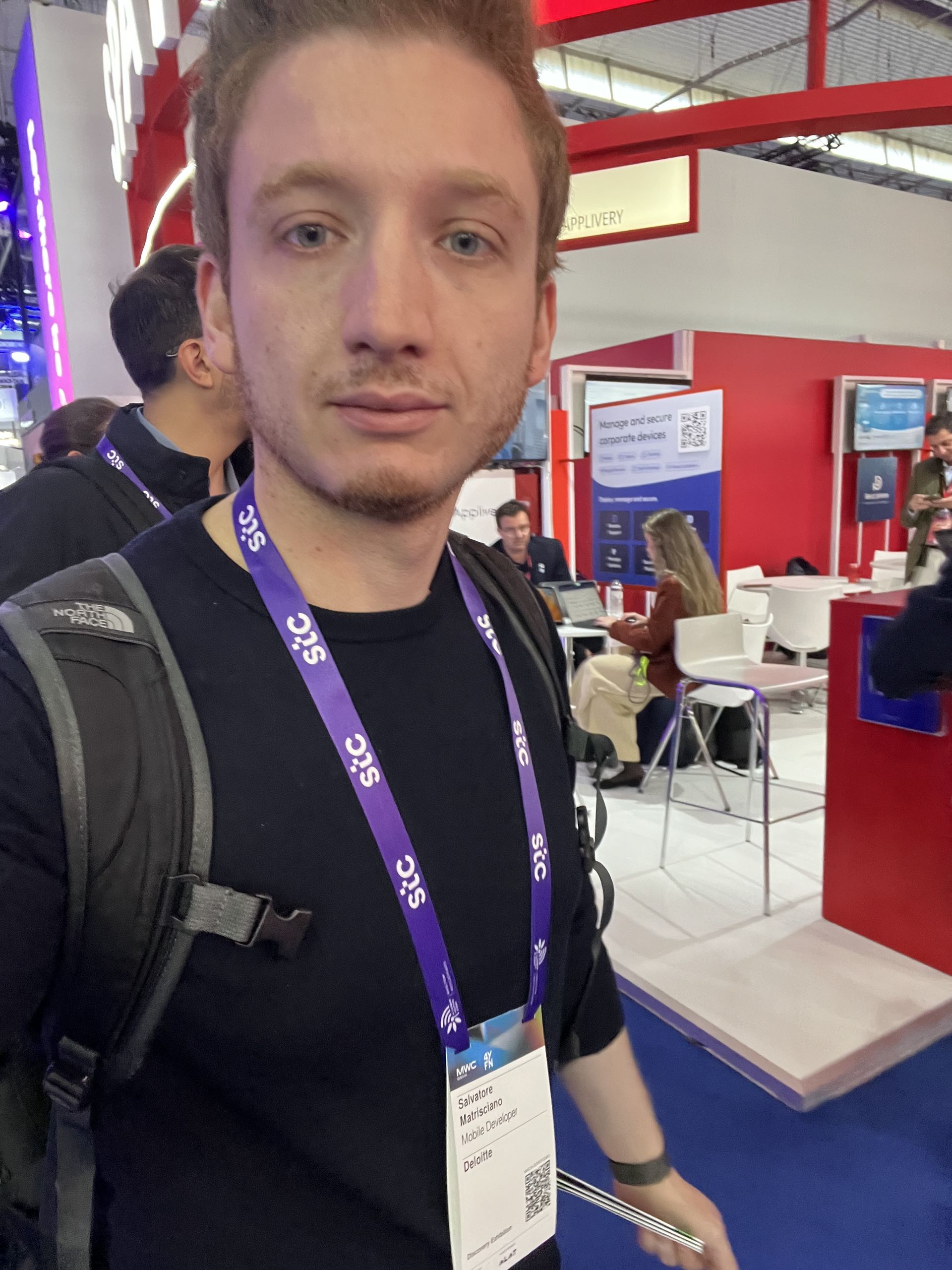
Badge on, somewhere in Hall 2
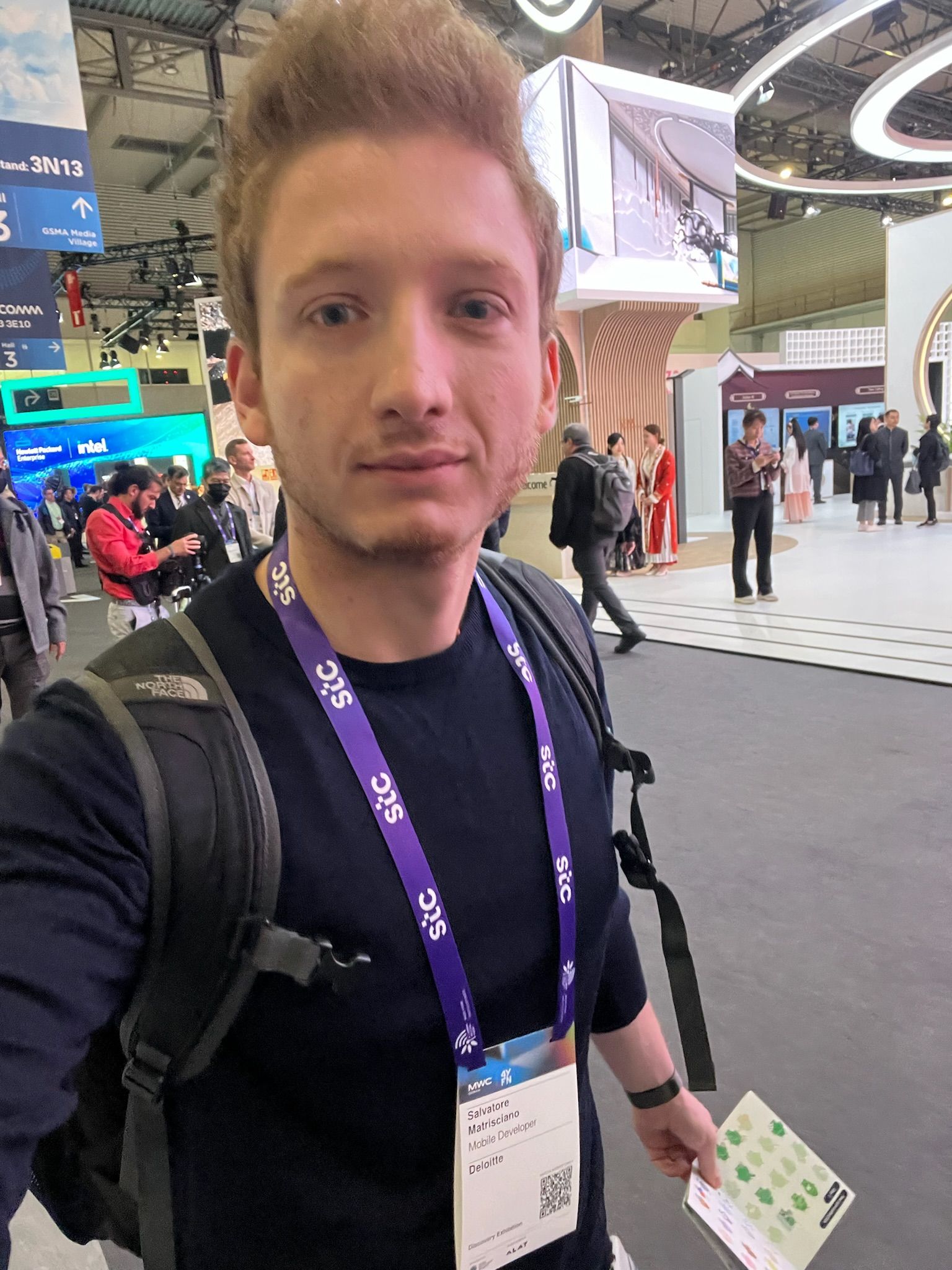
Stand 3N13, and a map full of pins to collect
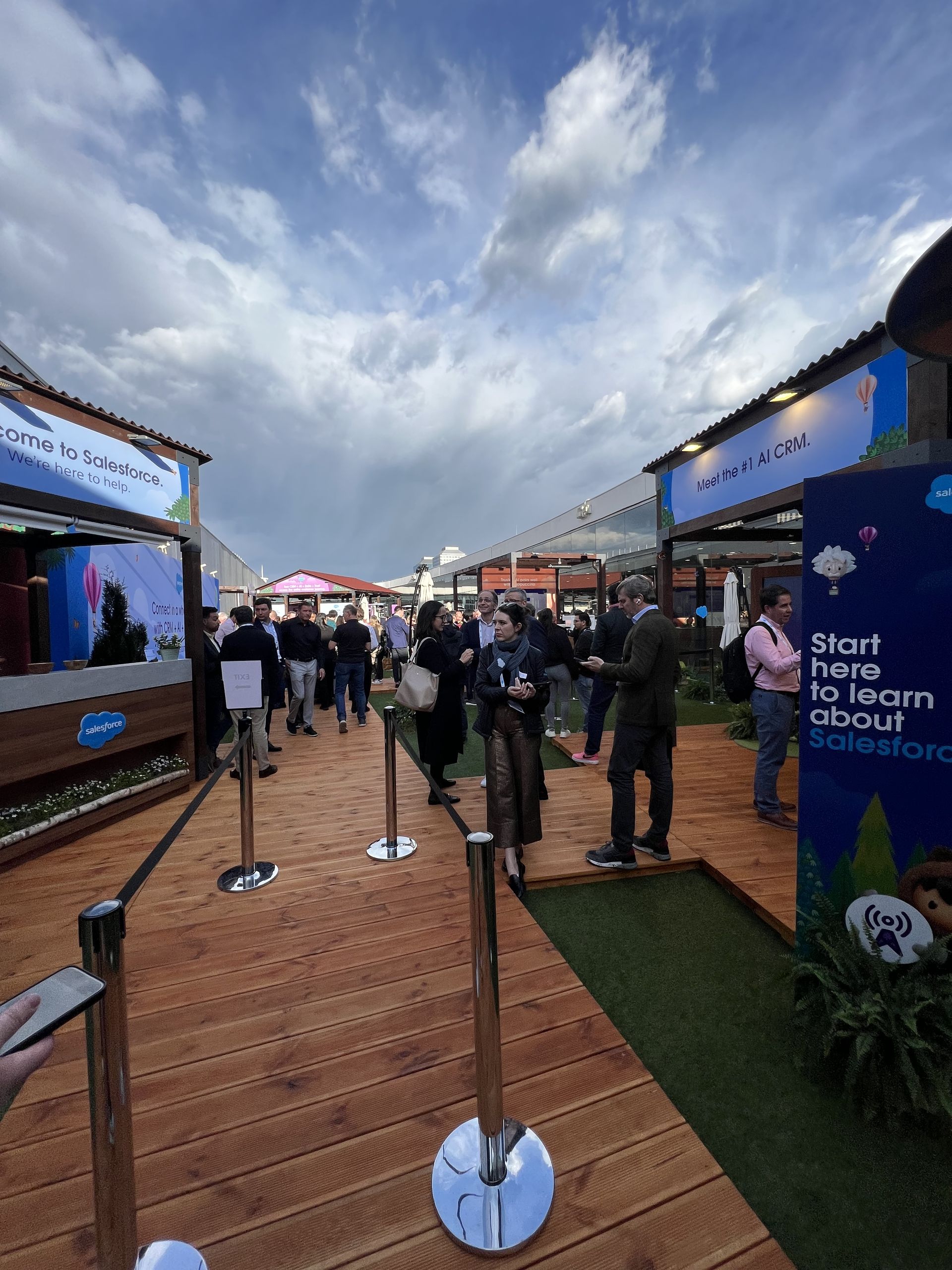
The Salesforce village, built outdoors
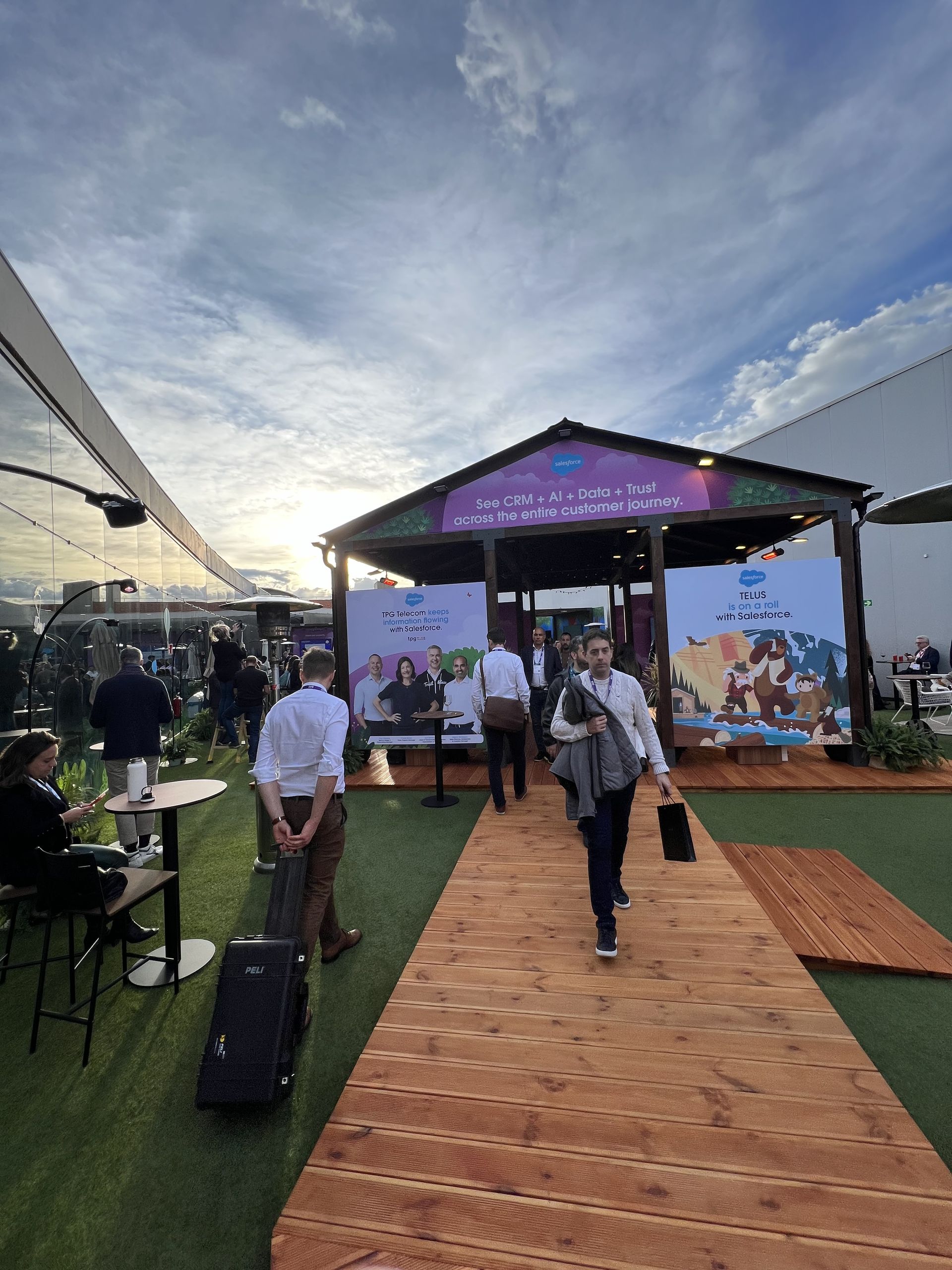
Six in the afternoon, the best light of the day
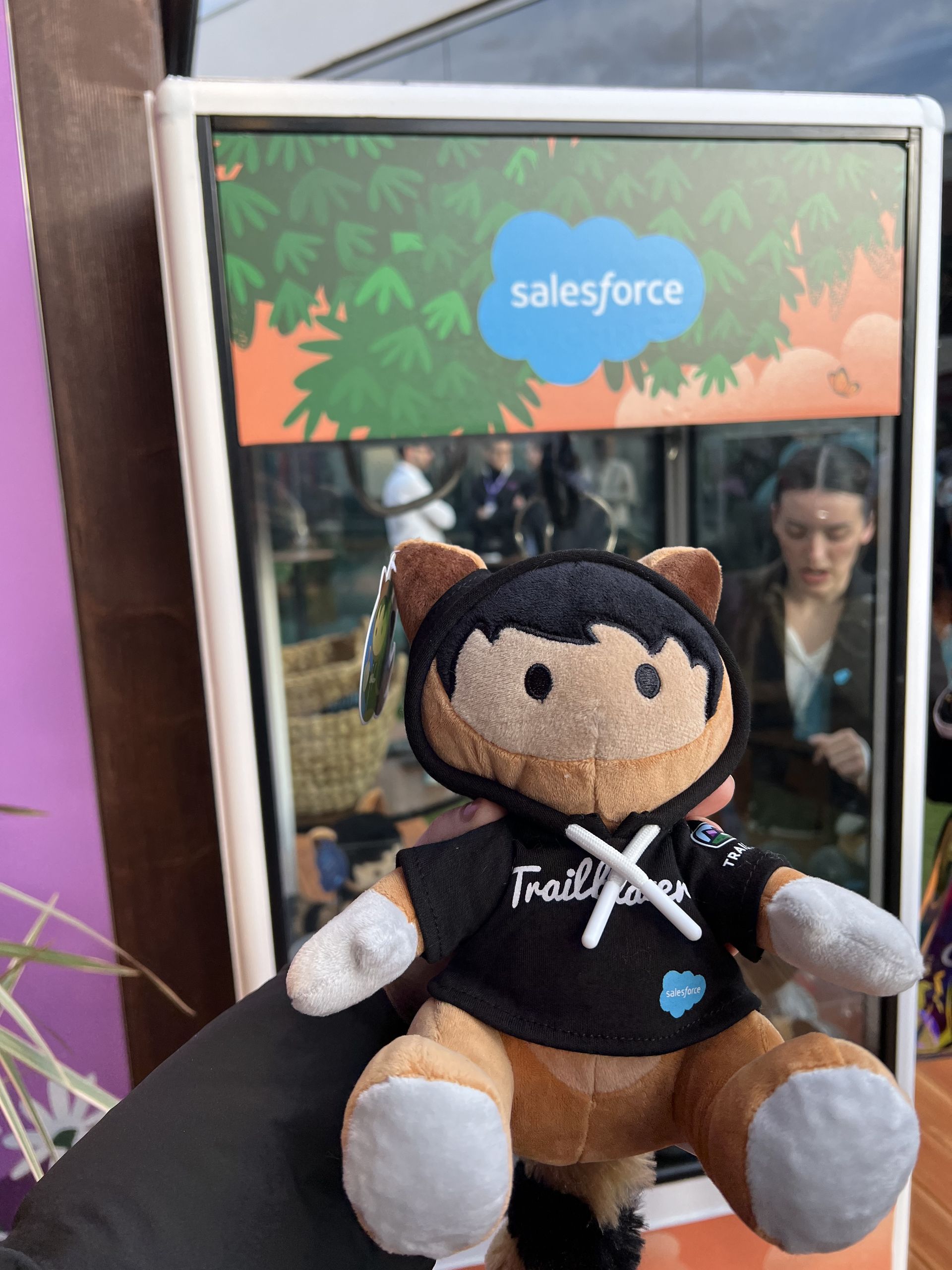
Swag with a hoodie on
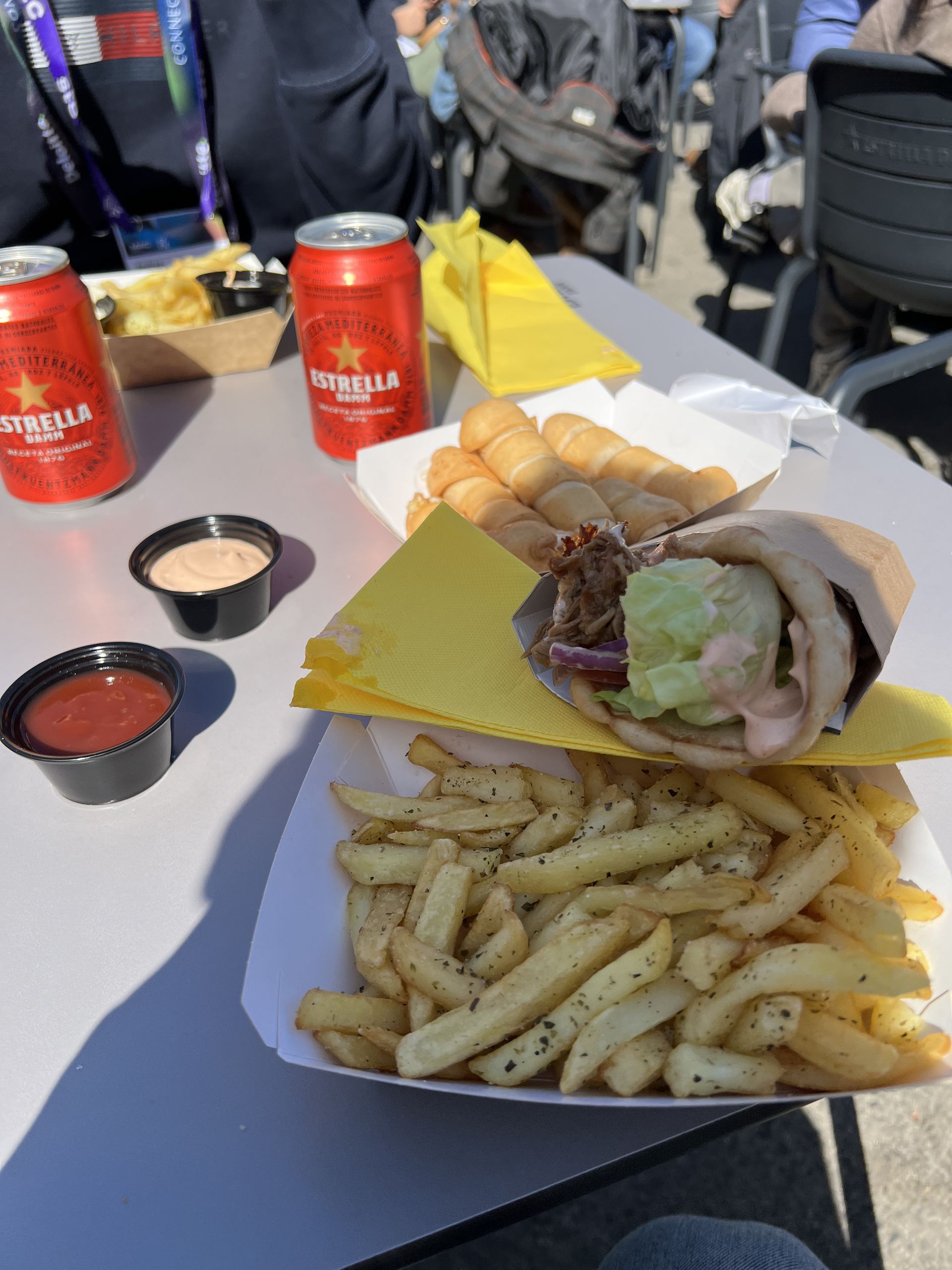
Lunch at the Fira, day four
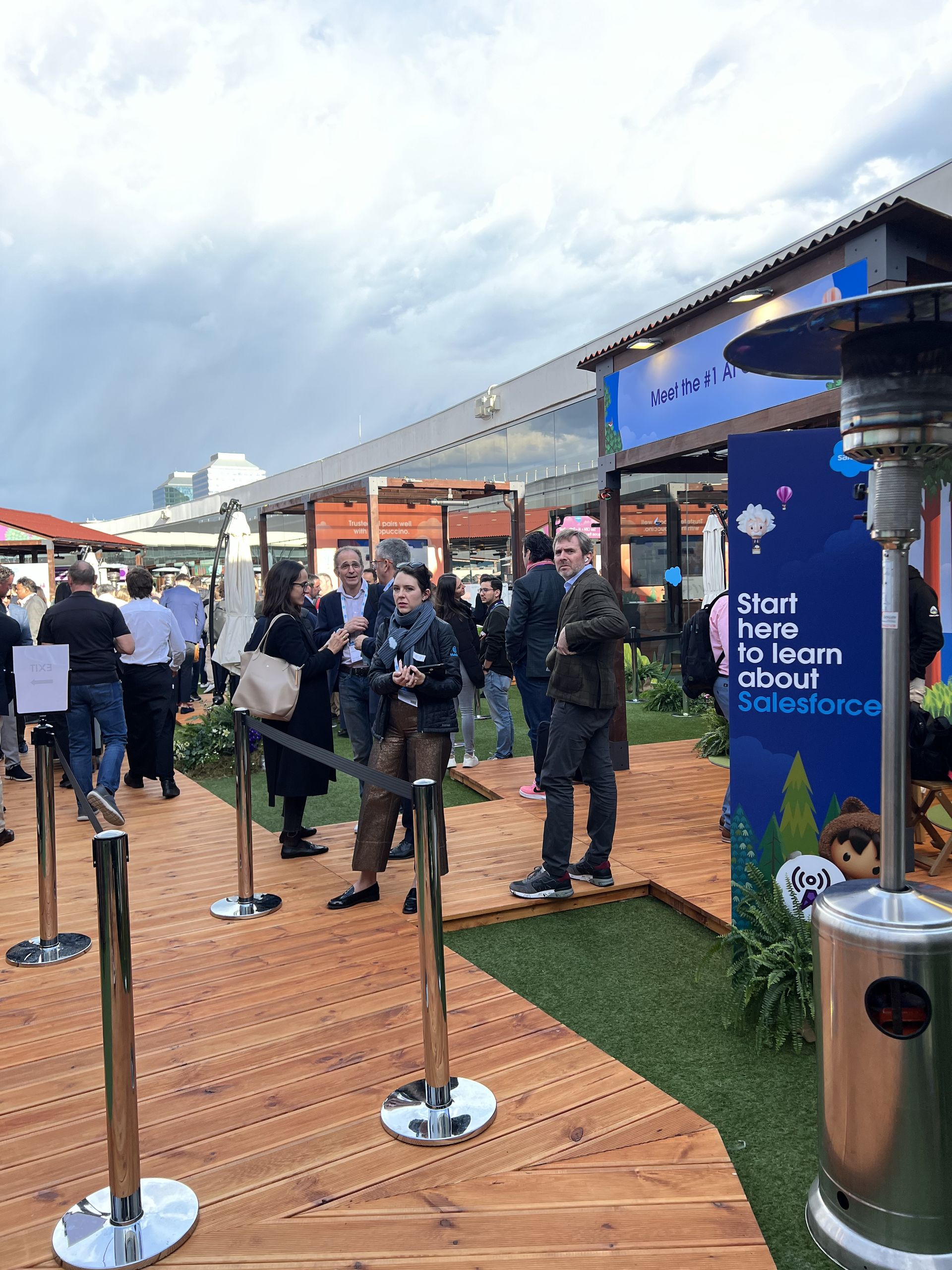
"Welcome to Salesforce", outside the halls
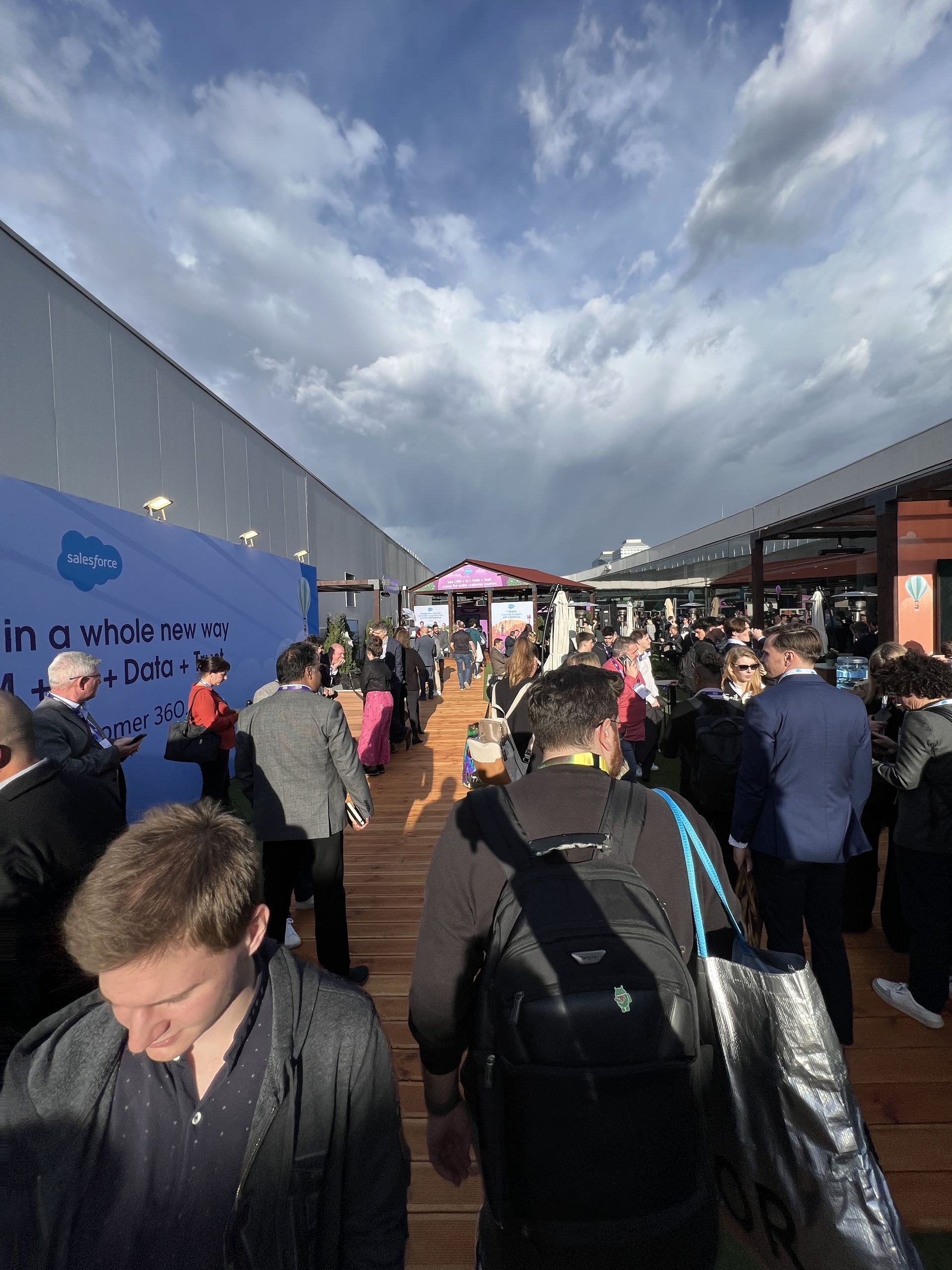
The boardwalk, at peak hour
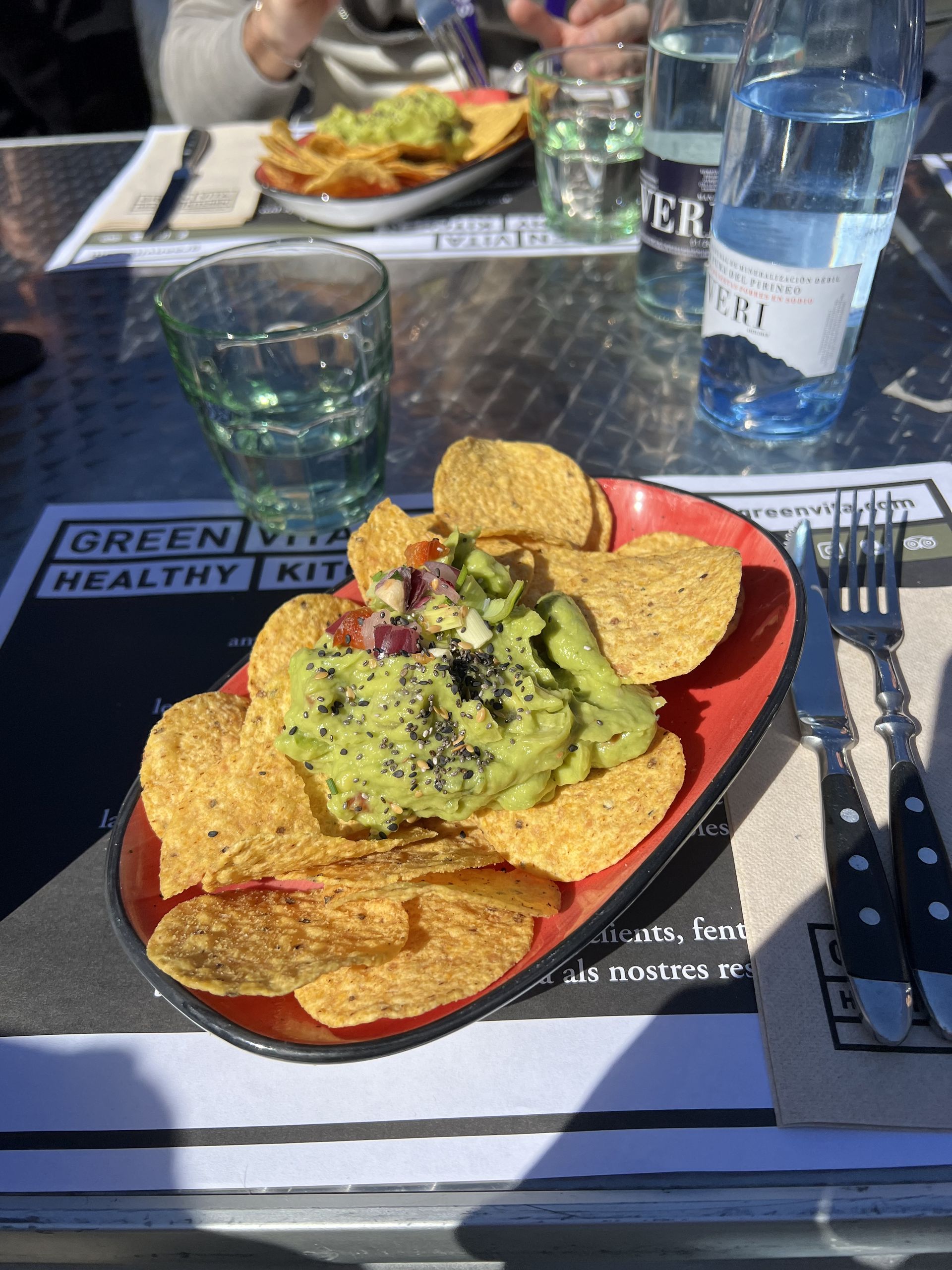
Guacamole, between one hall and the next
Barcelona
And then Barcelona, which does not need much of an excuse: tapas and cava after the halls closed, paella and sangria with the team, the Sagrada Família, Passeig de Gràcia and the Barceloneta at sunset. Plus breakfast at a counter before the first metro of the day, a proper tapas night on the way back from the fair, and churros with chocolate at the end of it.
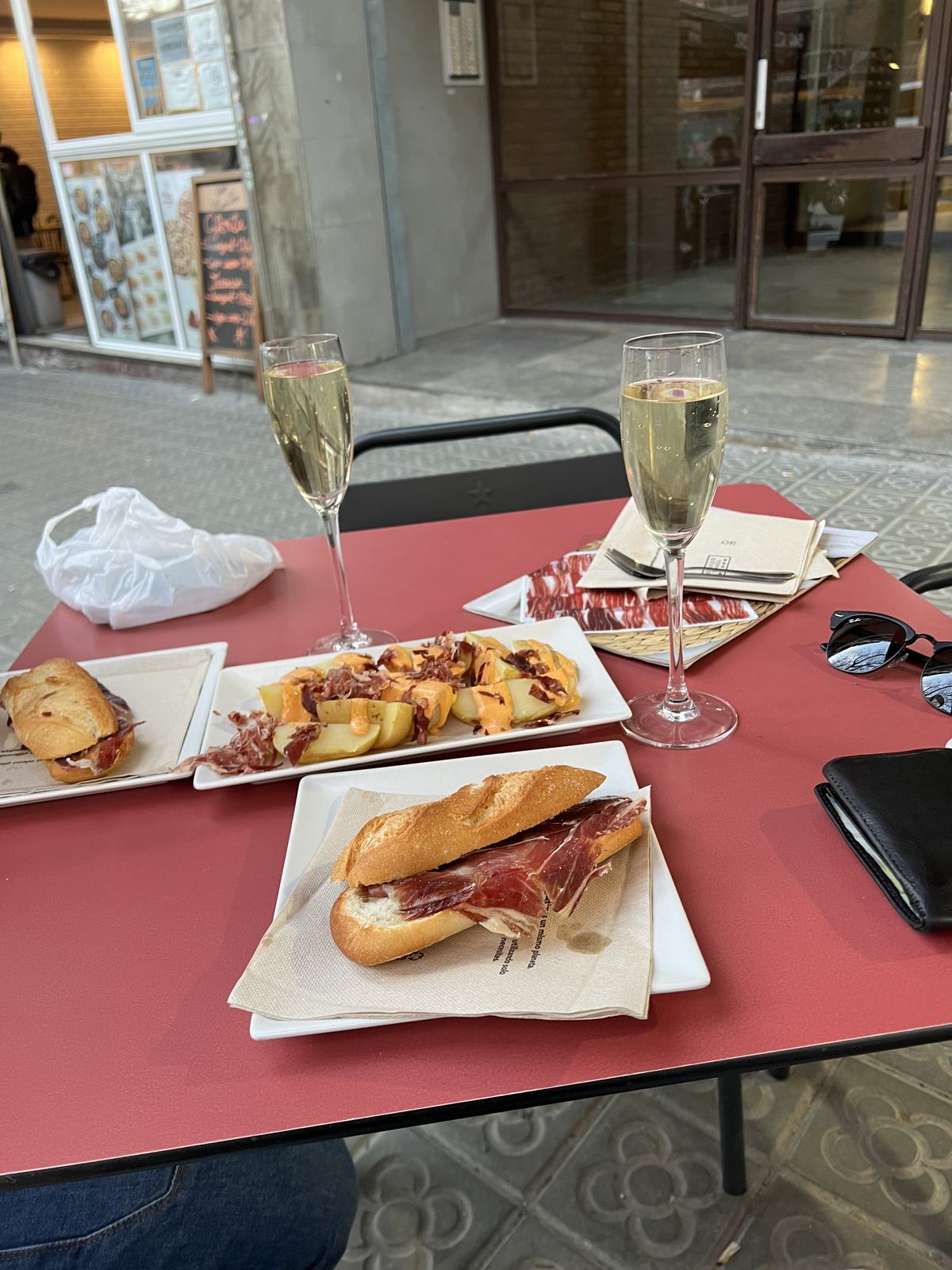
Tapas and cava
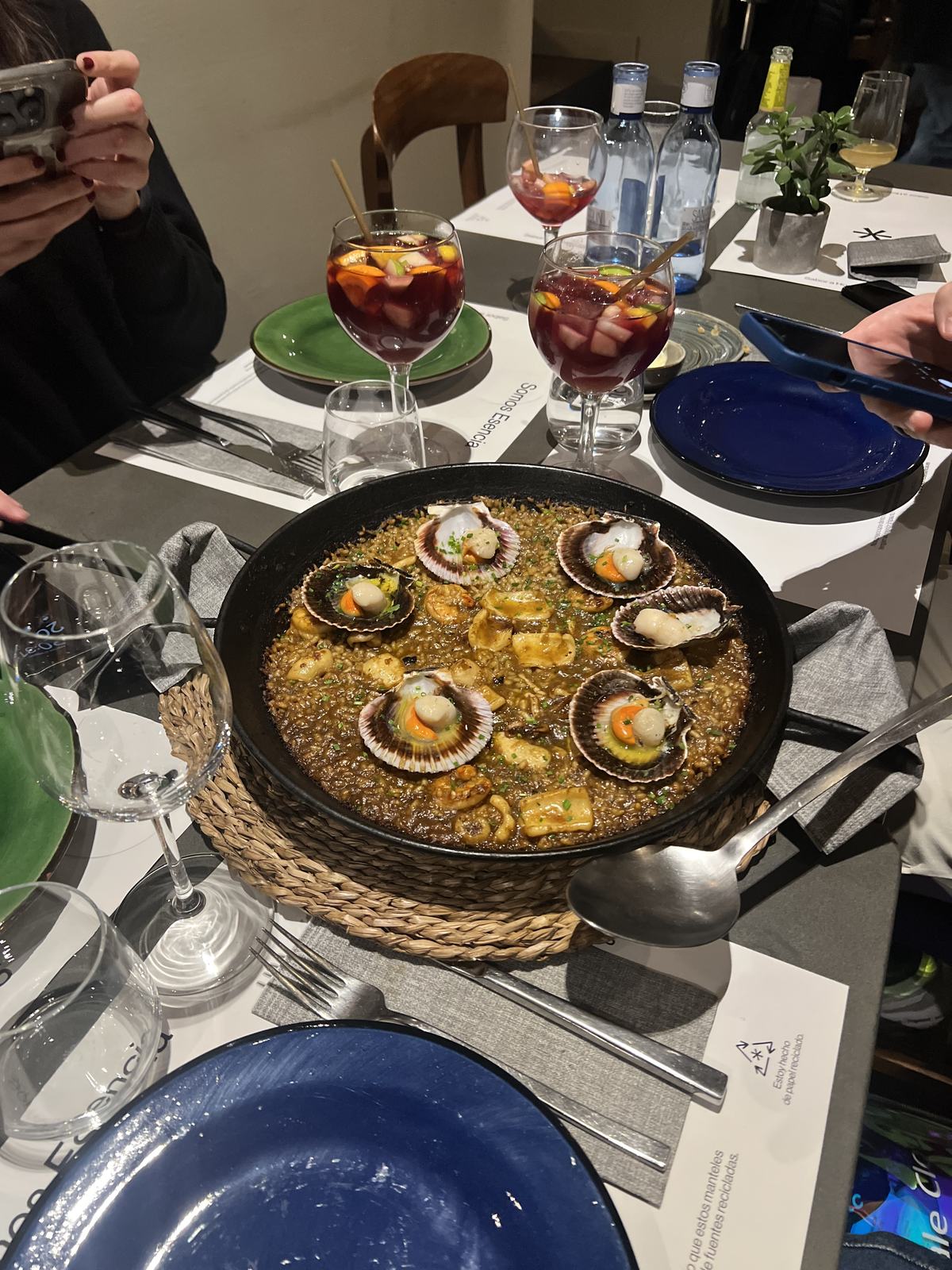
Paella
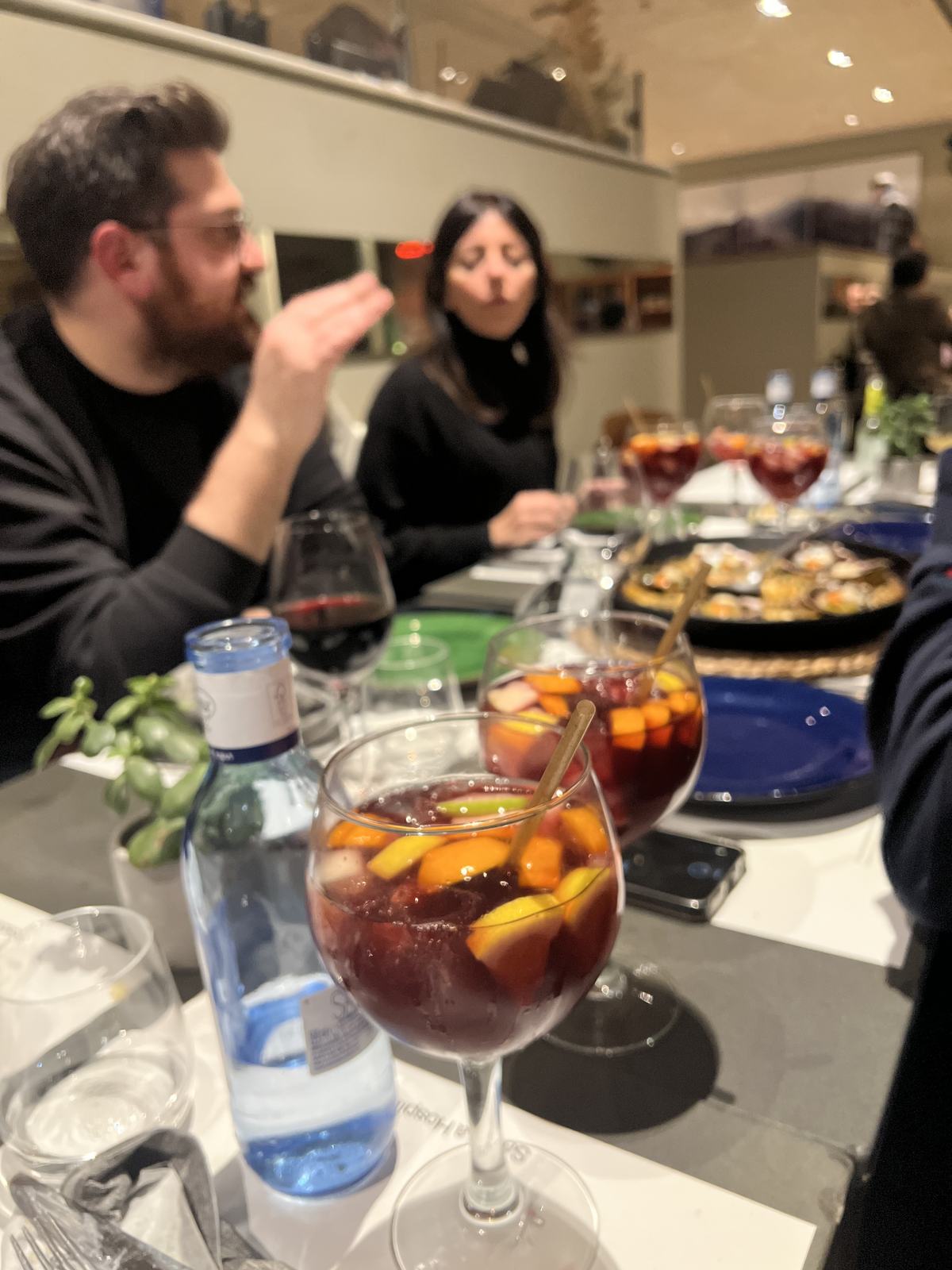
Sangria, end of day two
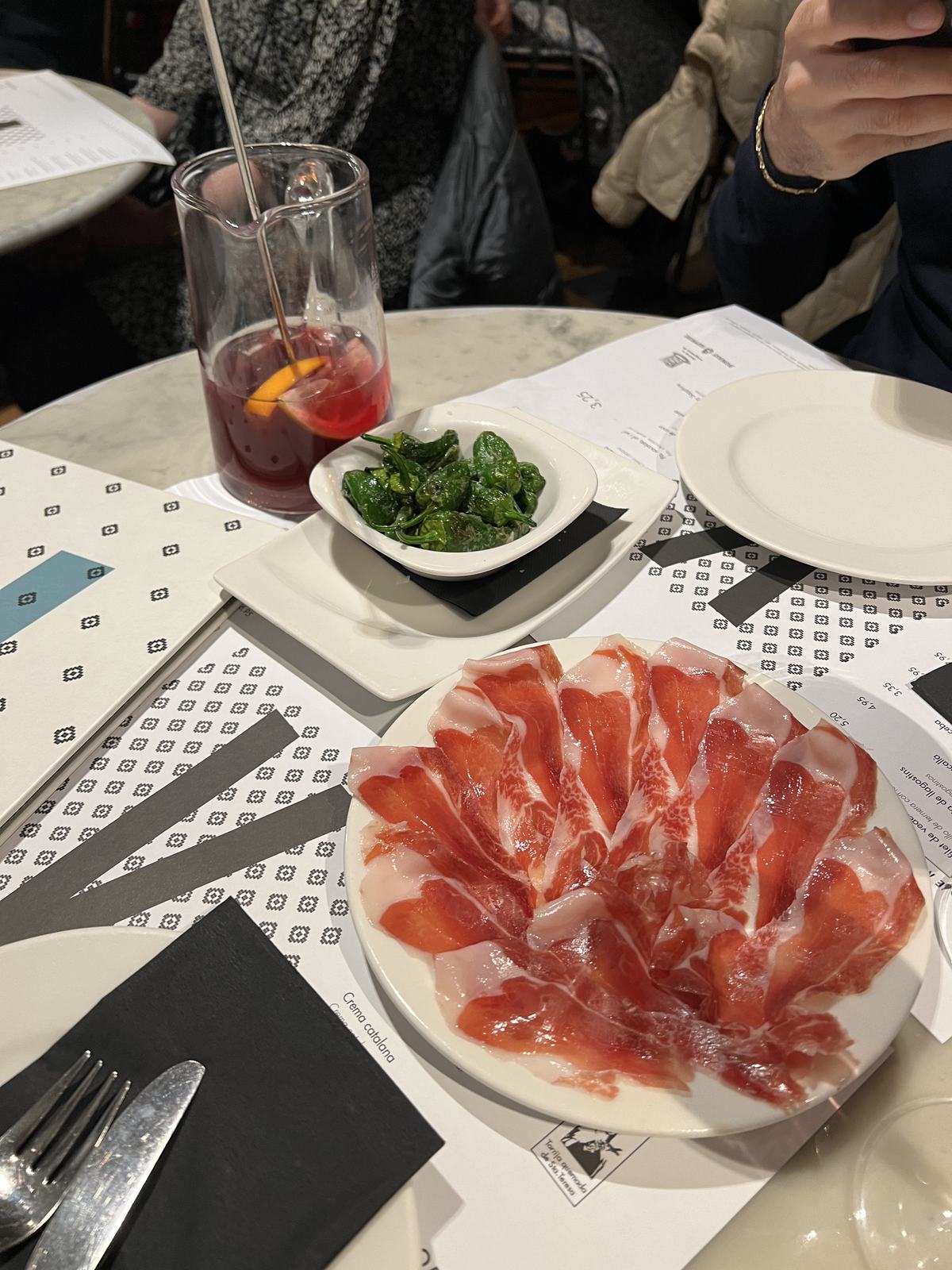
Jamón
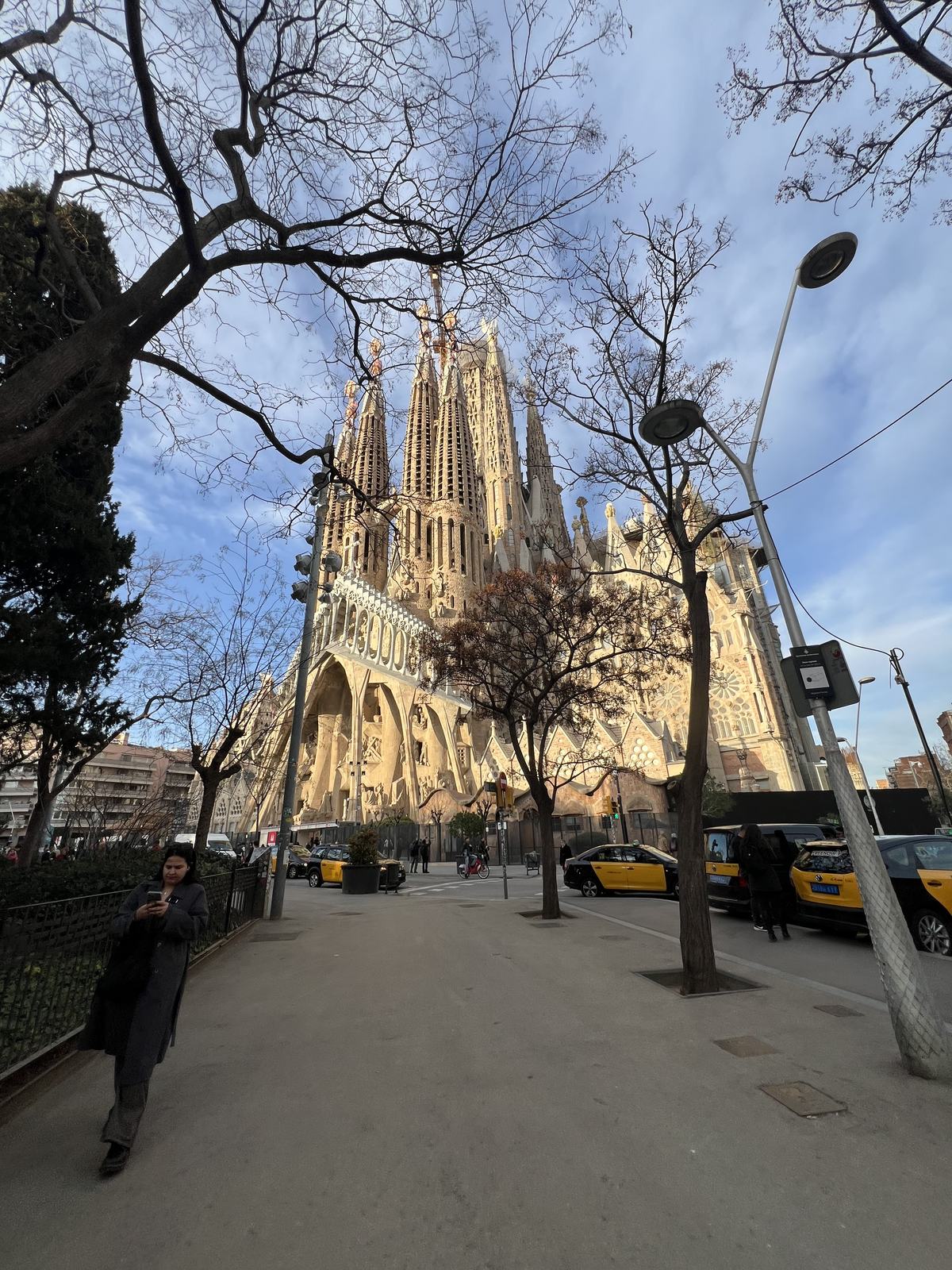
Sagrada Família
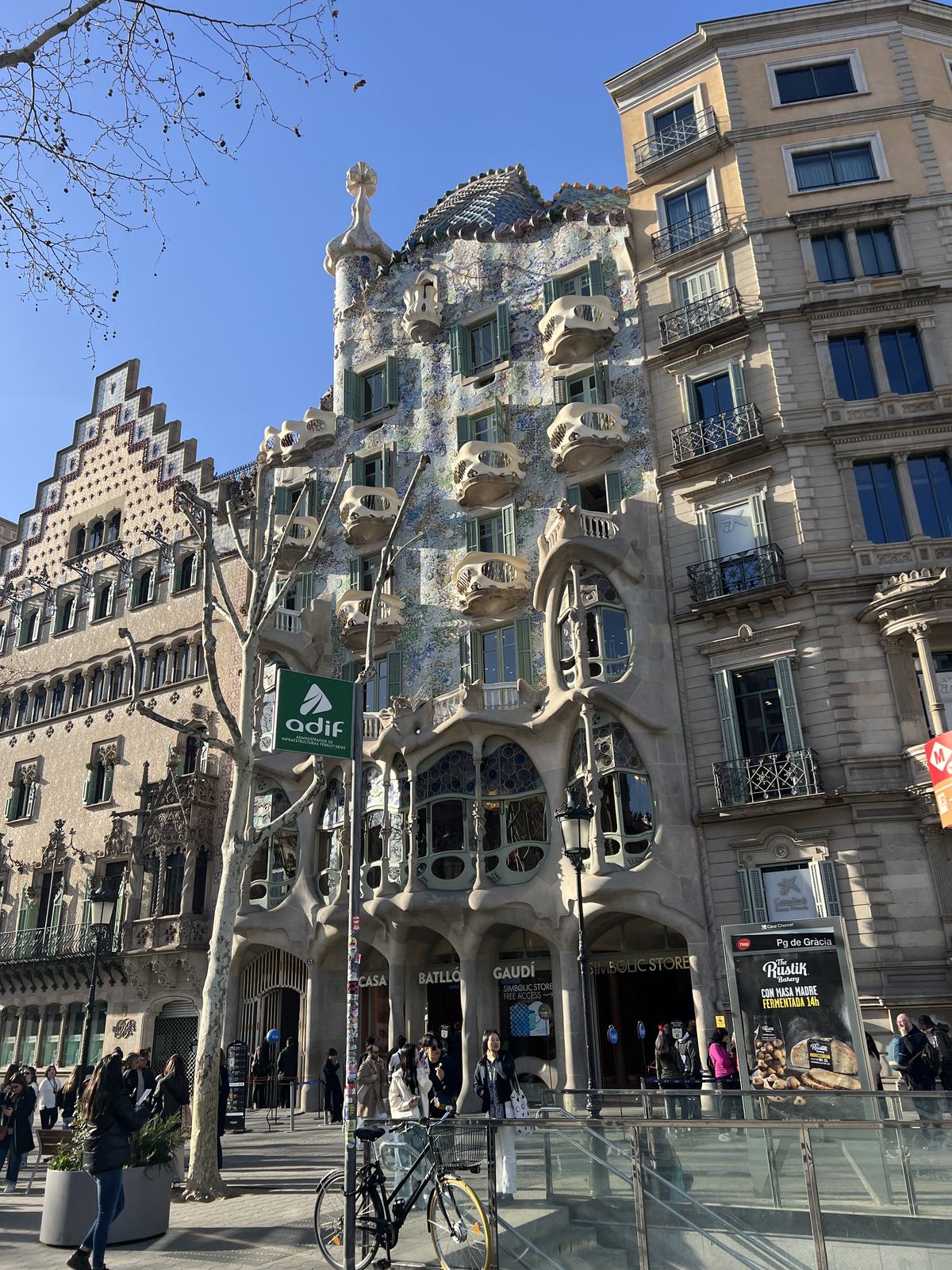
Casa Batlló
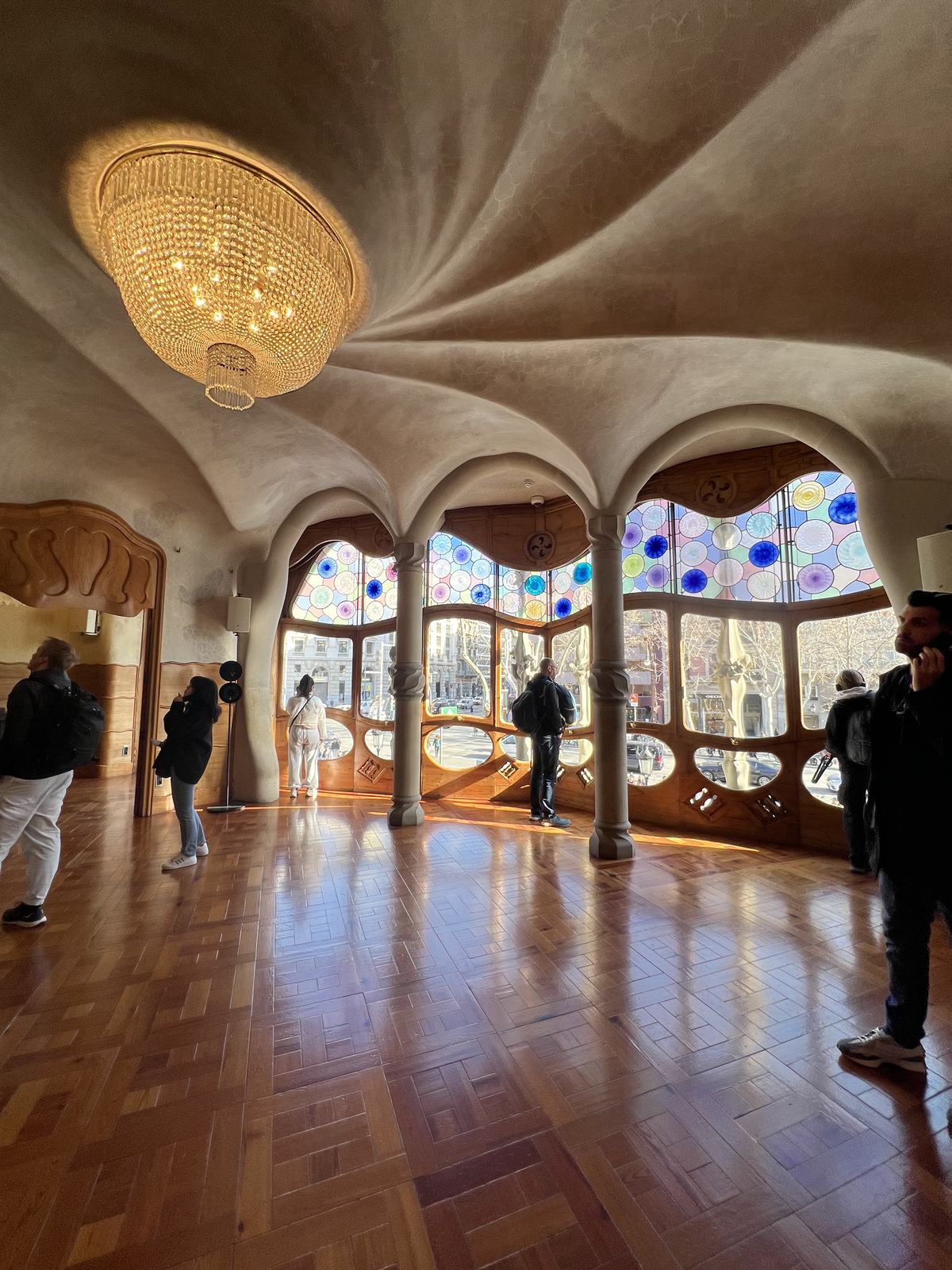
Inside, where the light does the work
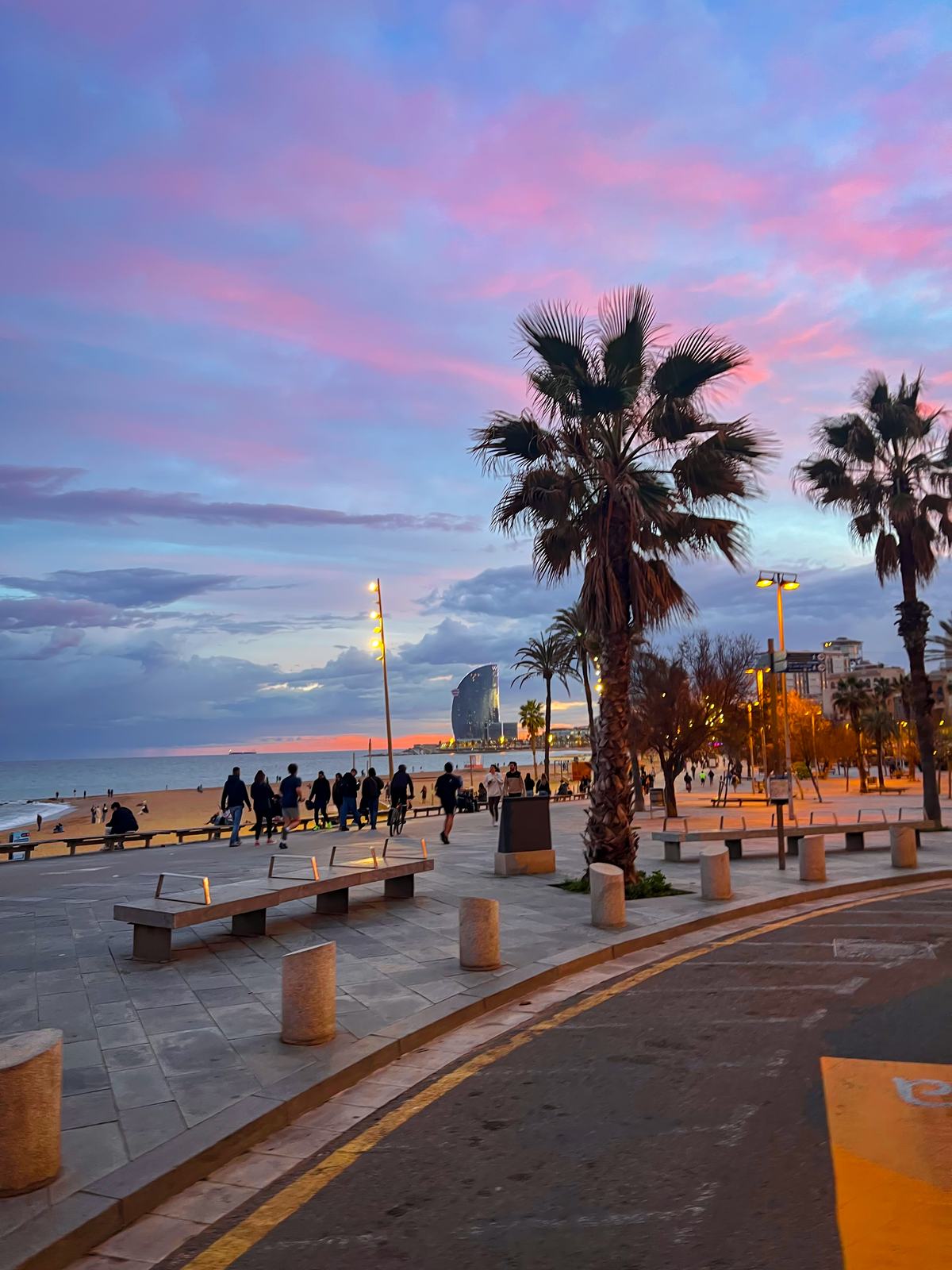
Barceloneta at sunset
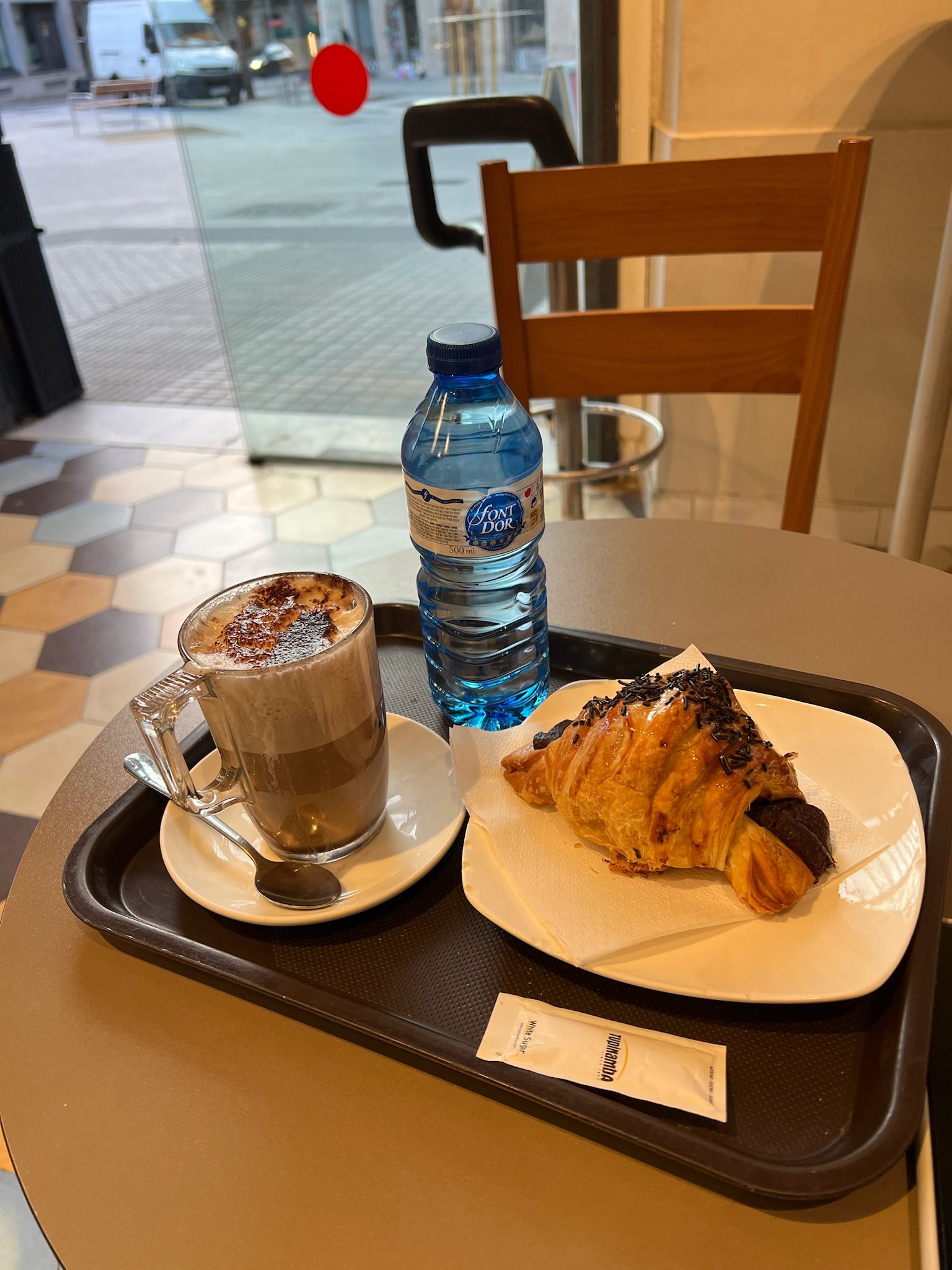
Breakfast before the first metro
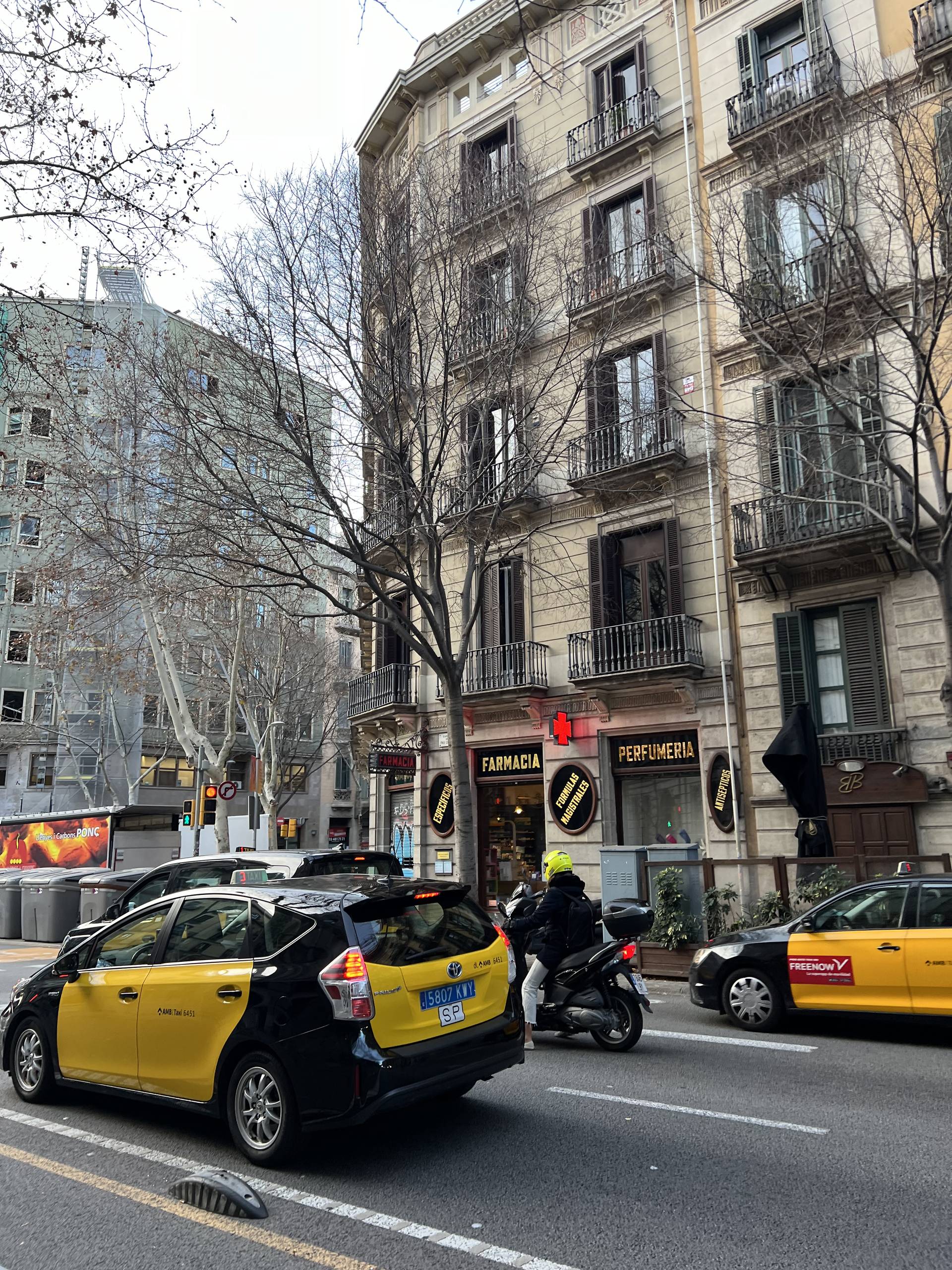
The black and yellow taxis, every morning
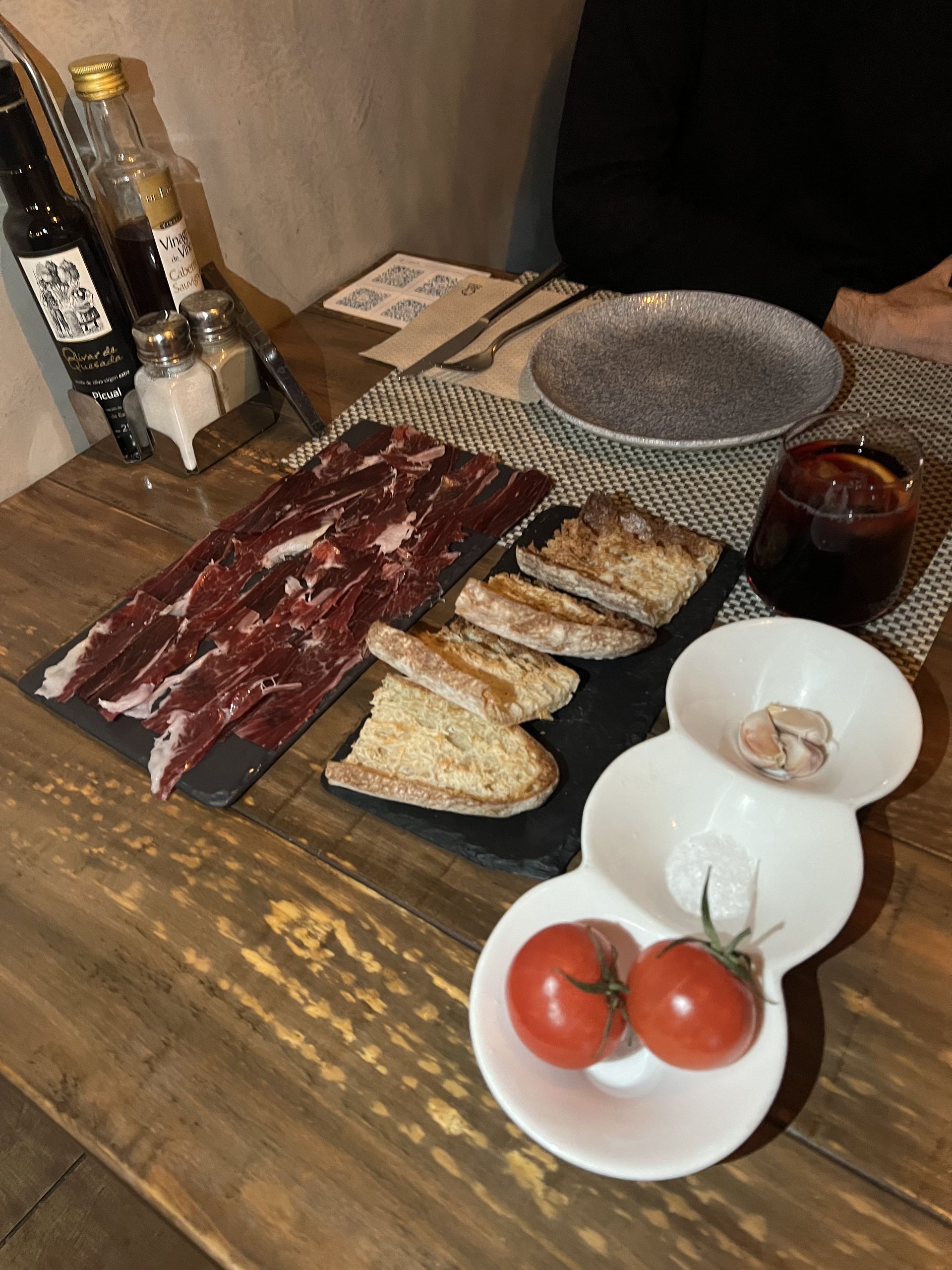
Jamón, pa amb tomàquet, vermut
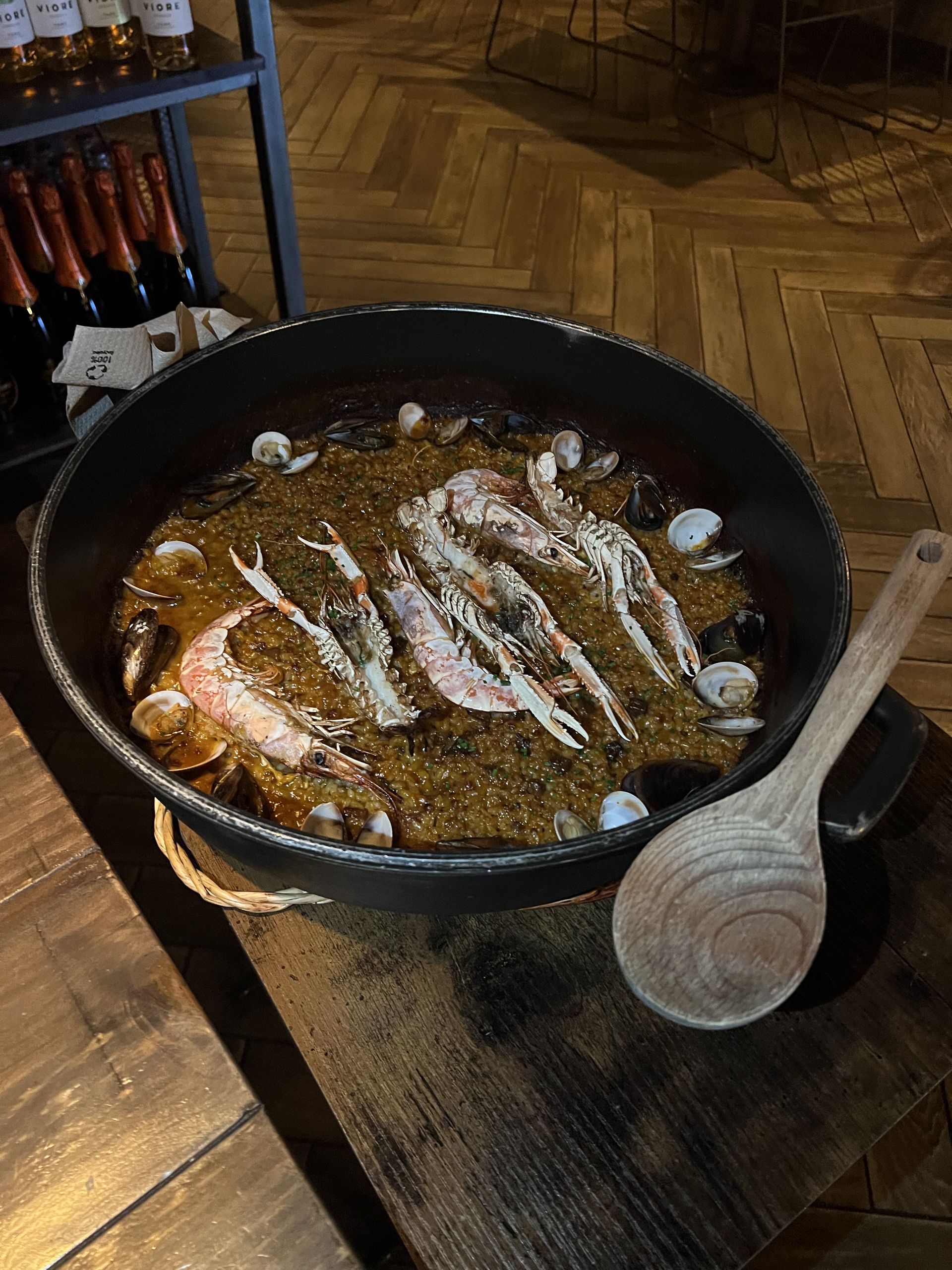
Paella
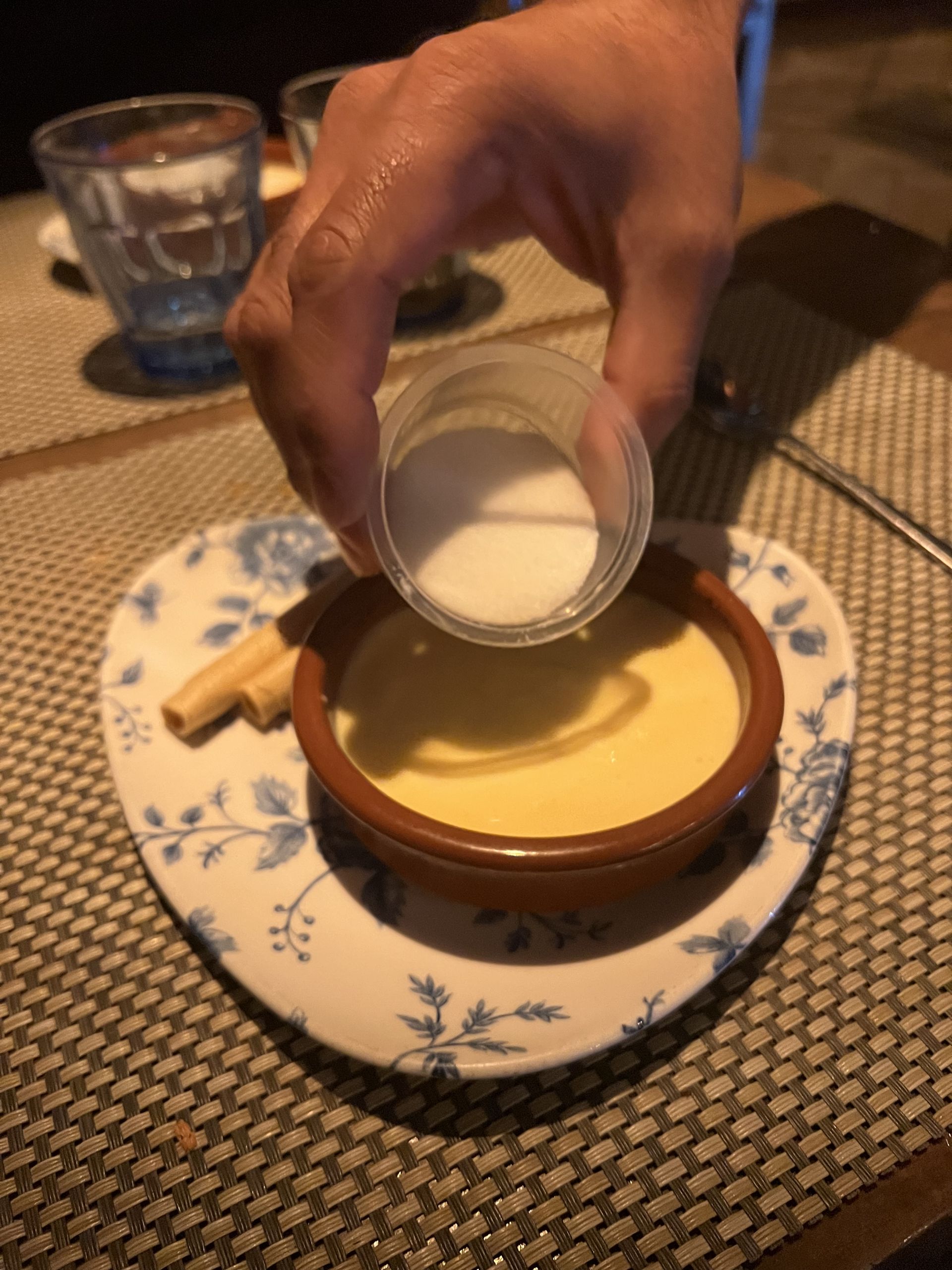
Crema catalana, one second before the sugar
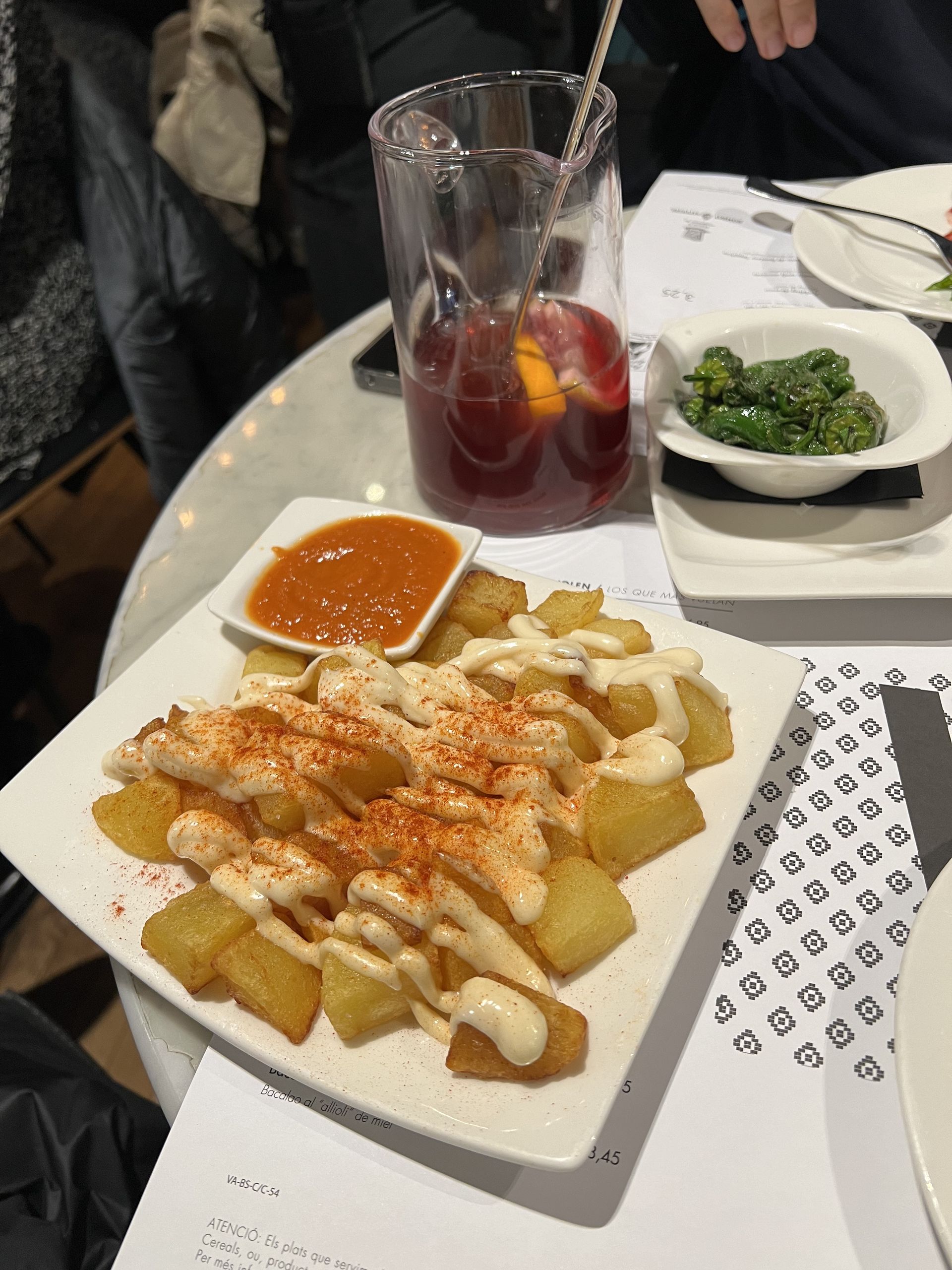
Bravas, padrón peppers, sangria
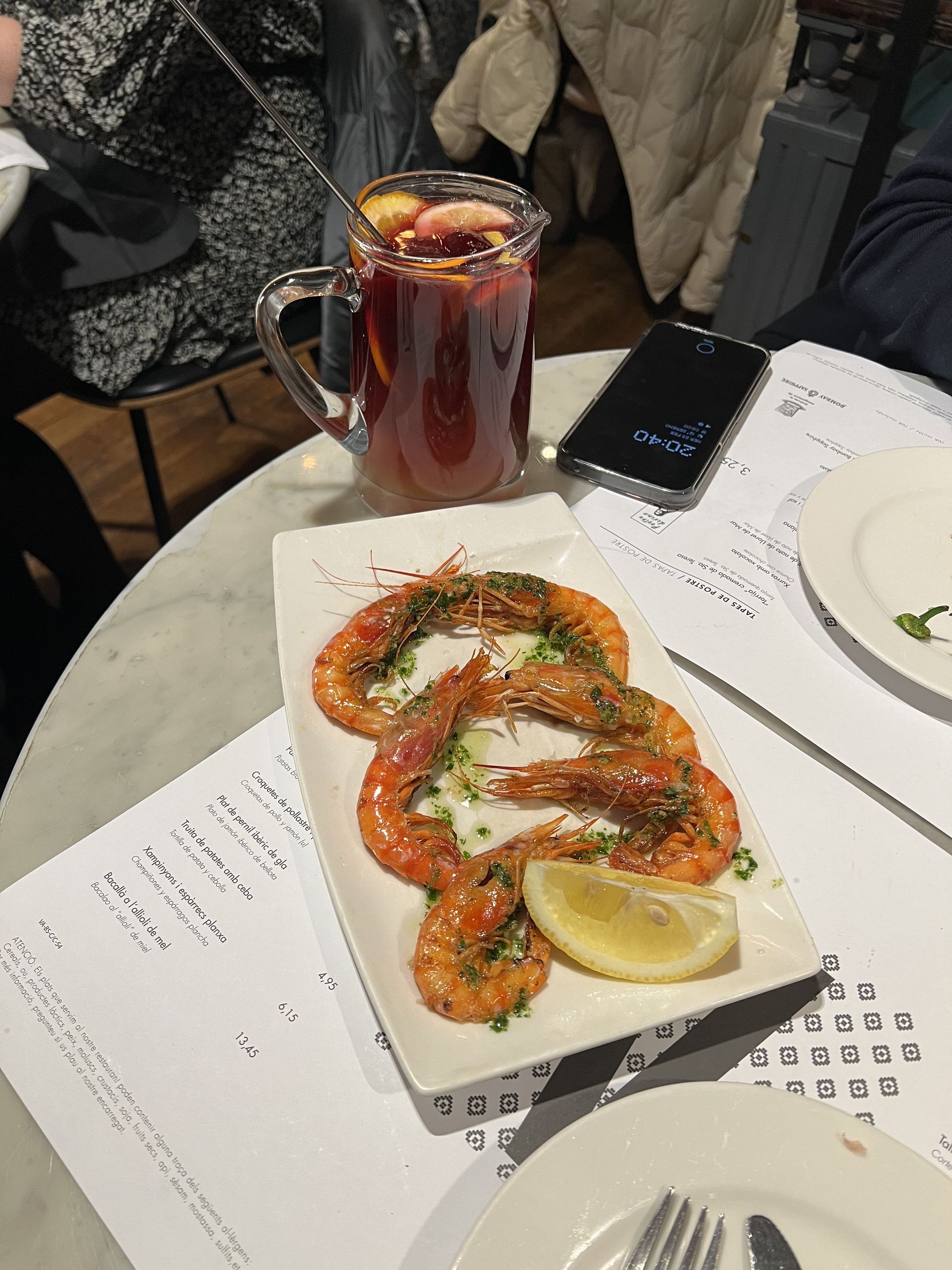
Prawns, second round
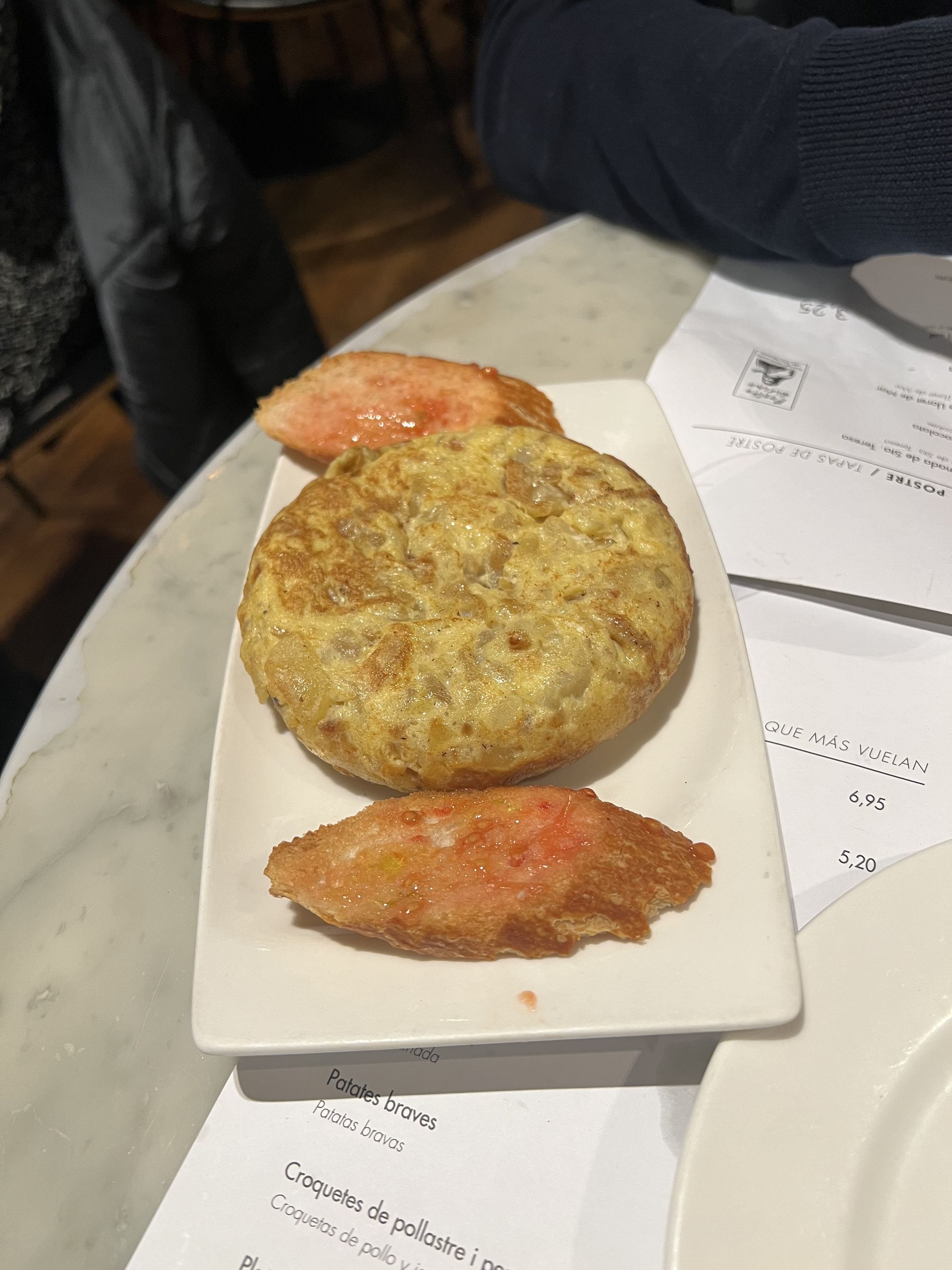
Tortilla, the non-negotiable one
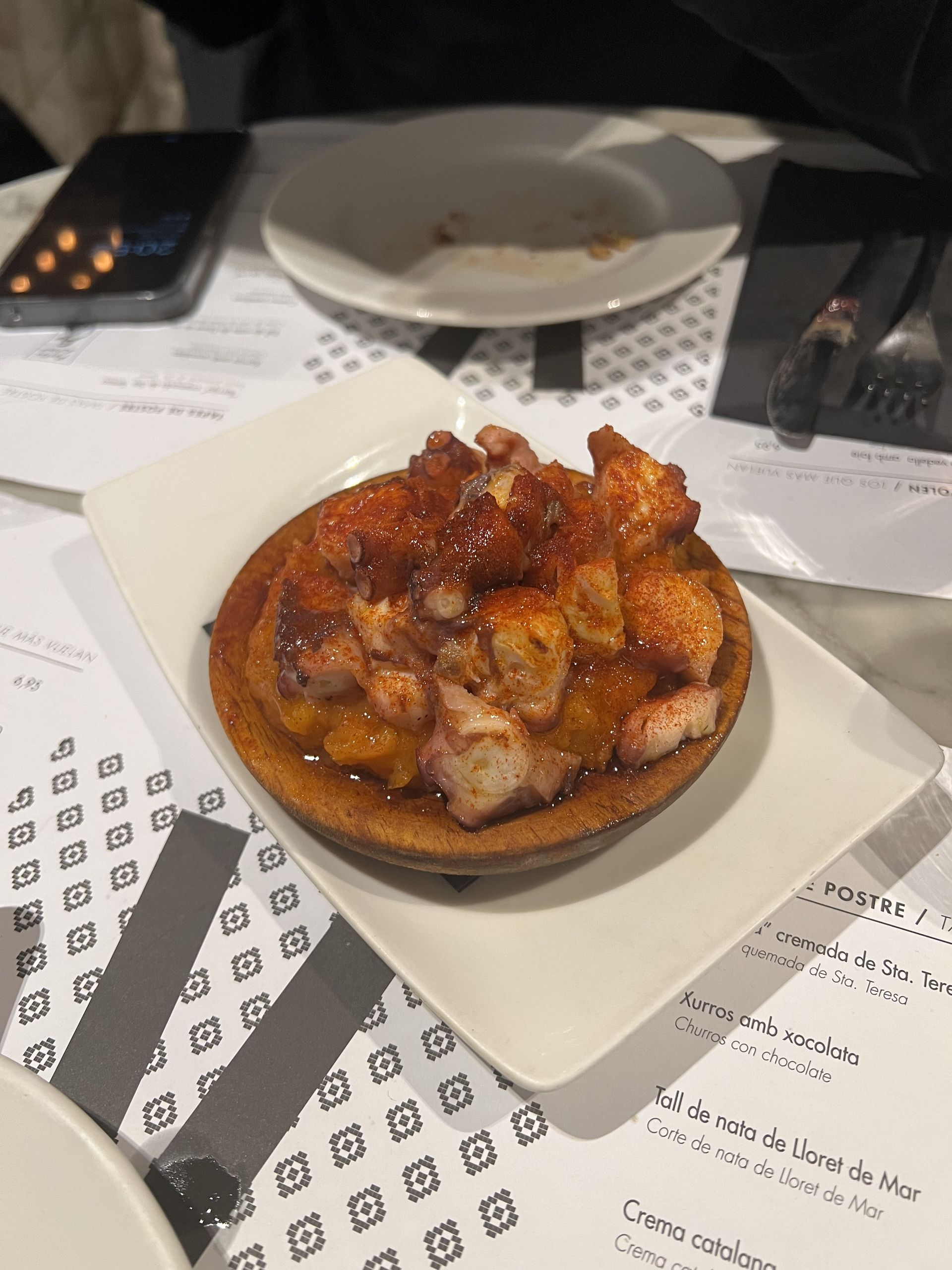
Pulpo, with paprika
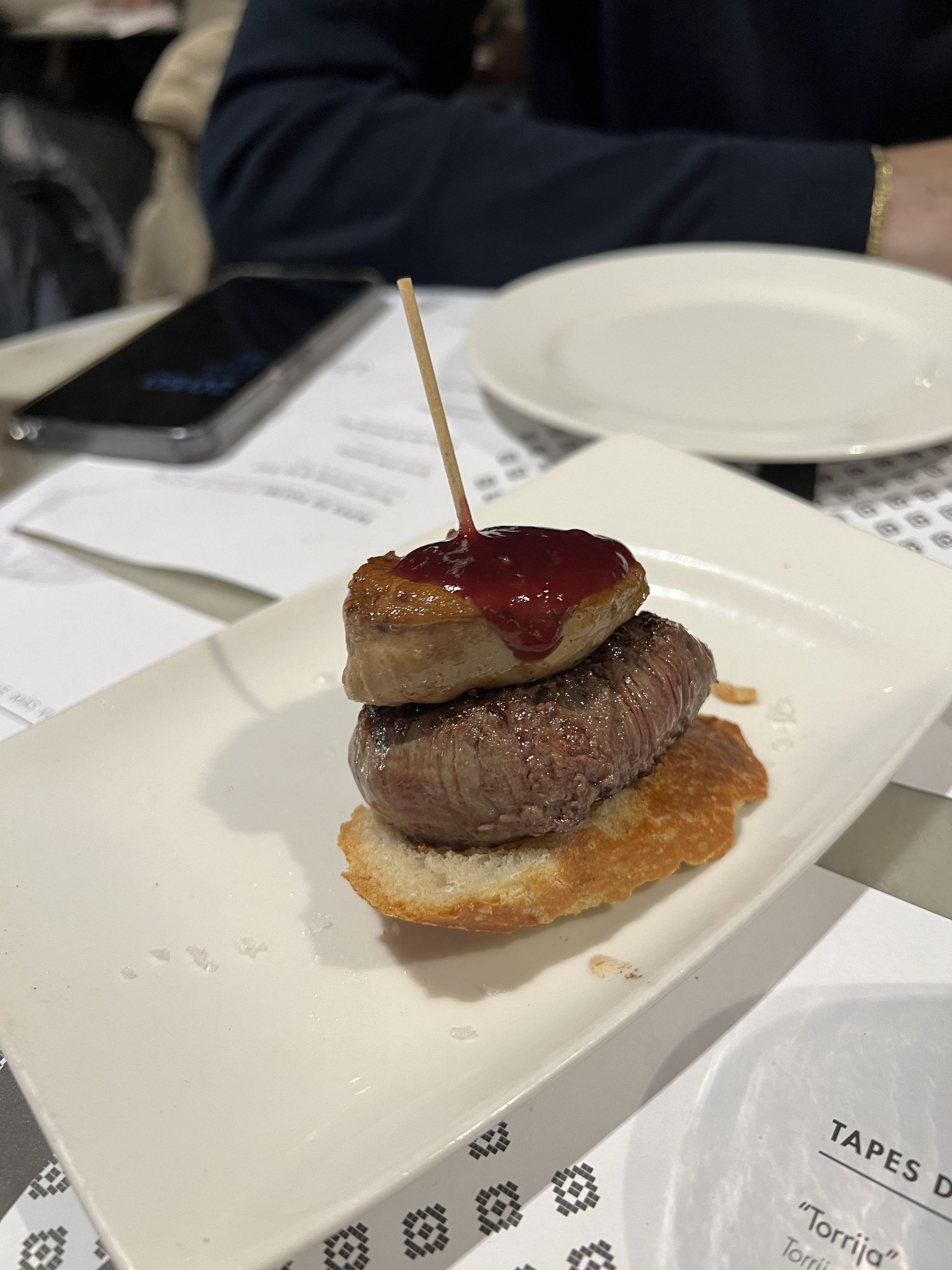
Beef and foie, on a stick
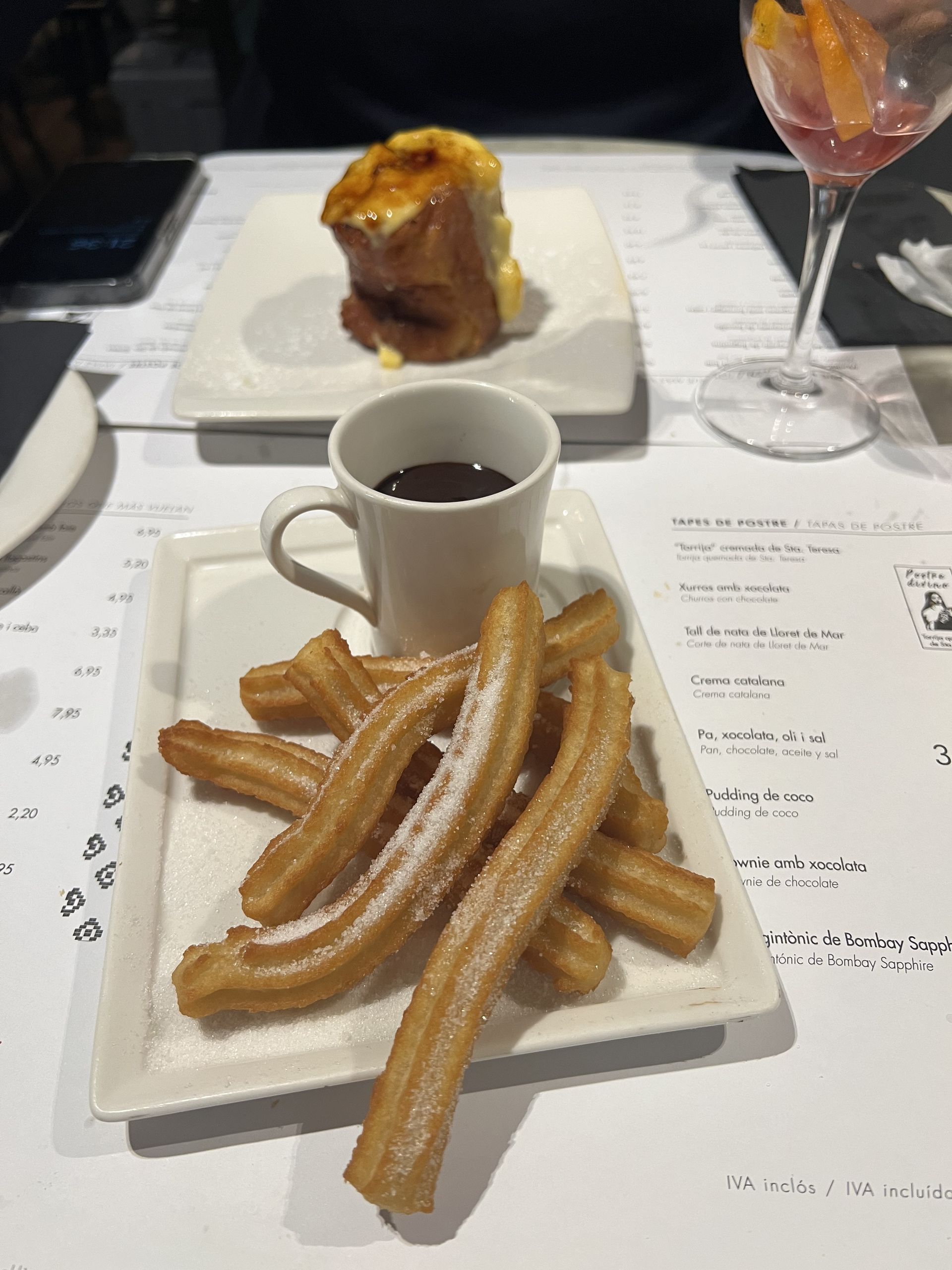
Churros amb xocolata, to close
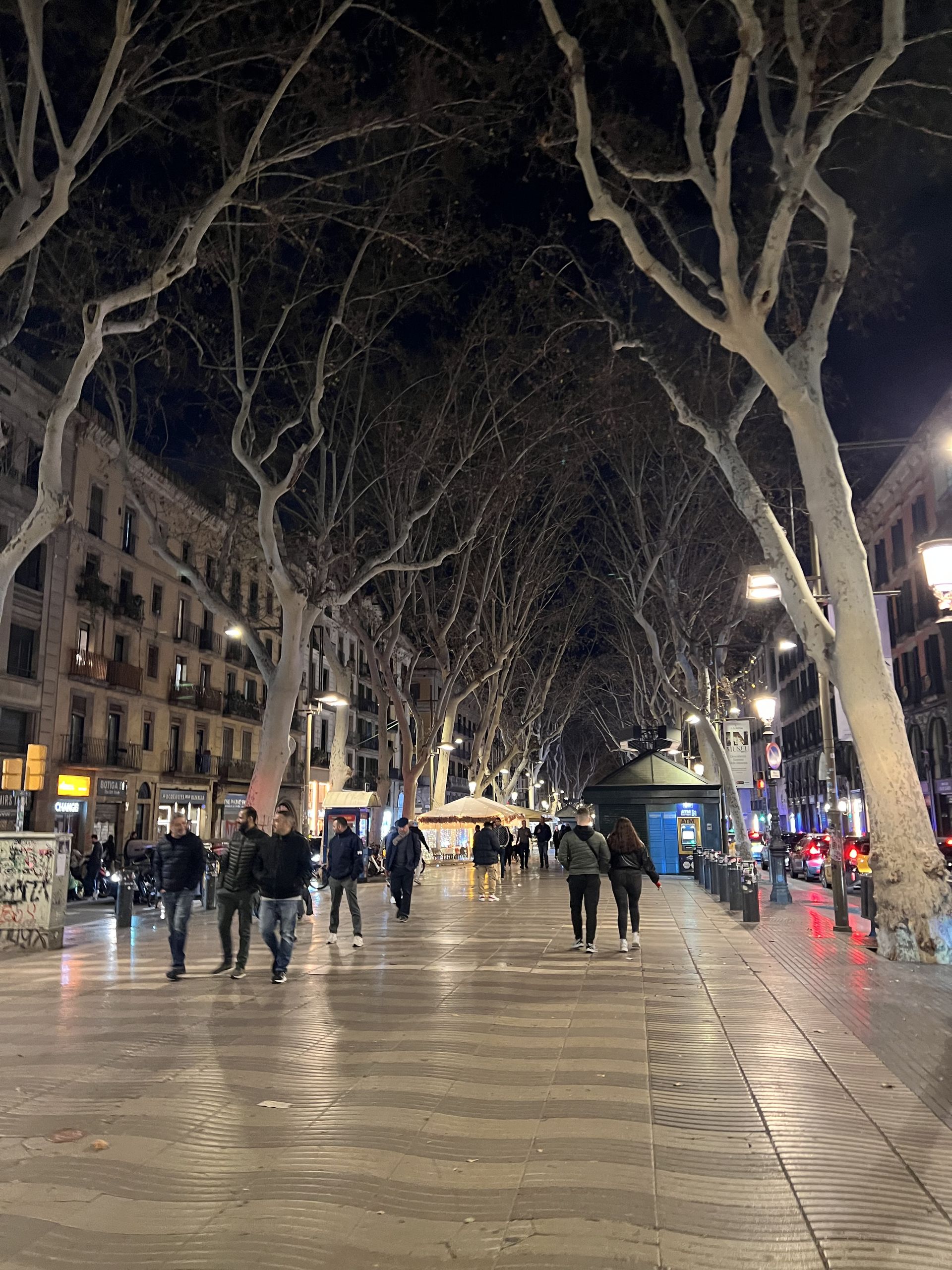
La Rambla, walking back
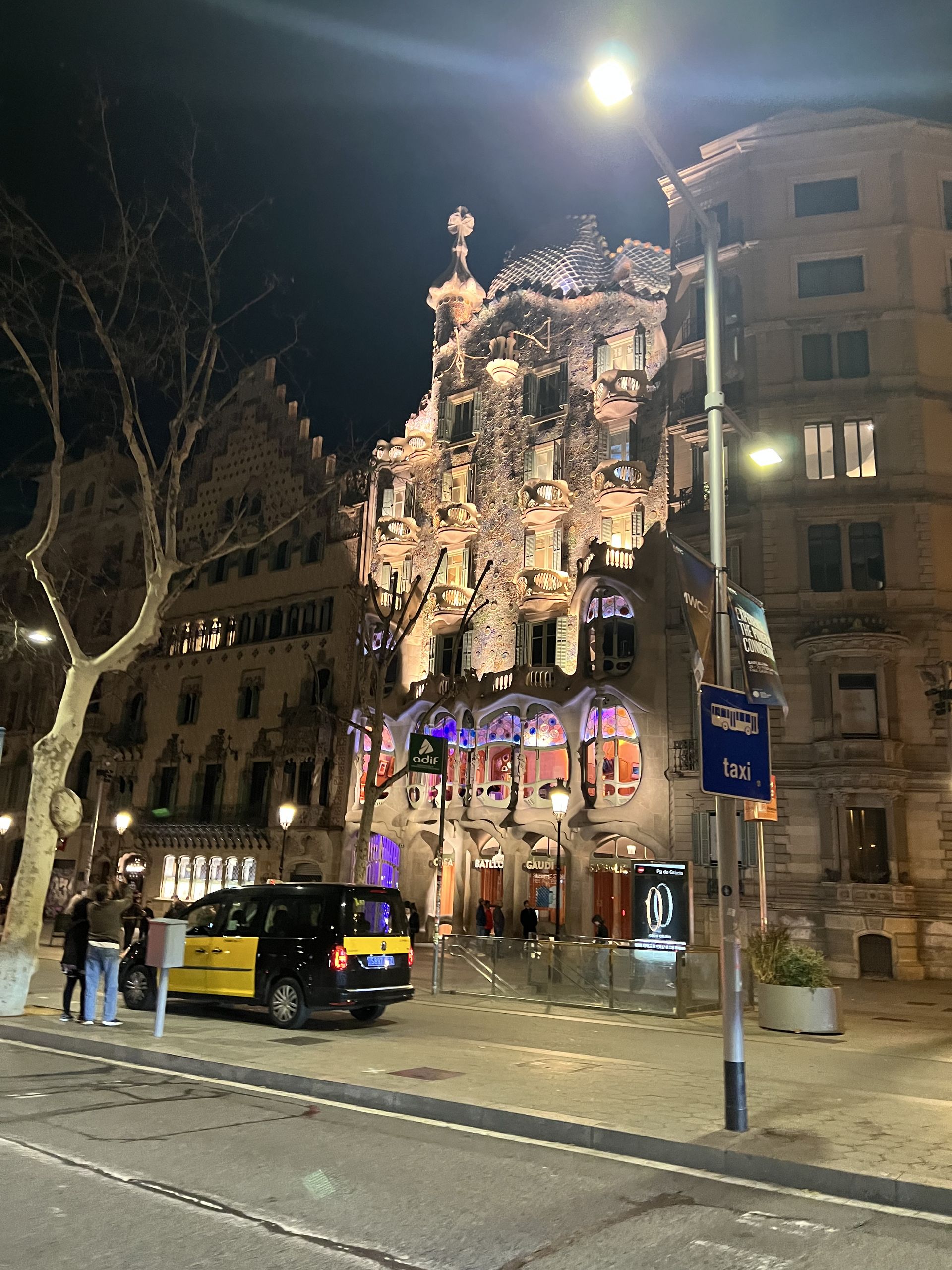
Casa Batlló, lit up at night
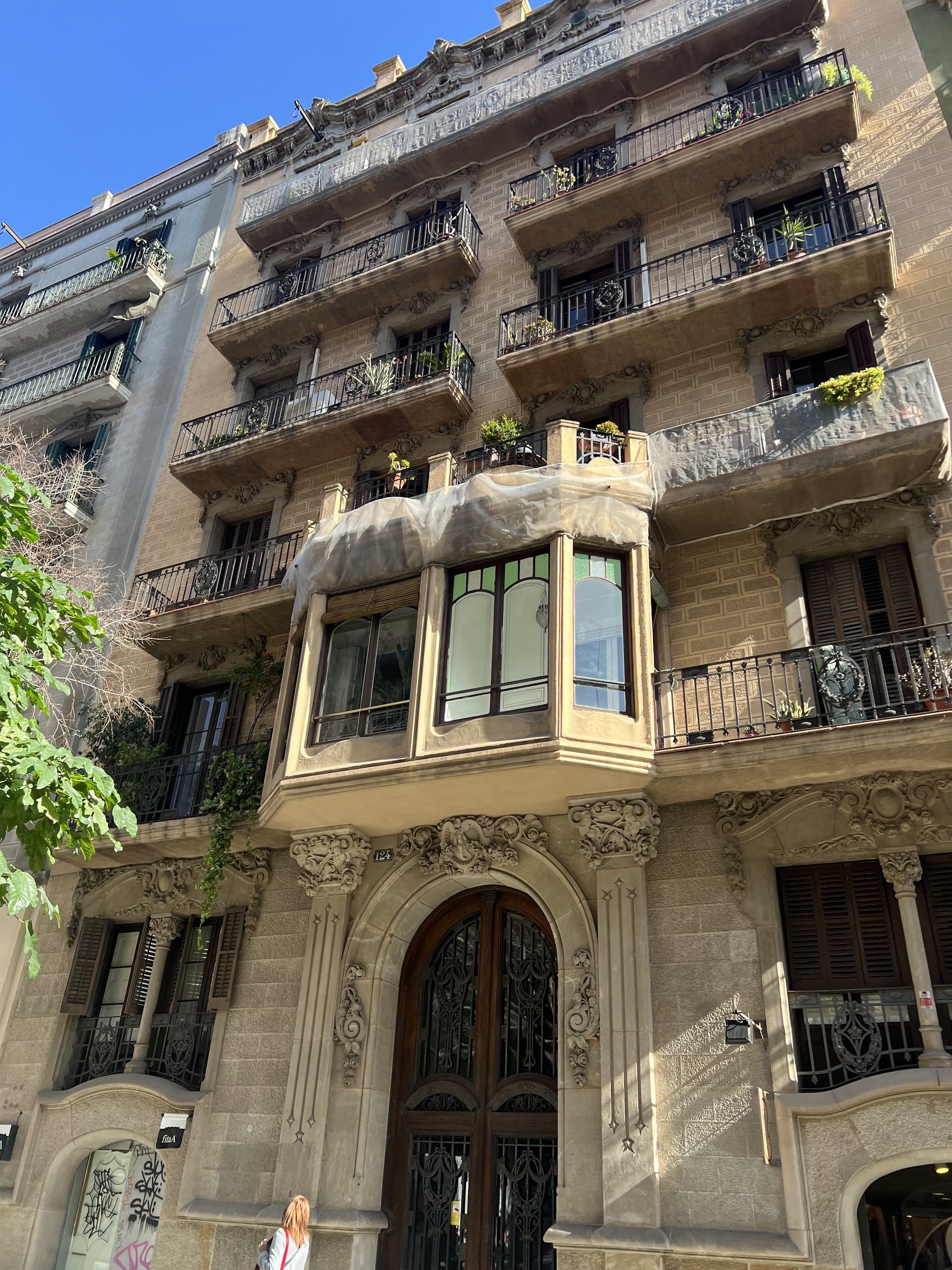
The Eixample, one facade at a time
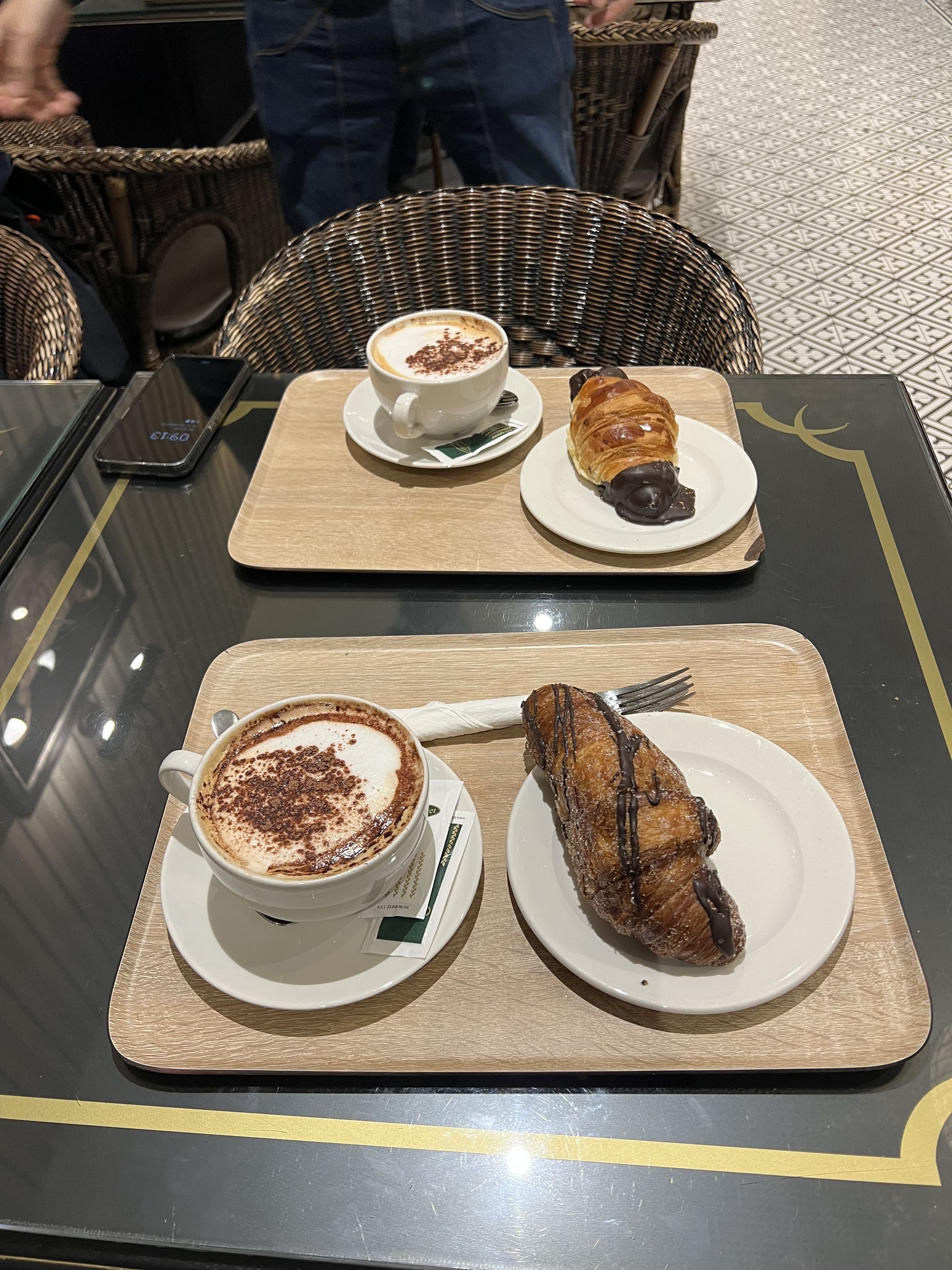
Two trays, before day four
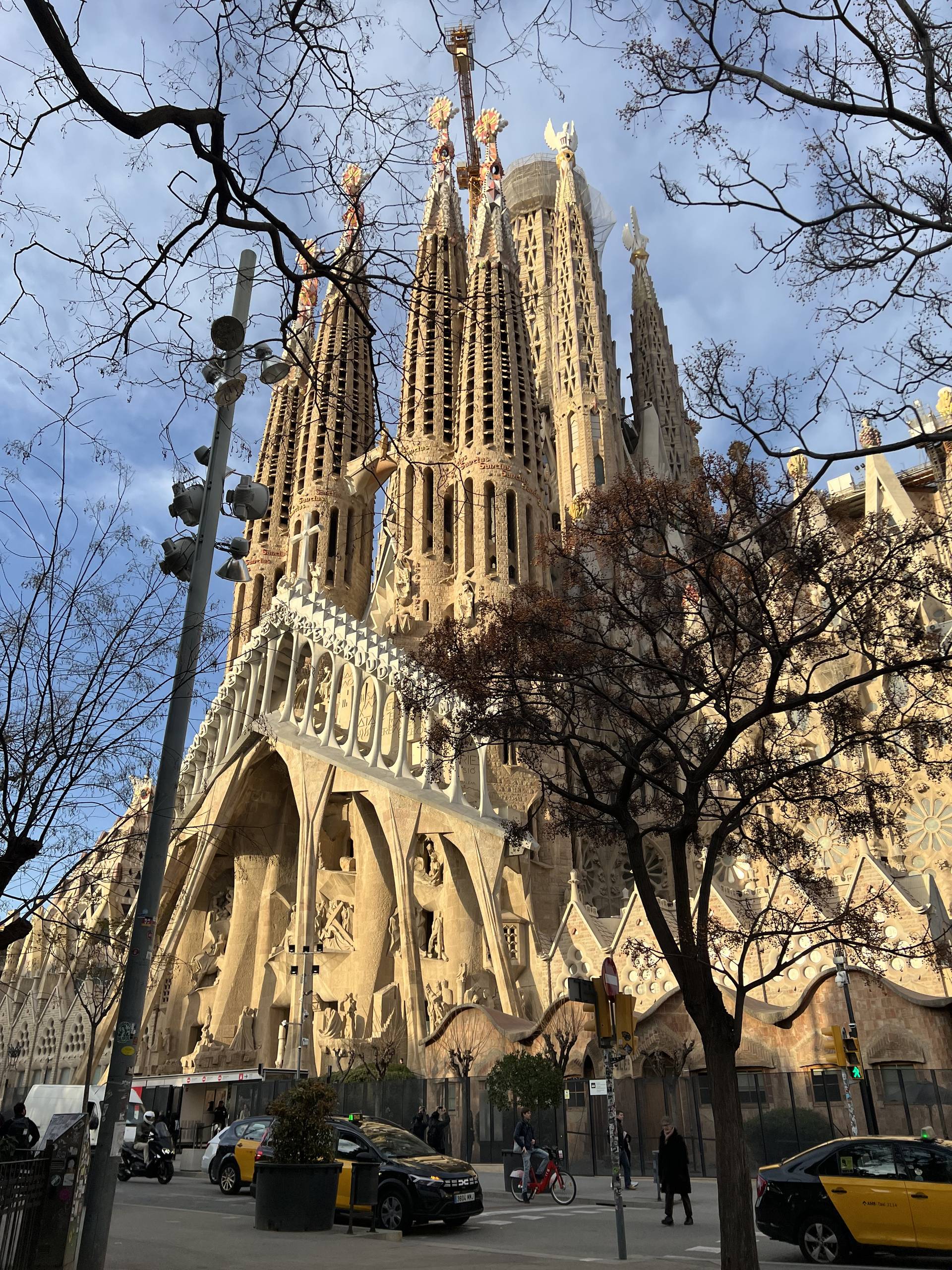
Sagrada Família, from the other side
Casa Batlló
On the last morning, before the flight, the one building I wanted to see from the inside: Casa Batlló, the house Gaudí rebuilt on Passeig de Gràcia between 1904 and 1906. The light well is tiled in blues that get darker as they go up, so that every floor receives the same amount of light; the attic is a corridor of white catenary arches; and the roof is a dragon's back in broken tile, with the turret and the cross on one end.
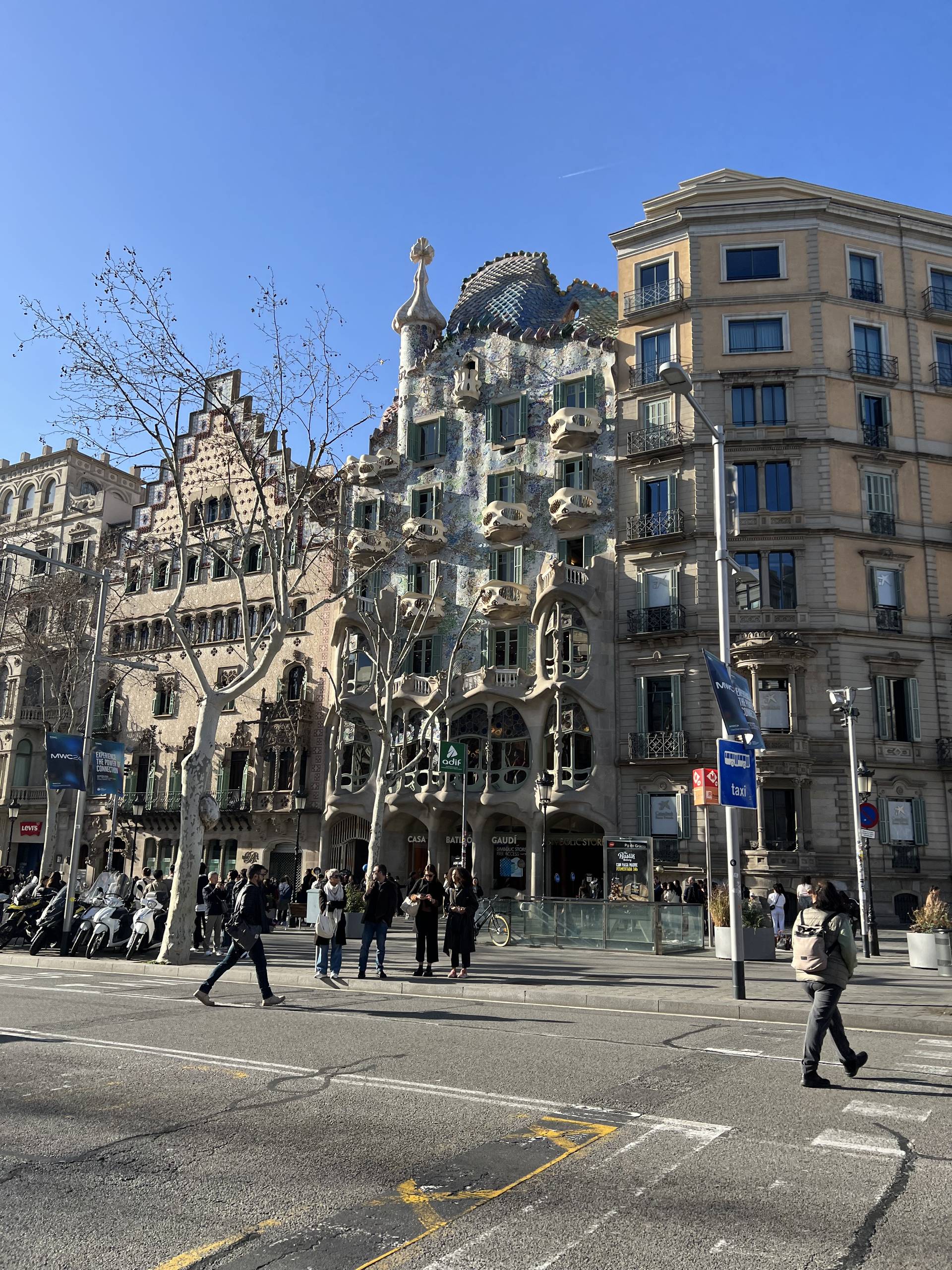
From across Passeig de Gràcia
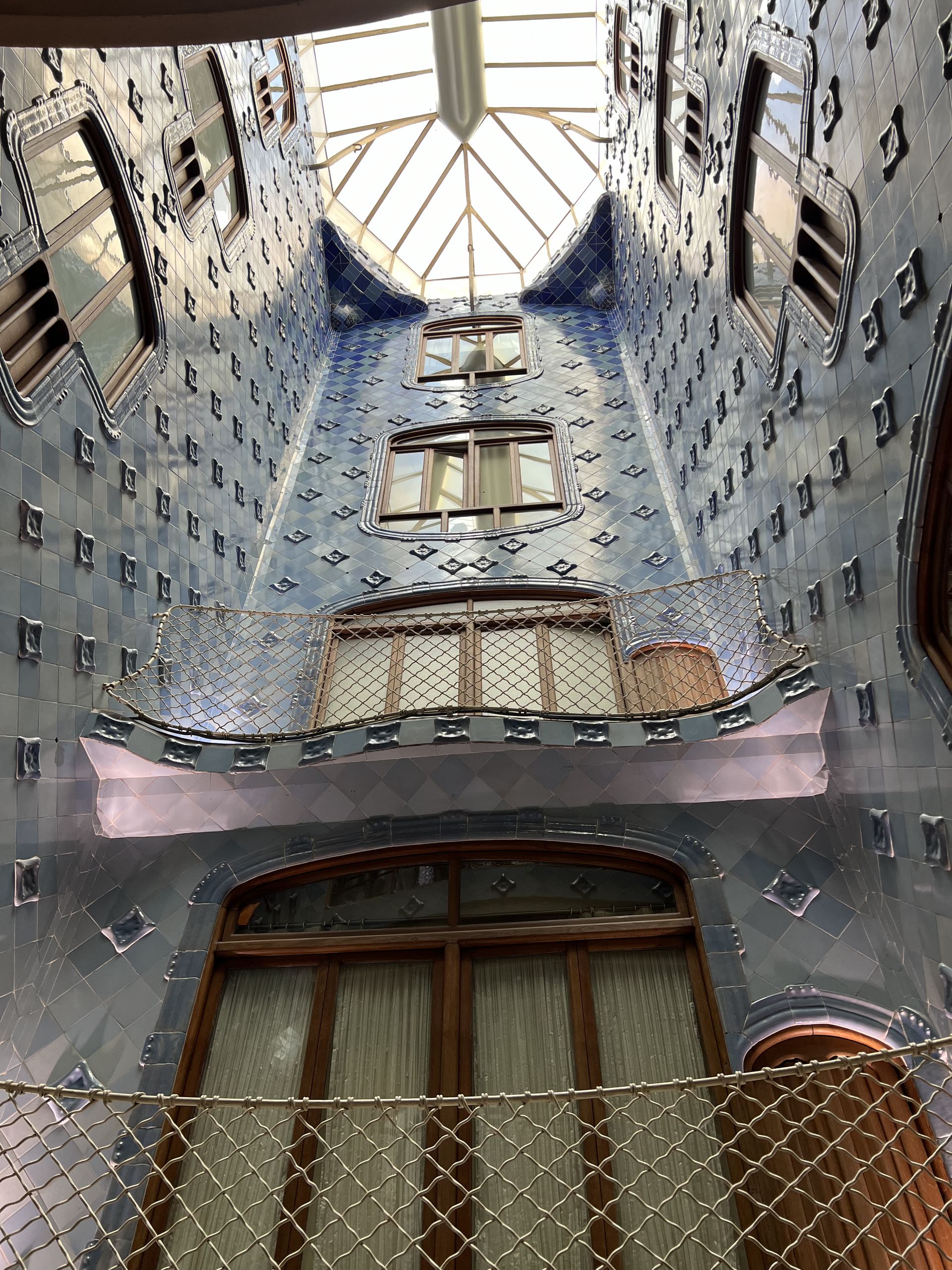
The light well, darker as it goes up
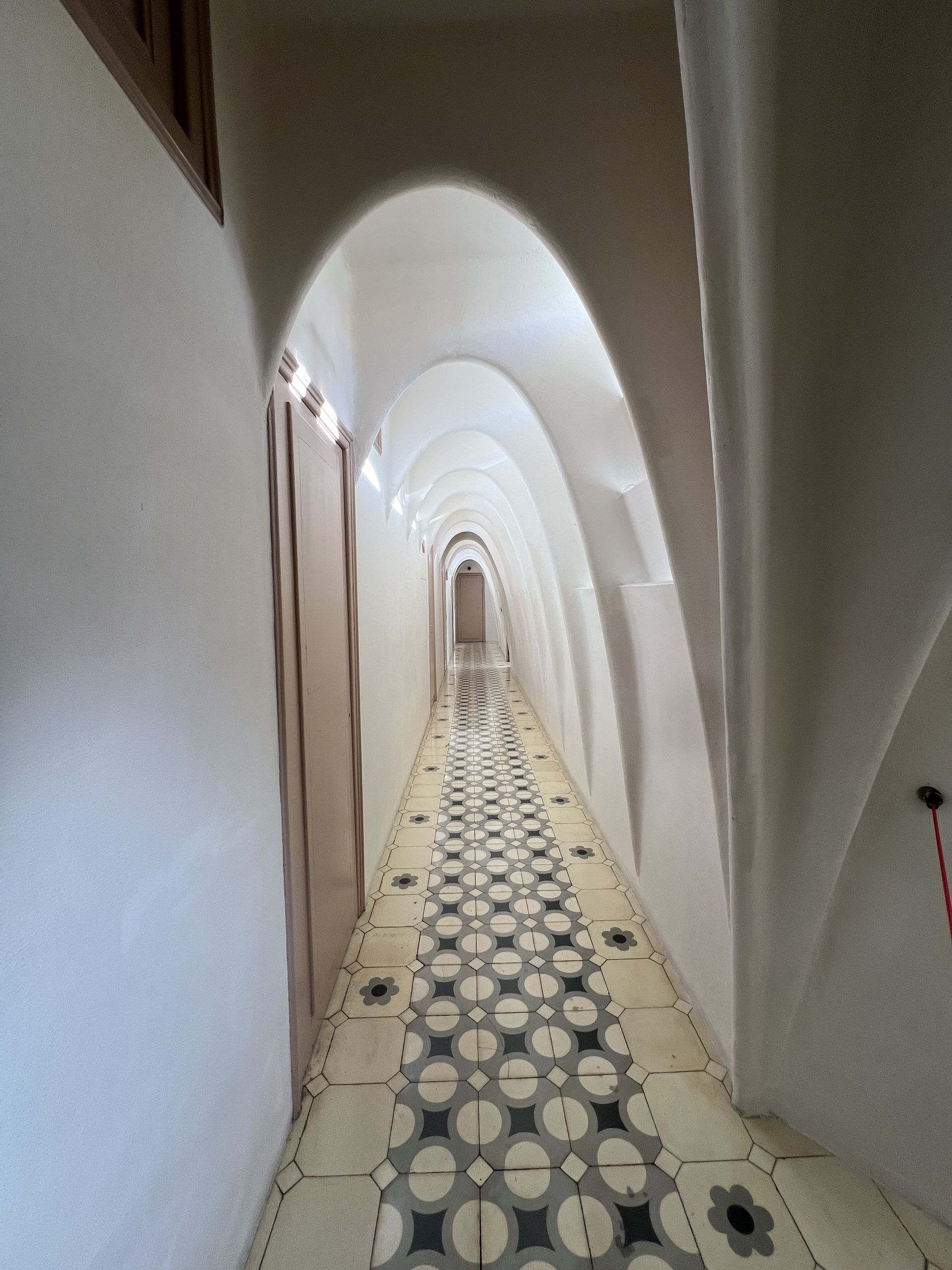
The loft, arch after arch
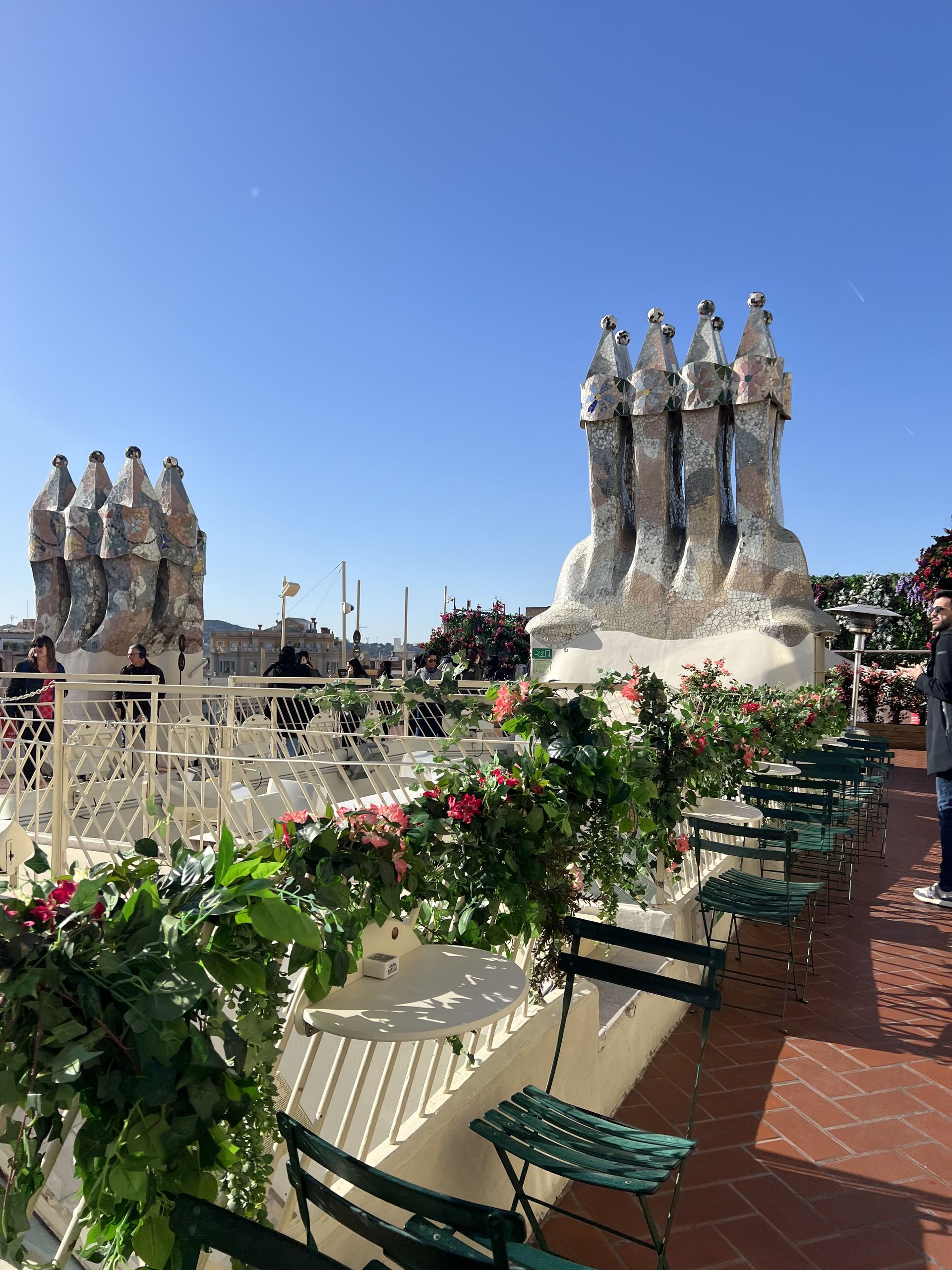
Out on the roof terrace
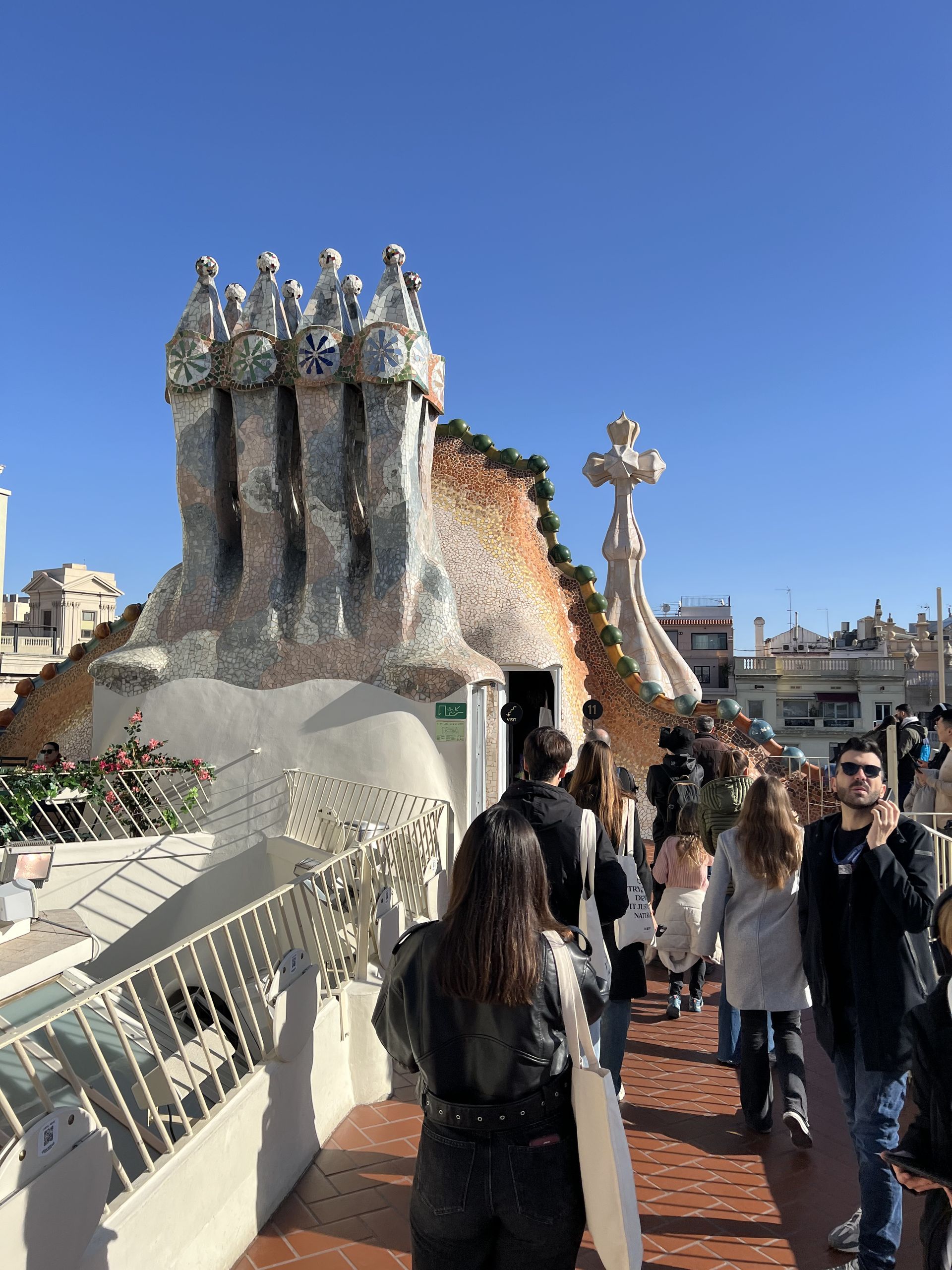
The dragon's back, and the cross at the end
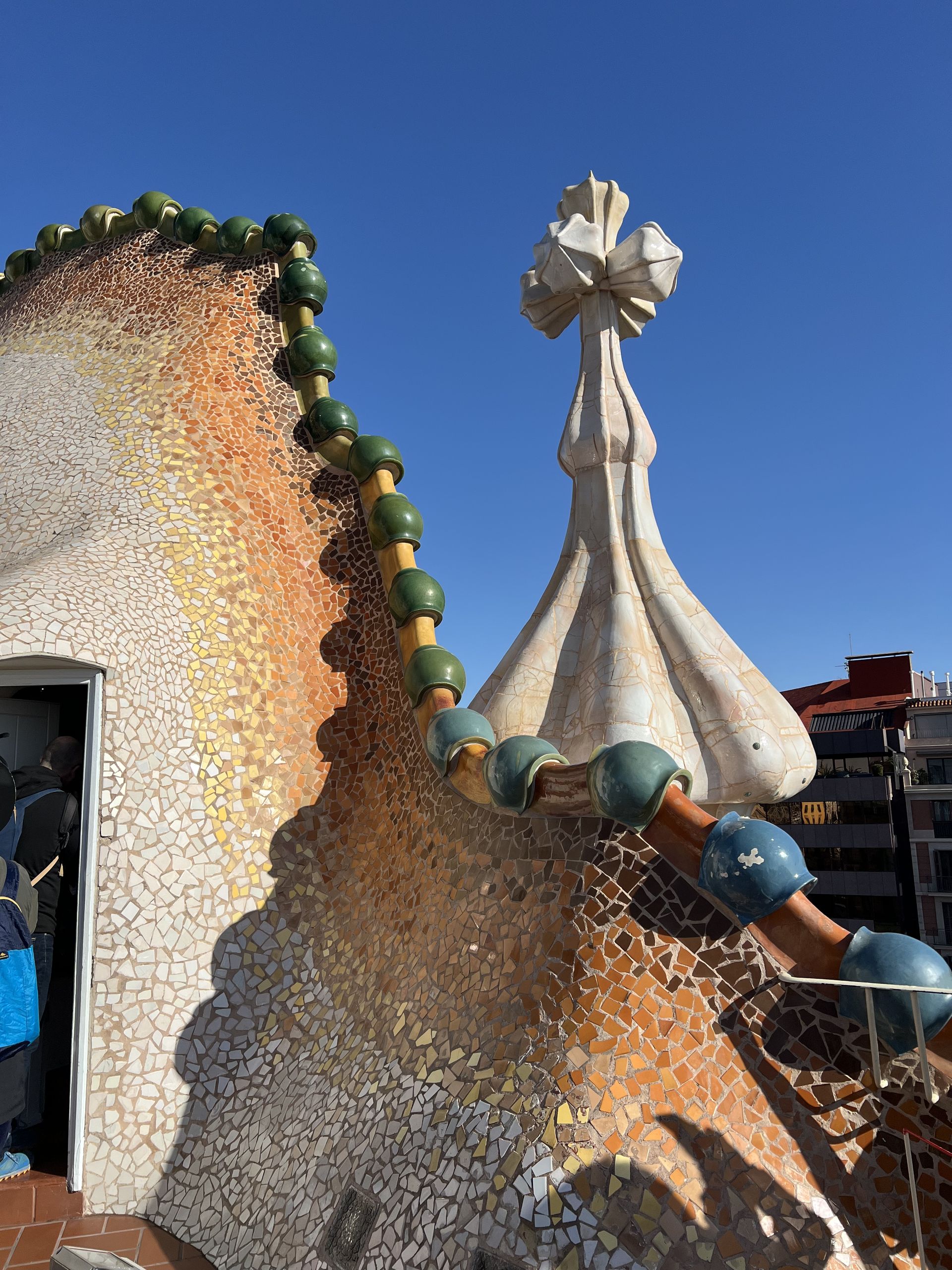
Up close, the scales
Going home
Four days, roughly 30,000 steps each, a bag full of pins and one gate at El Prat.
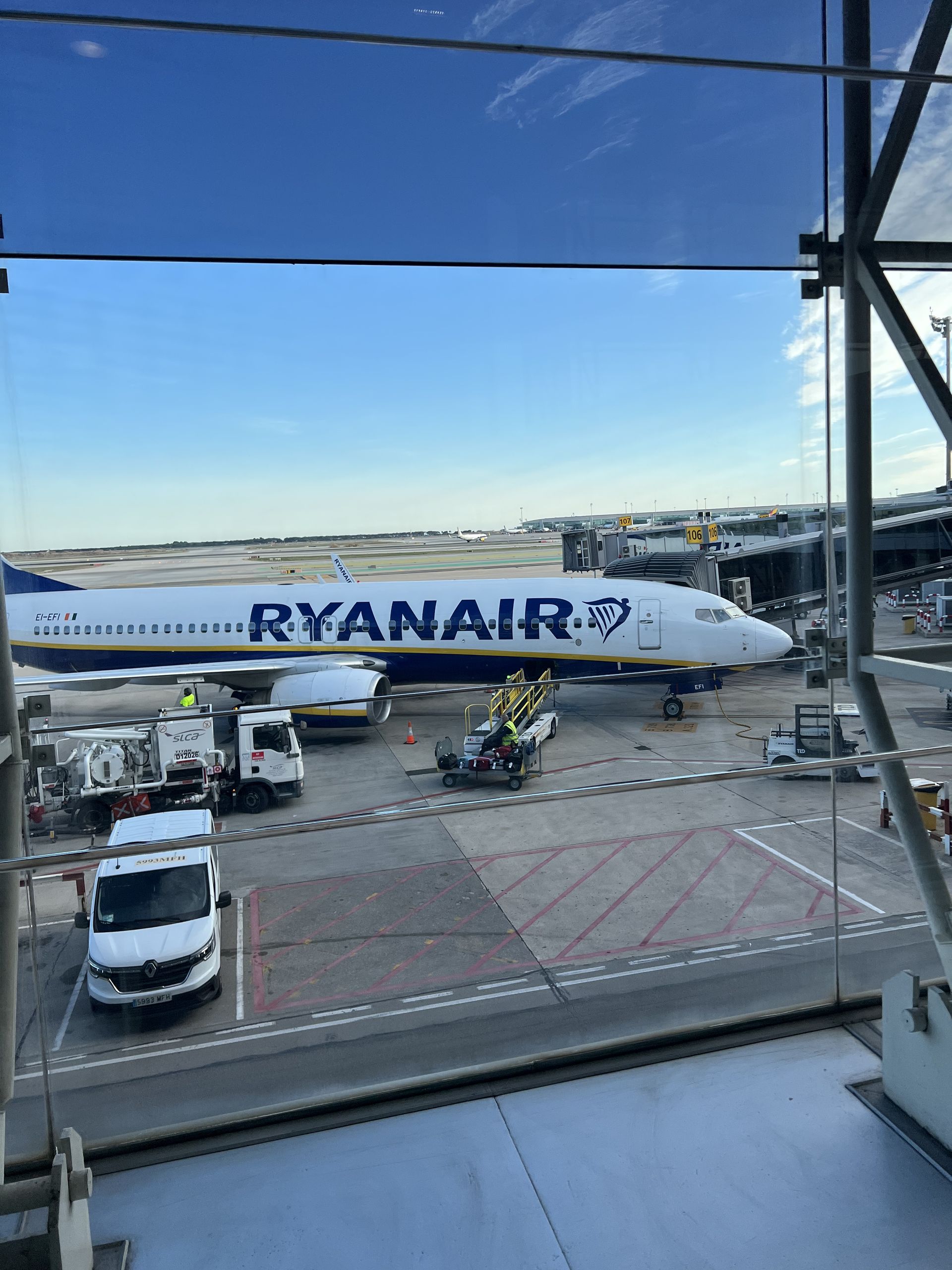
Gate at El Prat, and back to Milano
Mobile World Congress, Fira de Barcelona Gran Via, 26-29 February 2024.